
Authentication
Antique maps: how to tell an original from a facsimile
Printing technique, paper, plate mark, colour and the back of the sheet: the simple checks that separate an original antique map from a reproduction, with a magnifier and a little patience.
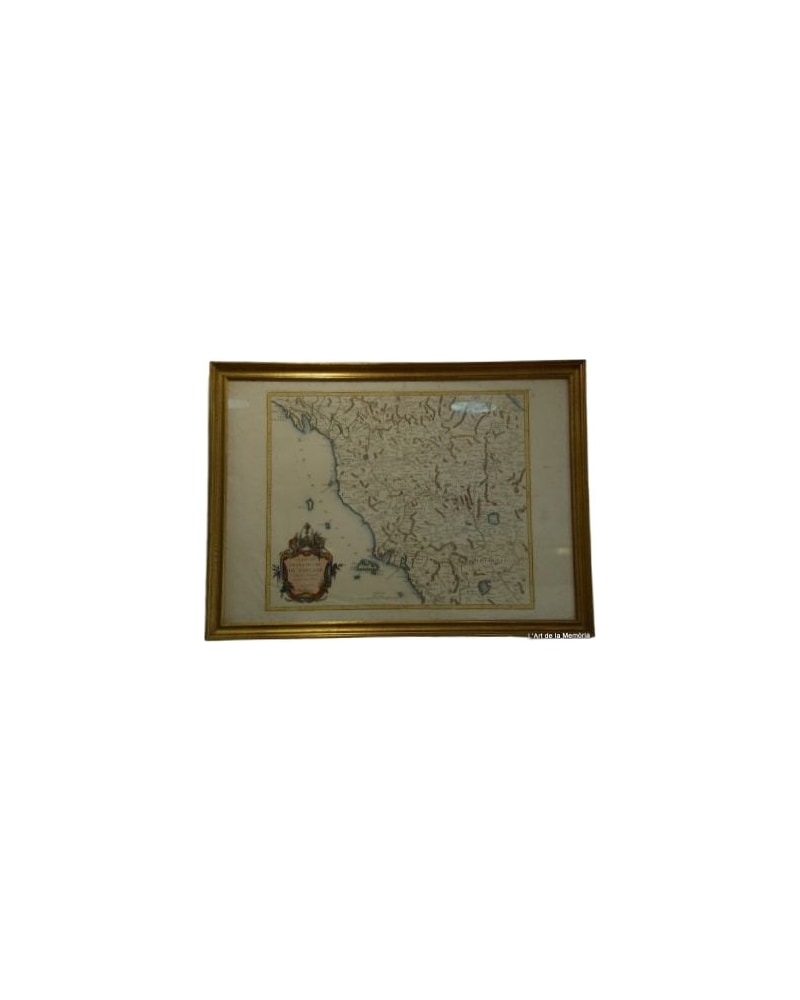
Antique maps are collected for their beauty, for the history they tell and for the place they show. They are also reproduced a great deal: fine facsimiles published in the twentieth century, decorative prints and digital copies printed on artificially aged paper. The good news is that an original leaves traces a reproduction rarely imitates completely. With a 10× magnifier and good light, almost every check in this guide can be done at home.
First, the printing technique
Almost all antique maps were printed with one of three techniques, and each leaves a different trace:
- Woodcut. The technique of many sixteenth-century maps, such as those in Sebastian Münster’s Cosmographia and his editions of Ptolemy. Ink sits on the raised parts of the block, so lines are somewhat thicker and the paper sometimes shows a slight impression.
- Copper engraving. Dominant from the seventeenth to the nineteenth century. Ink is held in lines cut into a copper plate and the paper is pressed hard against it. The result is very fine, crisp lines with the ink slightly raised.
- Lithography. Widespread in the nineteenth century. It prints from a flat surface with no incisions, and leaves no plate mark.
Modern reproductions are almost always printed by offset or on a digital printer. Under a magnifier, offset shows a pattern of regular dots, often in a rosette, especially in coloured areas. An engraved line, by contrast, is continuous. If a line turns out to be made of tiny dots when you magnify it, you are looking at a reproduction.
The plate mark
A copper engraving leaves the outline of the plate on the paper: a raised impression around the printed area, visible when light falls across it from the side. It is one of the most reliable signs of an engraving, with two caveats: margins may have been trimmed, removing the mark, and some facsimiles imitate it with a blind stamp. So it should never be the only test.
The paper
Until the late eighteenth century, European paper was almost always laid paper: held up to the light it shows fine, closely spaced lines and, at right angles to them, more widely spaced lines known as chain lines. Many sheets also carry a watermark, the mark of the paper mill. Smooth wove paper, without those lines, became common in the nineteenth century.
Old rag paper has body and some flexibility. Over time it may show foxing, small brown spots, and a warmer tone along edges exposed to light. Paper that is evenly yellowed, with an identical “aged” tone over the whole sheet, is usually an imitation.
The colour
For centuries maps were printed in black and coloured by hand with watercolour, either at the time or later. Hand-applied colour soaks into the paper fibres, may run slightly over the lines and varies from copy to copy. The printed colour of a reproduction sits on the surface and, under the magnifier, again shows the dot pattern.
Modern colour does not make a map a fake: many originals were coloured later to make them more attractive. But it affects value, and a good seller should say whether the colour is contemporary or later.
The back and the centre fold
- Text on the back. Many maps taken from books have printed text on the reverse, like those from Münster’s Cosmographia. A facsimile is usually blank on the back.
- Centre fold. Atlas maps were folded in half to be bound. A centre fold, sometimes with traces of the binding guard or reinforcements, is normal and consistent with an original.
- Numbering and margins. Page or plate numbers, remnants of binding and margins worn as you would expect from use.
Editions, states and later impressions
The same map may have been printed for decades from the same plate, sometimes with changes: an updated date, a new publisher in the cartouche or a corrected border. Specialists call these variants “states”, and identifying them affects value. There are also later impressions pulled from original plates; they are genuine prints, but later than the first edition. Ask the seller which edition it is and what the dating is based on.
Quick checklist before buying
- Look at the lines under a magnifier: are they continuous or made of dots?
- Look for the plate mark with raking light.
- Hold the paper up to the light: laid lines, watermark.
- Check the back: text, centre fold, traces of binding.
- Ask whether the colour is contemporary or later, and which edition it is.
- Ask for detail photos with a scale if you are buying from a distance.
Antique maps in the catalogue
Maps from the sixteenth to the nineteenth century, from Münster to Robert de Vaugondy, with detail photos and the option to ask the seller about edition and condition.
See antique maps →Related pieces

Tabula Asiae de Sebastian Münster, Edición de 1545
Art & Paintings
16th Century
Papel
L'Art de la Memòria · Sant Andreu de Llavaneres
750 €
Map of Roses, Beaulieu, 1645
Art & Paintings
17th Century · Roses, España
Paper, gold frame
L'Art de la Memòria · Sant Andreu de Llavaneres
950 €
Map of Italy by Delisle, Covens & Mortier, 1700
Art & Paintings
18th Century · Italy
Paper, ink
L'Art de la Memòria · Sant Andreu de Llavaneres
699,5 €
Map of the Caribbean by Bowen, 1747
Art & Paintings
18th Century · United Kingdom
Paper, ENGRAVING
L'Art de la Memòria · Sant Andreu de Llavaneres
499,5 €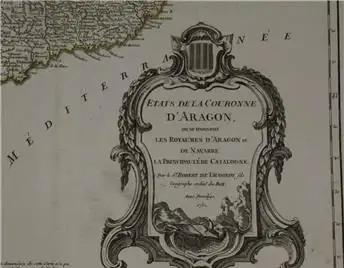
Map 1757 of the Crown of Aragon by Robert de Vaugondy
Art & Paintings
18th Century · France
Paper, map
L'Art de la Memòria · Sant Andreu de Llavaneres
299,5 €
Map of Seville, Andalusia, Year 1771
Art & Paintings
18th Century · Andalucía, España
Engraved on wool
El Rincón de Viriato · Madrid
300 €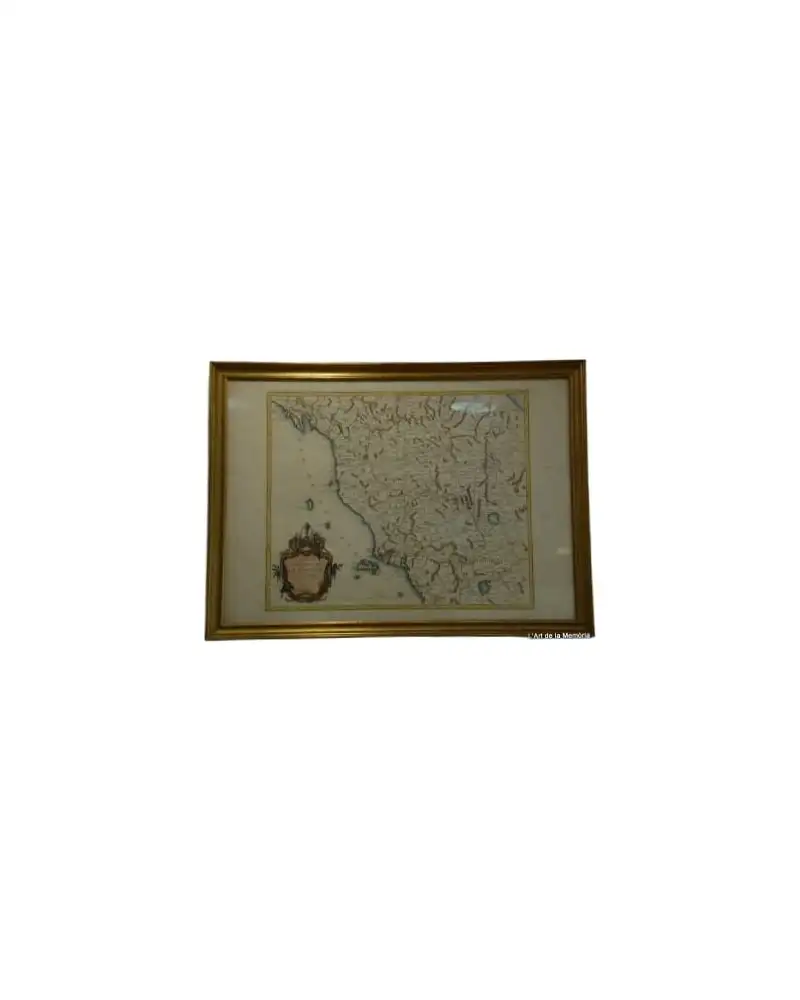
Map of the Grand Duchy of Tuscany by Santini/Remondini, 1776
Art & Paintings
18th Century · Italy
Paper, ink
L'Art de la Memòria · Sant Andreu de Llavaneres
465 €
Gulf Coast Map of the U.S., 1863, by Bache
Art & Paintings
19th Century · United States
Paper
L'Art de la Memòria · Sant Andreu de Llavaneres
299,5 €