Guide
How to tell if an antique book is valuable: edition, condition and provenance
Age is not enough: what gives an antique book its value is the edition, completeness, condition, binding and demand. How to read the title page, check plates and maps, spot a facsimile and look up reference prices.
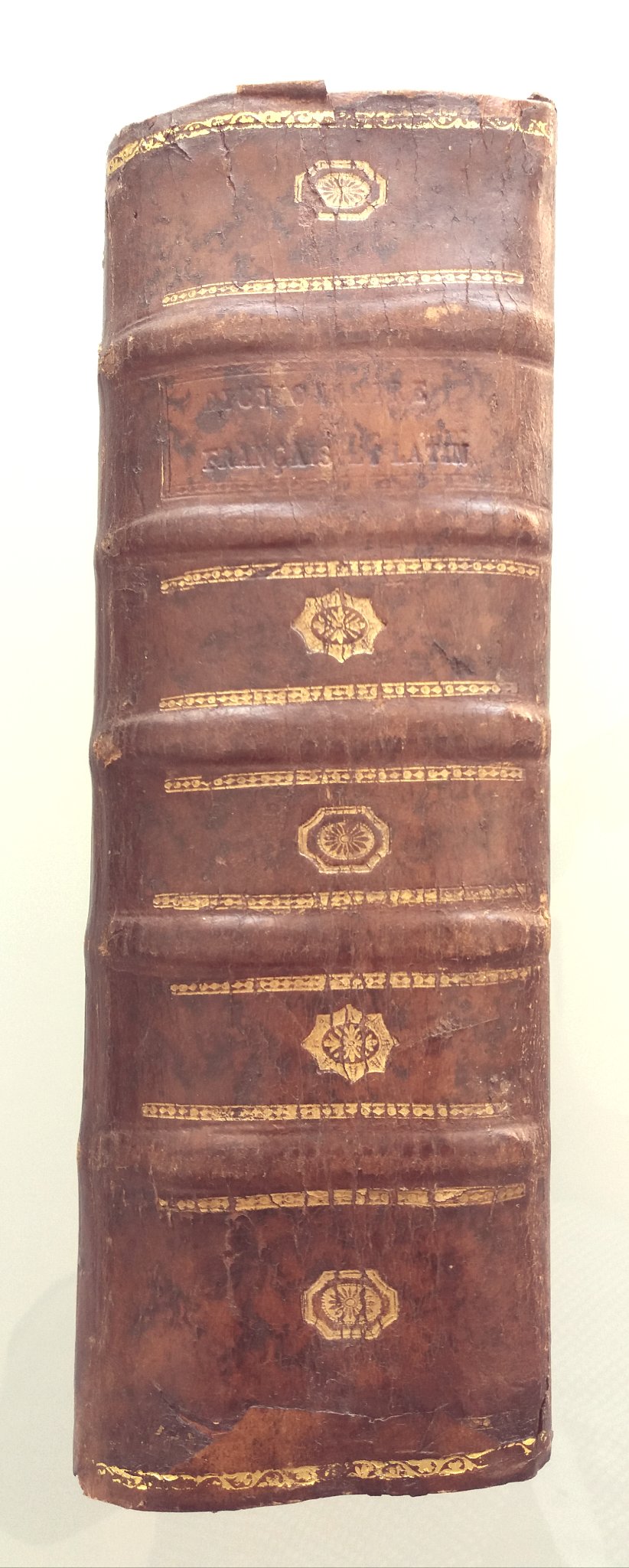
Almost every home has an old book with leather covers and yellowed paper, and it is natural to wonder whether it is worth anything. The short answer is that age alone does not confer value: millions of books were printed in the eighteenth and nineteenth centuries and most of them fetch modest prices. What turns an antique book into a sought-after piece is the combination of edition, rarity, demand, completeness, condition and binding. This guide explains how to check each point with the book in your hands.
First, the title page and the imprint
The title page is the book’s identity card. It gives the title, the author and, at the foot, the place of printing, the printer or bookseller and the year, which in antique books often appears in Roman numerals (MDCCXIII is 1713). In the oldest books this information may be at the end, in the colophon. If there is no date, catalogues record it as “s. a.” (sin año, “without year”; in English catalogues, “n.d.”) and the book is dated from other evidence.
With these details you can already look the book up in public catalogues. The Catálogo Colectivo del Patrimonio Bibliográfico Español (the Spanish union catalogue of bibliographic heritage) and the catalogue of the Biblioteca Nacional de España show which libraries hold the same edition, and classic reference works such as Palau’s Manual del librero hispanoamericano help to place it. If an edition appears in hundreds of libraries, it is unlikely to be rare. If it barely appears at all, it deserves a closer look.
First edition, reprint or facsimile?
For many titles the first edition is the one collectors care about most, though not always: sometimes a later corrected or illustrated edition, or one with a special binding, is what is sought. Reprints repeat the title page with a different date or with “new edition”, and in the eighteenth century counterfeit editions also circulated: unauthorised copies that imitated the original. Comparing the book with the catalogue description (number of pages, plates, known misprints) is the way to tell them apart.
A facsimile is something else: a modern, declared reproduction of an antique book. It has its own interest and its own market, but it is not an original. Our catalogue has a good example: the facsimile of the *Llibre del Consolat de Mar*, published in Barcelona in 1978 from the 1523 edition, numbered and in its slipcase. A facsimile usually says so on the half-title, in the colophon or on the slipcase; uniform paper, halftone dot printing and an industrial binding give it away even when that information has been lost.
Is it complete? Collation
An incomplete book loses much of its value, and what is most often missing is what is most valuable: plates, maps and engravings, which for decades were torn out to be sold separately. Checking that a book is complete is called collating. It means counting the leaves, plates and maps and comparing them with what the book itself states (many works include a list of plates) or with a catalogue description.
- Plates and folding maps: count them one by one. In geographical works, such as Malte-Brun’s Géographie universelle or the Atlas geográfico ibero-americano by Chías y Benito, they are the heart of the book.
- Paper stubs by the sewing: a narrow strip close to the spine usually indicates a leaf that has been cut out.
- Page numbering and signatures: jumps in the numbering or in the letters at the foot of the gatherings point to missing leaves.
- Portraits and frontispieces: the plate facing the title page is among the first to disappear.
Paper and printing
Until the early nineteenth century, books were printed on hand presses on rag paper, often laid paper: held up to the light it shows fine lines and sometimes a watermark. This paper ages well and usually keeps its body and flexibility. From the second half of the nineteenth century, paper made from wood pulp became widespread; it is more acidic, and yellows and turns brittle over the years. This is not a flaw of a particular copy but of the material of the period. For examining paper and plates under a magnifier, the criteria are the same as those we explain in our guide to antique maps.
The binding
A good period binding adds value, and sometimes it is what weighs most in the price of an ordinary text. These are the types most often found on the Spanish market:
- Vellum: very common in Spanish books from the sixteenth to the eighteenth century, often limp and with remains of ties or clasps.
- Leather: in the eighteenth and early nineteenth centuries, calf with a spine richly tooled in gilt. Pasta española (“Spanish calf”), a mottled, speckled leather, is characteristic of Spanish workshops.
- Half binding (*holandesa*): spine and sometimes corners in leather, with the boards covered in paper or cloth. Very common in the nineteenth century.
- Publisher’s cloth: in the second half of the nineteenth century, publishers began selling books already bound in cloth, sometimes with stamped decoration.
A later rebinding is not necessarily a problem if it is well done, but a discerning buyer values the original binding more. Broken spines, detached boards and worn corners can be restored, though always by a binder experienced with antique books.
Condition and signs of use
- Foxing: small brown spots on the paper. They are common and detract little if light.
- Damp and mould: extensive staining, a musty smell or cockled paper. They detract a great deal and can spread to other books.
- Wormholes: small holes and tunnels running through the leaves. If they affect the text or the plates, the value drops.
- Stamps, bookplates and annotations: a library stamp usually reduces value. A bookplate or notes by a known owner, on the other hand, can add to it.
Demand: what people look for
Two books of the same period and in the same condition can command very different prices depending on the subject. Travel, cartography, science and technology, navigation, local history, gastronomy and illustrated books have a wide audience. A nineteenth-century treatise on navigation, such as this one from 1853 translated by Brigadier Vizcarrondo, appeals to collectors of nautical material as well as to bibliophiles. Collections of sermons, odd volumes from complete works and school textbooks, by contrast, tend to sell poorly.
How to find a reference price
Second-hand bookselling portals show asking prices, not actual sale prices, and should be treated with caution. Auction results, where available, are more reliable. Always compare the same edition, in similar condition and with the same plates. For important pieces, the opinion of an antiquarian bookseller (in Spain, many belong to the Asociación Ibérica de Librerías Anticuarias) or a professional valuation avoids costly mistakes.
An antique book is worth what its edition is worth, in the condition it is in and to the public that seeks it. The date on the title page is only the starting point.
Quick checklist before buying
- Note the author, title, place, printer and year from the title page or colophon.
- Look up the edition in the catalogue of the Biblioteca Nacional or in the Patrimonio Bibliográfico.
- Check whether it is a first edition, a reprint or a facsimile.
- Count the plates and maps and look for stubs of cut-out leaves.
- Check for damp, mould, wormholes and stamps.
- Ask for photos of the title page, the spine, the plates and any defects.
- Remember that books more than a hundred years old need a permit to leave Spain.
Frequently asked questions
Is a nineteenth-century book valuable just because it is old?
Not necessarily. Many nineteenth-century books sell for modest prices. Value depends on the title, the edition, completeness and condition. Illustrated works, travel, science and cartography are the subjects that attract most interest.
How should I store an antique book at home?
Upright, not squeezed between other books, away from direct sunlight, radiators and damp walls. Do not use adhesive tape to repair leaves or spines: it can be removed, but it leaves permanent stains.
Is a rebound book worth less?
It depends. An old, high-quality rebinding can be highly appreciated. A simple modern one usually detracts somewhat compared with a copy in its original binding in good condition.
Antique books in the catalogue
Eighteenth-century dictionaries, geographical works with maps, nineteenth-century treatises and numbered facsimiles, with photos of the title page, spine and plates. You can ask the seller about the collation before buying.
See antique books →Explore the catalogue
Related pieces
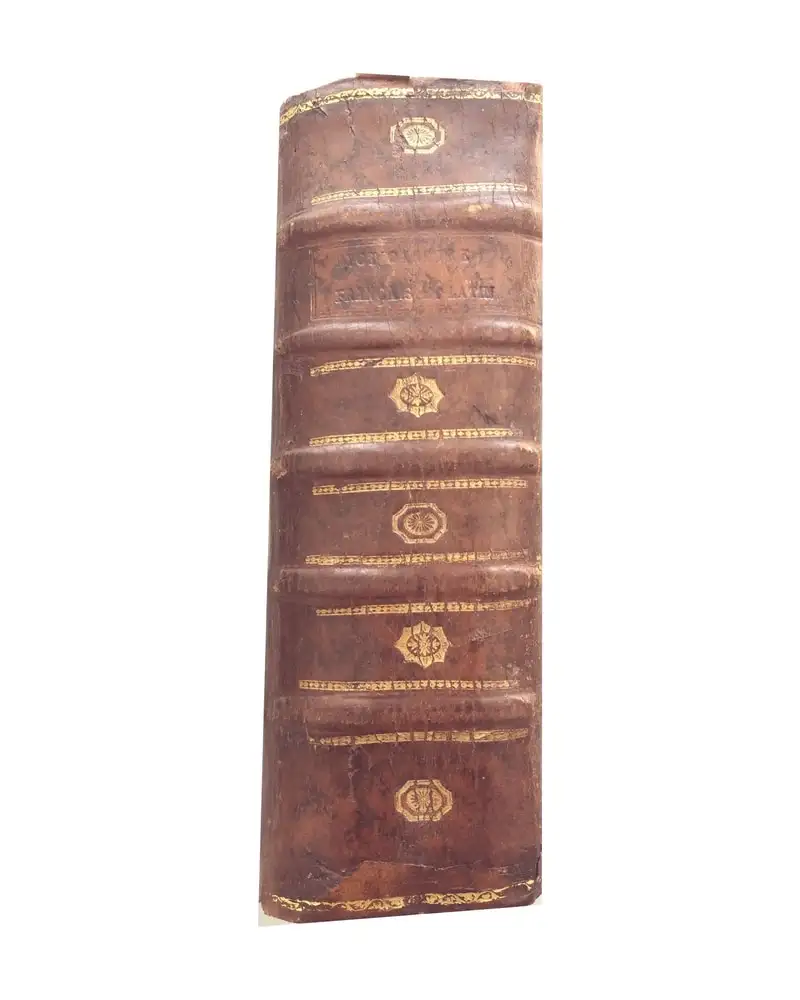
1713 Danet Grand Dictionnaire François Et Latin
Books & Manuscripts
18th Century · LYON
Leather binding
L'Art de la Memòria · Sant Andreu de Llavaneres
190 €
Géographie Universelle de Conrad Malte-brun, 1850
Books & Manuscripts
19th Century · París, Francia
Encuadernación MIXTA
L'Art de la Memòria · Sant Andreu de Llavaneres
490 €
Ibero-American Geographic Atlas by Chías and Benito, 1900
Books & Manuscripts
First half of the 20th Century · Spain
PAPER, BOOK
L'Art de la Memòria · Sant Andreu de Llavaneres
300 €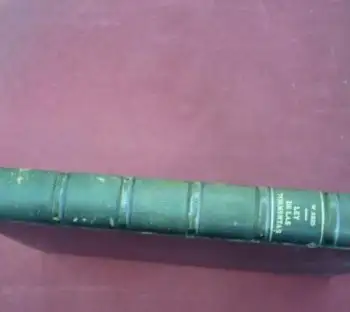
Spanish Treatise on Navigation, 19th Century
Books & Manuscripts
19th Century · Spain
Paper, leather binding
L'Art de la Memòria · Sant Andreu de Llavaneres
300 €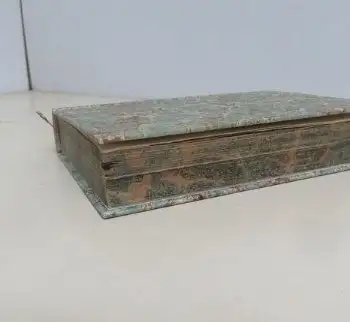
1822 Esquisse D'un Tableau Historique, Condorcet
Books & Manuscripts
19th Century · France
Paper, hardbound
L'Art de la Memòria · Sant Andreu de Llavaneres
182 €
1850 Supplement to the Code: Collection of Laws
Books & Manuscripts
19th Century · Italy
Leather binding
L'Art de la Memòria · Sant Andreu de Llavaneres
39,99 €
EL LLIBRE DEL CONSOLAT DEL MAR facsimile
Books & Manuscripts
16th Century · Spain
Guaflex
L'Art de la Memòria · Sant Andreu de Llavaneres
69 €