
History
Antique reliquaries: types, materials and how to recognise them
Thecae, embroidered cartouches, silver and pendant reliquaries: a guide to the antique reliquaries that come onto the market, how they were made, what their seals and documents mean and what to know before buying one.
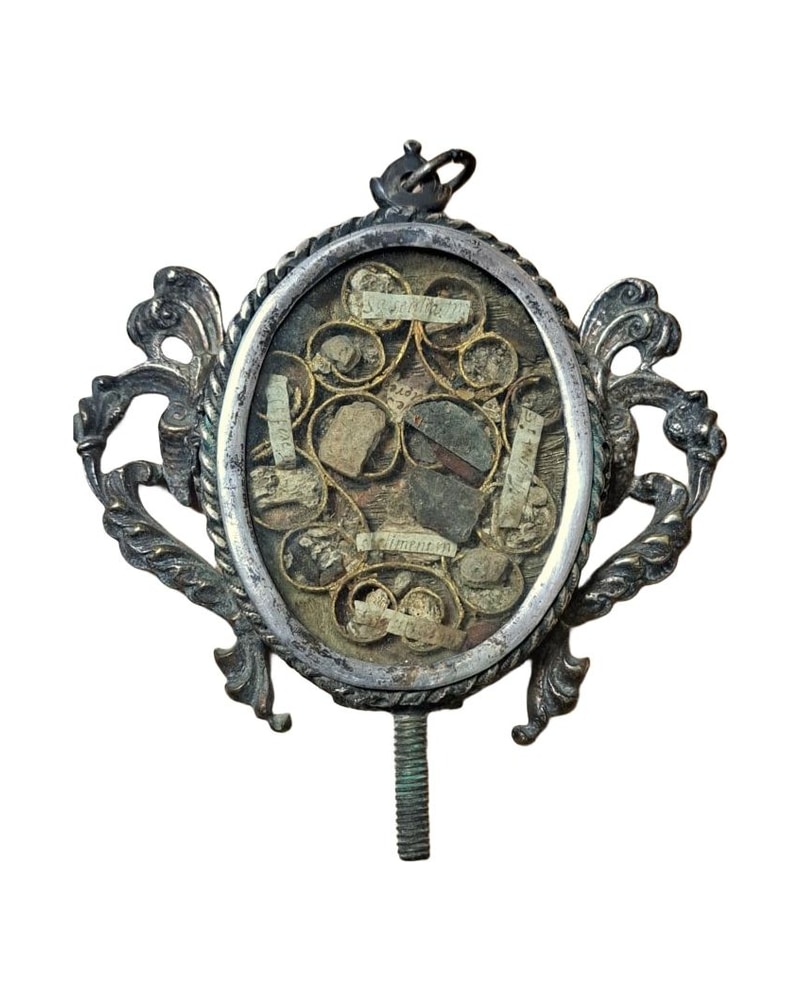
A reliquary is, in its simplest sense, a container made to keep and display a relic. For centuries they were made in every size and material, from large silver pieces for altars to small medallions worn around the neck. Many of those on the market today are objects of domestic devotion from the eighteenth and nineteenth centuries, valued for their silverwork, embroidery or paperwork.
A necessary clarification
For the Catholic Church, the sale of sacred relics is expressly forbidden: canon 1190 of the Code of Canon Law states it without qualification. What collecting and the antiques trade value is the reliquary as a work: its design, its materials and its craftsmanship. Anyone buying a reliquary that still holds remains inside should know it and treat it with the respect it deserves. If your interest is devotional, the right person to guide you is a parish priest or the diocese.
The most common types
- Theca. A small metal case, usually round or oval, with glass on the front. Inside, the relic rests on a ground of fabric or decorated paper, identified by a small handwritten label in Latin. The back is usually closed with a wax seal and a cord.
- Cartouche or embroidered reliquary. A fabric frame, often silk, embroidered in gold or silver thread, with spangles and sometimes small stones. Widespread in convents in the eighteenth and nineteenth centuries, they combine a central print or theca with an embroidered border.
- Rolled-paper reliquary. Compositions of gilded paper strips rolled and glued on edge, forming spirals and flowers around the relic. It is a painstaking technique typical of convent work.
- Silver reliquary. Freestanding, with a foot and a glazed receptacle, often shaped like a monstrance or a cross. The best are the work of silversmiths and may carry hallmarks.
- Pendant reliquary. Worn around the neck, sometimes double-sided, with rock crystal, enamel or miniature paintings. In Spain they were highly prized in the sixteenth and seventeenth centuries.
How to read a reliquary
A reliquary holds more information than it seems. These are the parts worth examining:
- The seal. An intact wax seal on the back shows that the theca has not been opened since it was closed. It usually bears the arms or emblem of the church authority that sealed it. A broken, remade or missing seal does not invalidate the piece as an object, but it changes what can be said about its contents.
- The labels. The small handwritten slips identify each relic, usually with the saint’s name in abbreviated Latin, such as “S. Andreae Ap.”. Handwriting and ink help to date the piece.
- The authentication document. Some relics were accompanied by a signed and sealed document, the “authentic”, certifying their origin. When it survives, it greatly increases the historical interest of the whole.
- The materials. Gold or silver thread in embroidery, silver or gilt bronze in frames. On silver, look for town, maker or assay marks; we explain them in our guide to antique silver and its marks.
Signs of age and quality
In old embroidery, metal thread darkens unevenly and reveals its silk core where it is worn. Old spangles are metal, not plastic. The glass is usually thin and may contain small bubbles. In paper reliquaries, the gilding has dulled unevenly over time. A piece that looks too bright and uniform deserves a second look.
Quality shows in the density of the embroidery, the regularity of the paper spirals and the finish of the metal. A simple, well-preserved cartouche can be more interesting than a larger, heavily restored piece.
How to display them at home
Embroidered cartouches and paper reliquaries look better grouped than alone: a wall with several pieces of different sizes, at eye level, makes a coherent whole. Box frames with a little depth protect the relief of the embroidery and stop the glass from flattening it. Small thecae can sit on a stand or in a display cabinet, alongside other devotional pieces or silver. Whatever the arrangement, choose a wall out of direct sunlight and away from sources of heat.
Provenance and care
As with all religious art, provenance matters. Buy from sellers who can explain where a piece comes from, and be wary of objects that look as though they were removed from a church without documentation. As for care, textile and paper reliquaries are delicate: avoid direct sunlight and damp, do not open sealed thecae and, if intervention is needed, turn to a conservator specialising in textiles or paper.
Religious art on Antiga
Reliquaries, carvings and devotional paintings from the seventeenth to the nineteenth century, with detail photos and the option to ask the dealer about each piece’s provenance.
See antique religious art →Explore the catalogue
Related pieces
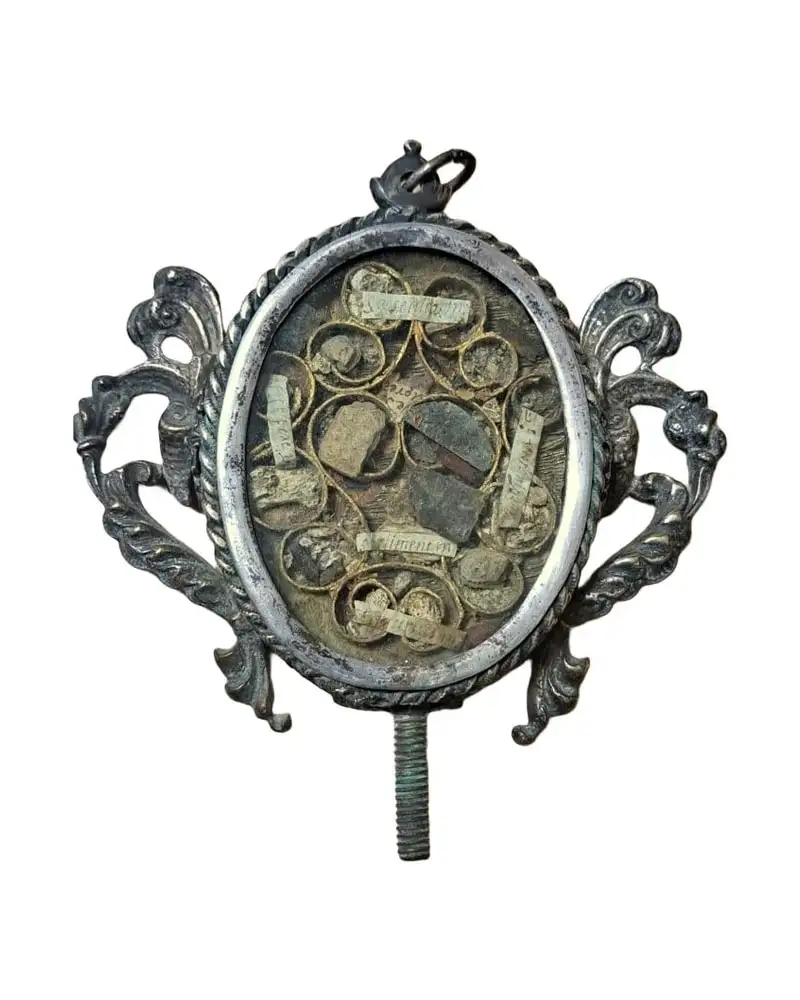
Large Baroque Reliquary 18th Century, silver with multiple relics of saints
Religious & Devotional
18th Century
Silver
Antigüedades Calderón · Mataró
790 €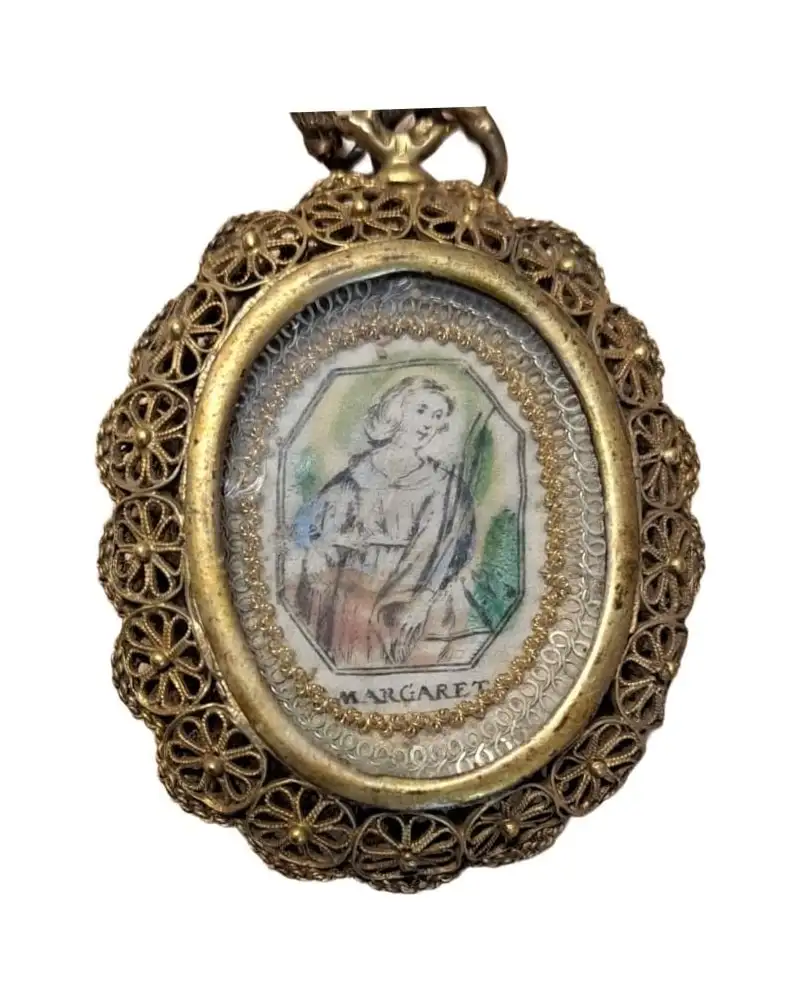
Golden silver reliquary dedicated to Margaret, Saint Margaret. 18th - 19th century
Religious & Devotional
18th Century · Spain
Silver
Antigüedades Calderón · Mataró
475 €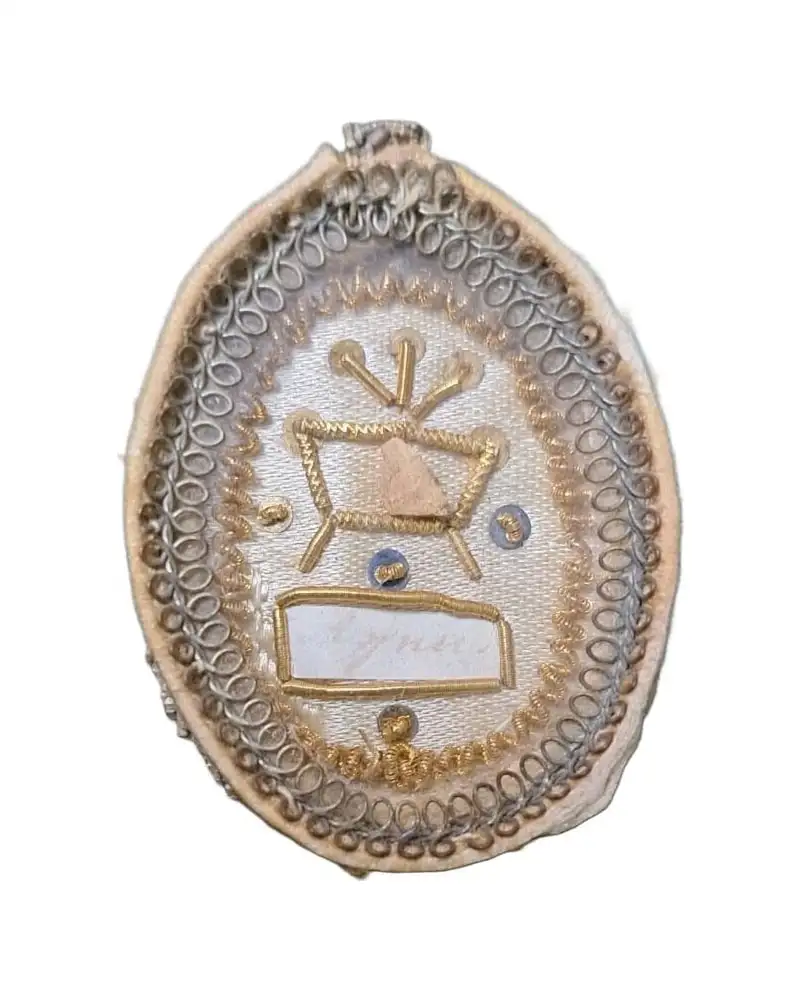
Antique reliquary adorned with gold thread filigree, 19th century
Religious & Devotional
19th Century · Spain
Gold
Antigüedades Calderón · Mataró
125 €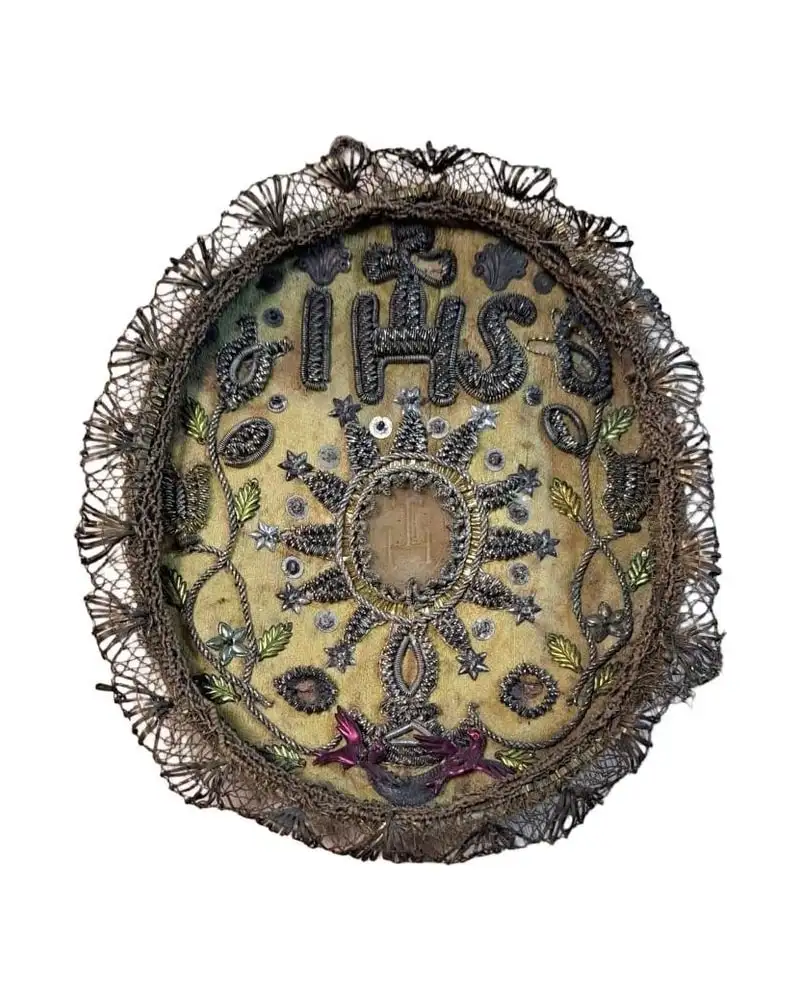
Embroidered plaque or reliquary in gold and silver with the Christogram IHS. 19th century
Religious & Devotional
19th Century · Spain
Silver
Antigüedades Calderón · Mataró
125 €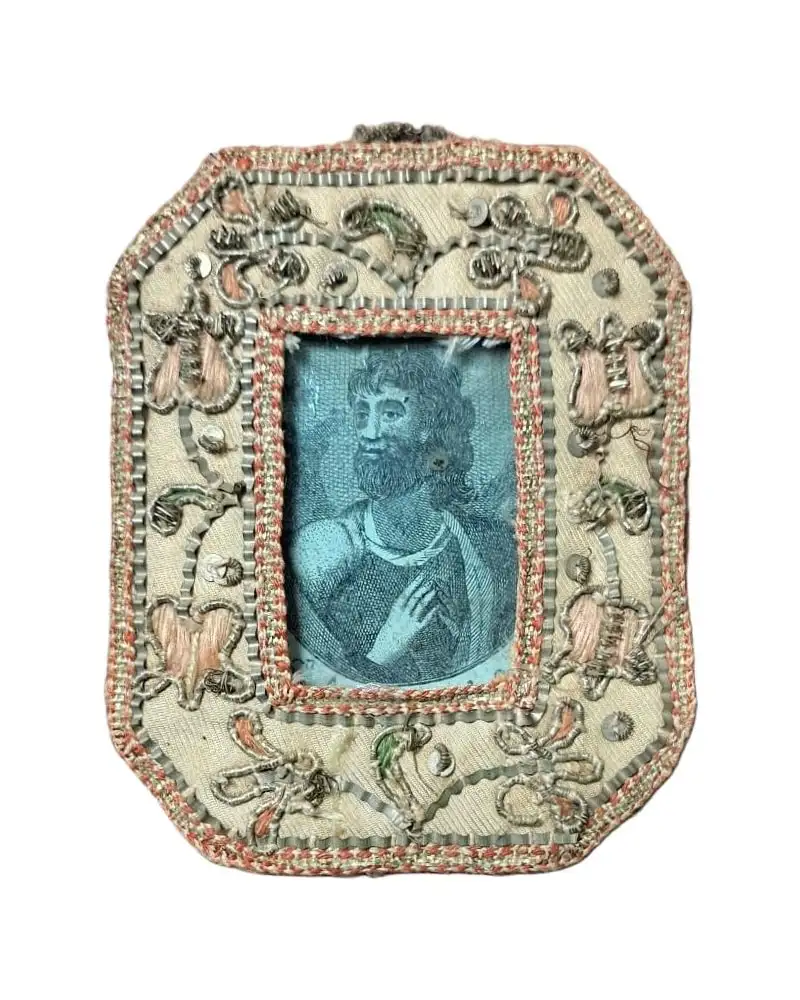
18th 19th Century Reliquary Saint Andrew Apostle Embroidered in Metallic Thread
Religious & Devotional
18th Century
Textile
Antigüedades Calderón · Mataró
235 €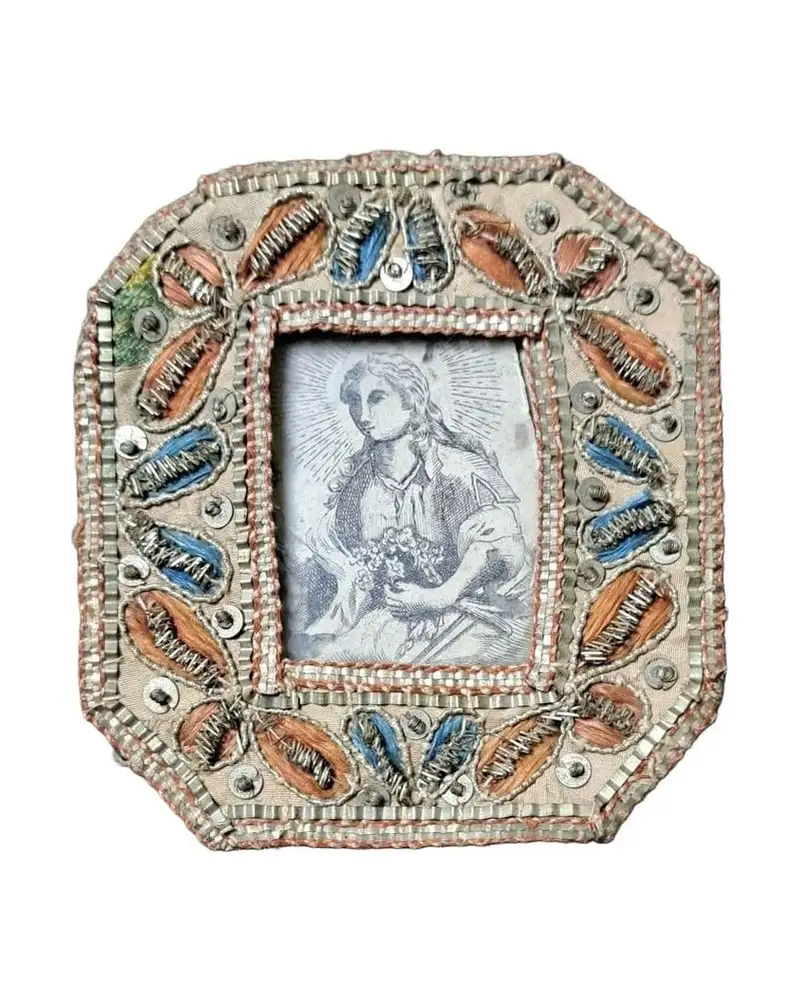
N. S. de los Dolores. Embroidered plaque or reliquary in silver thread 18th-19th century
Religious & Devotional
18th Century
Silver
Antigüedades Calderón · Mataró
135 €