
Guide
Measure before you buy: getting antique doors, grilles and furniture right
Which dimensions to ask for and how to measure at home before buying an antique door, grille, balcony or piece of furniture, and how to check that the piece will fit and can reach its place.
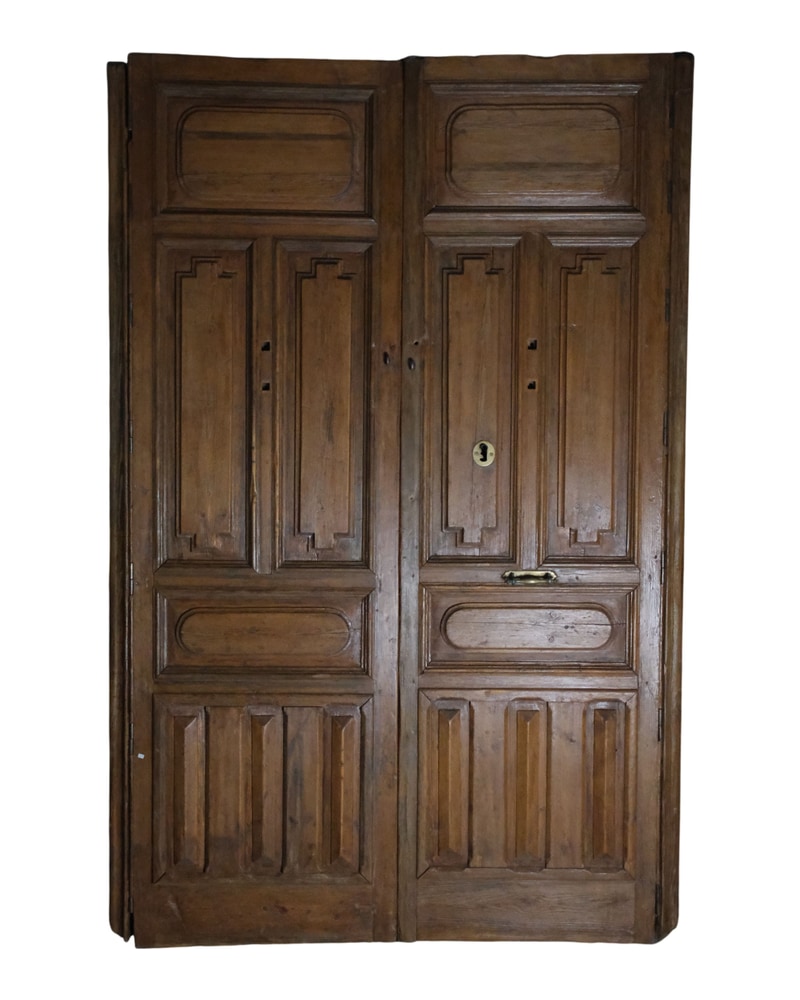
Most disappointments when buying a large antique have nothing to do with authenticity and everything to do with size: a door that does not fit the opening, a grille that falls short, a wardrobe that will not go up the stairs. All of this is avoided with a tape measure and ten minutes of attention before buying. This guide brings together what to measure in each case.
A general rule: measure twice
- Measure in centimetres and always note height × width × depth, in that order.
- Antique pieces are not perfectly square: take each measurement in at least two places and keep the smaller figure.
- Ask the seller for the maximum dimensions of the piece, including mouldings, fittings or feet that project.
- If you are buying from a distance, ask for a photo of the piece with a tape measure against it. It avoids misunderstandings.
Doors
An antique door rarely matches a standard modern opening. The key question is whether the door will be adapted to the opening or the opening to the door.
- Structural opening: clear height and width between the walls, and from the finished floor to the lintel.
- Leaf and frame separately: ask for the dimensions of the leaf (or each leaf, if there are two) and of the frame, if it survives.
- Leaf thickness: it determines the hinges and the type of frame you will need.
- Opening direction: inwards or outwards, and to which side; on a double door, which leaf opens every day.
- Swing space: an open leaf needs clear space equal to its width.
If the door is slightly larger than the opening, a carpenter can adjust it, but cutting down an antique door reduces its value and may affect its decoration. It is usually better to adapt the opening or hang the door on a new frame. If it is more than a hundred years old and is going to another country, remember the export permit too.
Grilles, balconies and railings
- Clear opening: the free width and height of the window or opening where the grille will go.
- Fixings: antique grilles were fixed with lugs set into the wall. Measure where they are and how far they project: they may require new sockets to be cut.
- Balcony projection: on a balcony or a bowed grille, how far it stands out from the façade.
- Height of railings and balustrades: if the piece is to act as a safety barrier, check the minimum height required by local building rules. An antique piece may need a discreet extension.
Furniture
- Wardrobes and cabinets: total height, including the cornice, and your ceiling height. Many antique wardrobes come apart in sections; ask whether that is the case.
- Tables: besides the top, the clearance under the apron and the distance between legs, which determine how many chairs fit and whether armrests slide under.
- Chests of drawers and sideboards: depth, often greater in antique furniture than in modern pieces, and height relative to windows and sockets.
- Chests and bargueños: the clear space above to open the lid or the fall front.
Photos worth asking for
Dimensions are easier to understand with images. If you are buying without seeing the piece in person, ask the seller for photos from the front and side, of the back, the edges and the areas where fixings or hinges will go. For doors and grilles, a photo with a person standing next to it gives a real sense of scale. For furniture, a photo of the inside shows the condition of drawers, shelves and backs. And it helps to do the same for the place where the piece will go: a photo of the opening with its dimensions written on it is the best way to ask the dealer for advice.
The route to its place
A piece that fits its final place must also be able to get there. Before buying, walk the route from the street in your mind:
- Width and height of the building entrance and every door along the way.
- Inside dimensions of the lift, including the diagonal depth, and its maximum load.
- Width of the staircase and turns on the landings: a long piece may not turn.
- If it will not fit inside, ask whether it can be hoisted up the façade; that needs to be arranged in advance.
For transport, weight matters as much as size. A solid wood door or a wrought-iron grille weighs more than it looks, which affects the shipping cost and how many people will be needed to install it. On Antiga, each listing shows the dimensions of the piece and an estimated shipping cost; if anything is missing, write to the dealer from the listing itself.
Tape measure in hand
Write down your measurements and compare them with those in the listing. If in doubt, send the seller a photo of the opening: dealers are usually happy to help you get it right.
See antique Spanish doors →Explore the catalogue
Related pieces

Wooden Gate, 19th Century
Doors & Architectural
19th Century · Madrid
Noble wood with detailed woodworking.
Portantica · Madrid
1.500 €
18th Century Castilian Paneled Door
Castilian Doors
18th Century · Spain
Solid oak
Portantica · Madrid
590 €
Iron Grille, 18th Century
Metalwork & Ironwork
18th Century · Spain
Wrought iron with natural patina.
Portantica · Madrid
1.890 €
Wrought Iron Balcony from the 18th Century
Metalwork & Ironwork
18th Century · Castilla, España
Wrought iron
Portantica · Madrid
1.400 €
Rustic Castilian Paneled Pine Door, 19th - 20th century
Castilian Doors
19th Century · Spain
Solid pine
Portantica · Madrid
350 €
Wrought Iron Grille, 18th-19th Century
Metalwork & Ironwork
19th Century · Spain
Wrought iron with aged patina
Portantica · Madrid
790 €