
Guide
Exporting antiques from Spain: permits and the basic steps
Which pieces need a permit to leave Spain, what the Spanish Historical Heritage Act (Law 16/1985) says, how the permit is requested, and what to check before buying an antique to take to another country.
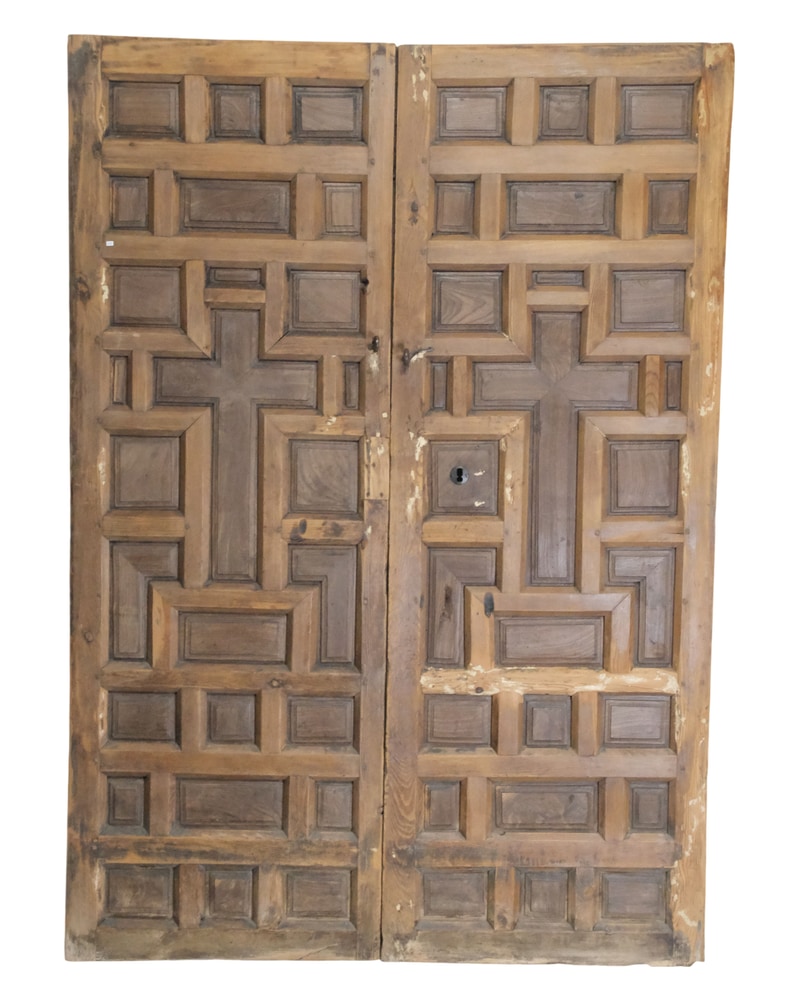
Buying a 17th-century Castilian door or an 18th-century wrought-iron grille for a house in London, Munich or New York is perfectly possible. But a Spanish antique is not just any piece of furniture: if it is more than a hundred years old it is, legally speaking, part of Spain’s Historical Heritage, and its departure from the country is regulated. This guide sums up the essentials so that foreign buyers and sellers know what to expect.
General information, not legal advice
This article explains the general framework. Every case depends on the piece, its history and the destination country. Before committing to an export, check the official information from Spain’s Ministry of Culture or ask a specialist.
The key law: Law 16/1985
The export of cultural goods is governed by the [Spanish Historical Heritage Act, Law 16/1985 of 25 June](https://www.boe.es/buscar/act.php?id=BOE-A-1985-12534) and its implementing regulations. The law defines export as leaving Spanish territory, so the control also applies when the piece travels to another European Union country, not only when it leaves the EU.
The practical rule to remember is simple: movable goods more than a hundred years old need express, prior authorisation to leave Spain. So do goods of any age that are listed in the General Inventory of Movable Property. A piece that is sixty or eighty years old and not inventoried does not, in principle, require this permit.
What cannot leave permanently
Goods declared to be of cultural interest (Bien de Interés Cultural, BIC), and those for which that declaration has been opened, cannot be exported permanently. Temporary exits may be allowed in specific cases, for example for an exhibition, but never a sale abroad. That is why it is important to ask the seller whether the piece has any specific protection.
Some categories are specially protected by law even without an individual declaration. A classic example is coats of arms, emblems and heraldic stones: if a piece of this kind comes from a façade, its origin should be very well documented before its sale or export is considered.
How the permit is requested
The application is filed by the owner of the piece, usually the dealer before delivery. It is examined by the Board for the Classification, Valuation and Export of Spanish Historical Heritage Goods (Junta de Calificación, Valoración y Exportación), which reports to the Ministry of Culture. The application usually includes:
- Clear photographs of the piece, overall and in detail.
- A description with materials, dimensions, approximate date and known provenance.
- The value the applicant declares for the piece.
- The destination country and whether the exit is permanent or temporary.
The declared value has a consequence many buyers are unaware of: the law treats it as an irrevocable offer of sale to the State. If the authorities do not authorise the export, they have six months to accept that offer and keep the piece at the declared value. That is why the value must be realistic and consistent with the sale price, neither inflated nor understated.
The law also provides for a tax on the export of certain goods, calculated on the declared value and payable when the authorisation is granted. Whether it applies depends on the case and the destination, so it is worth confirming with the authorities or the seller whether it affects the specific piece and who pays it.
If the destination is outside the European Union
When a piece leaves the EU, European rules on the export of cultural goods also come into play, requiring an export licence for certain categories depending on age and value. In practice, the Spanish permit and the EU licence are processed together, and the licence travels with the shipment through the customs office of exit.
On arrival, the buyer should allow for their own country’s import taxes. Many customs authorities classify antiques over a hundred years old under a specific tariff heading (9706), which receives favourable treatment in several countries. Rates vary from one country to another, so it is sensible to check before completing the purchase.
Materials with their own rules
Some materials are subject to international controls regardless of the age of the piece. This is the case with ivory, tortoiseshell and certain protected tropical woods. If an antique includes any of them, even in marquetry or a small detail, it may need additional documentation. We explain this in more detail in our guide to antique ivory and Spanish law.
Timing and planning
The permit is not immediate. Expect the process to take weeks, sometimes longer, depending on the time of year and the Board’s workload. If the piece is intended for a project with a deadline, start the process as soon as the purchase is agreed and schedule transport for after the authorisation has been granted.
- Ask the seller for the approximate age of the piece and whether it has any special protection.
- Agree who files the application and who pays the costs.
- Set a realistic declared value, consistent with the price.
- Arrange packing and transport only once the permit has been granted.
- Keep all the paperwork: it travels with the piece and you will need it at customs and in the future.
What Antiga does and does not do
On Antiga, every piece shows its dimensions, an estimated shipping cost and a way to contact the dealer directly from the listing. The seller knows the history of the piece and, where needed, files the export application. Antiga does not process permits on behalf of buyers; what we can do is help you find the right piece and talk to the seller before you commit.
Before buying for another country
Write to the seller from the piece’s listing and ask about its age, its provenance and how long the export permit will take. A clear answer is the best sign of a serious dealer.
See antique Spanish doors →Explore the catalogue
Related pieces

Castilian Door, 17th Century with Central Cross
Doors & Architectural
18th Century · Spain
Walnut and old Castilian pine panels
Portantica · Madrid
1.475 €
Iron Grille, 18th Century
Metalwork & Ironwork
18th Century · Spain
Wrought iron with historical patina.
Portantica · Madrid
4.500 €
18th Century Cordoban Balcony in Wrought Iron
Doors & Architectural
18th Century · Córdoba, España
Wrought iron
Portantica · Madrid
900 €
18th Century Castilian Paneled Door
Castilian Doors
18th Century · Spain
Solid oak
Portantica · Madrid
590 €
Iron Grille, 17th Century
Metalwork & Ironwork
17th Century · Spain
Wrought iron with original patina.
Portantica · Madrid
1.880 €
18th Century Iron Balustrade with Castilian Decorations
Metalwork & Ironwork
18th Century · Madrid, España
Wrought iron
Portantica · Madrid
700 €
