
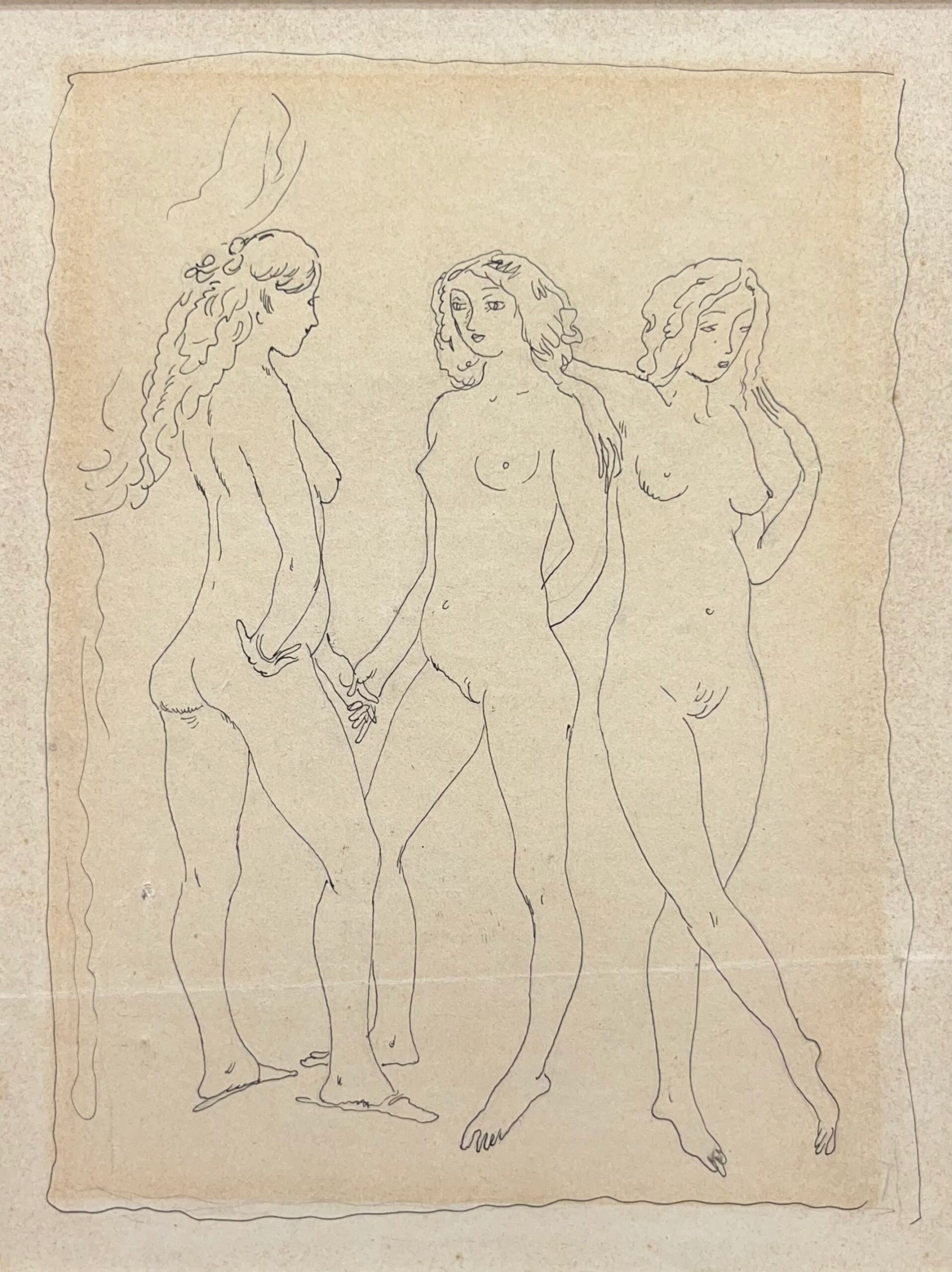
Pascin – Le tre Grazie
Prezzo indicativo dell'antiquario
7.500 €

Non serve un account. L'antiquario Le risponde direttamente.
Antiga non partecipa all'acquisto. Prezzo, pagamento e consegna si concordano direttamente con l'antiquario.
- Indirizzo
- Calle Ribera de Curtidores 29, 28005 MadridIndicazioni ↗
- Telefono
- +34694275594
- Sito web
- ladron-de-guevara.de
Riepilogo del pezzo
Pascin – Le tre Grazie è un pezzo antico offerto da Ladrón de Guevara Fine Arts a Madrid.
- Che cos'è
- Pascin – Le tre Grazie (Arte)
- Antiquario e città
- Ladrón de Guevara Fine Arts, Madrid
- Disponibilità
- In vendita
- Prezzo indicativo dell'antiquario
- 7.500 €
- Come contattare
- Con i pulsanti di contatto di questa scheda. Antiga non interviene nell'acquisto: prezzo, pagamento e consegna si concordano direttamente con l'antiquario.
Descrizione
Jules Pascin, alias Julius Mordecai Pinkas
(1885 Widin – 1930 Paris)
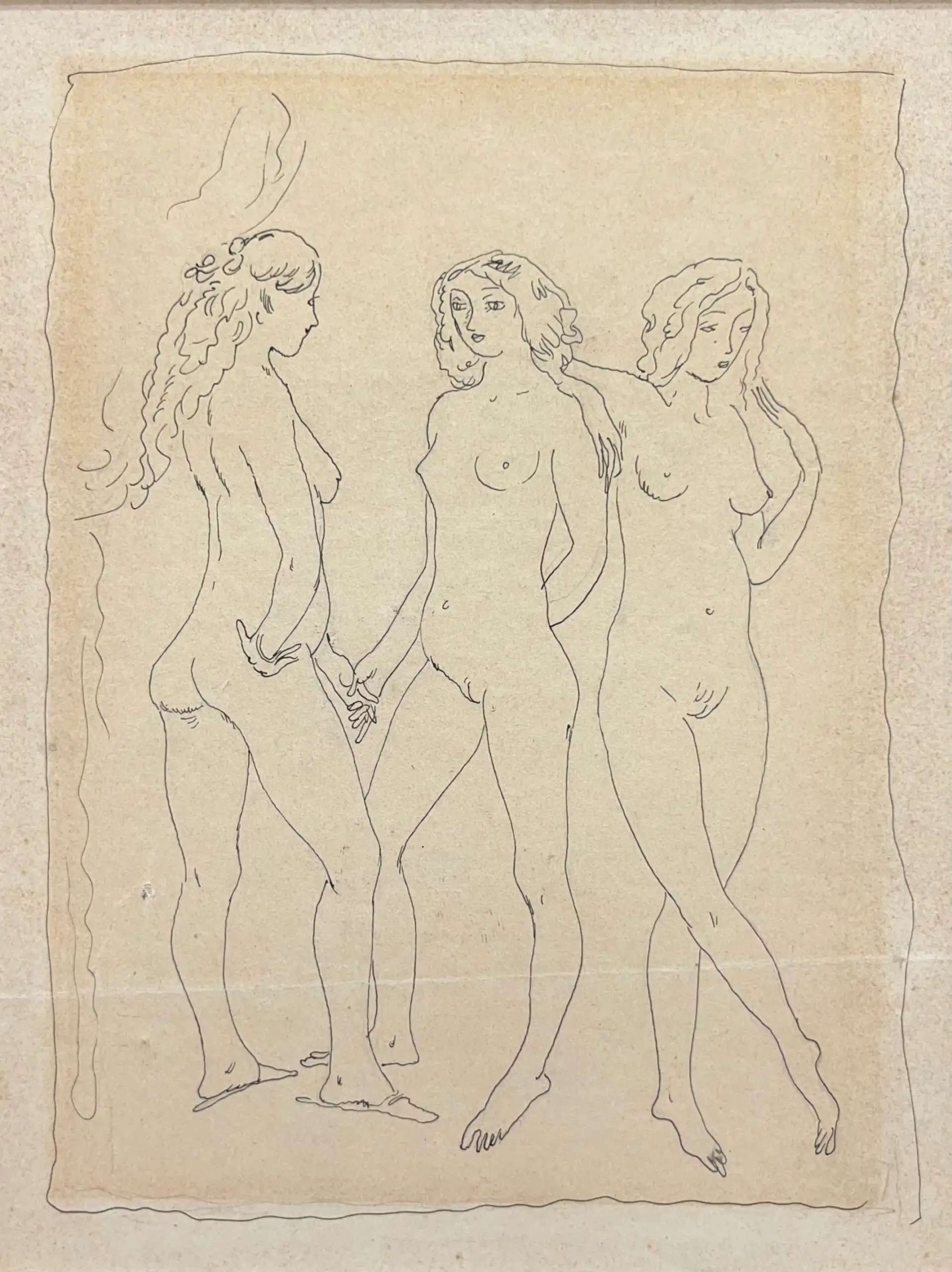
THE THREE GRACES
Drawn in Paris in 1907
Black ink on paper, 18 x 11 cm (passe-partout cut-out)
Provenance:
Frederic Stern Collection, Paris
Exhibition & Literature:
Paris, Galerie Romanet, Trois cents aquarelles et dessin. Renoir à Picasso, 1963
Expertise by Rosemarie Napolitano from the Comité Pascin, Paris, 26 November 2024
Ernest Hemingway befriended Pascin in Paris in the 1920s and dedicated a chapter to him in ‘A Moveable Feast’. ‘Pascin was a very good painter, and he was drunk, constantly, deliberately drunk, but with a clear mind.’ In fact, despite or perhaps because of his condition, Pascin painted like a man possessed, producing thousands of paintings and sketches, painting against the depression that he succumbed to in 1930.
Jules Pascin's expressionist work revolves around the erotic female nude. Apart from portraits, he painted little else, causing a sensation in Paris, especially in the 1920s. His ‘Three Graces’ were created during his early days in Paris, where, after completing his academic training in Bucharest, Vienna, Munich and Berlin, he attended the Ecole Matisse from 1905 onwards and worked as an illustrator. In Munich, he had worked for the satirical magazine Simplicissimus, joined the Secession in Berlin and become acquainted with German Expressionism. Both had an influence on his work. He was particularly influenced by the cheeky erotic works of George Grosz and Otto Dix.
Since ancient times, ‘The Three Graces’ have been an integral part of art. There is hardly an artist who has not attempted this motif. Compared to Thorvaldsen's Graces, for example, Pascin's appear rather casual. At first glance, they are just three young beauties with their hair down, one wearing slippers, but immediately recognisable as ‘The Three Graces’ due to the pictorial tradition. Pascin followed the academic tradition with a mocking wink. Ultimately, the motif has always been a welcome opportunity to nip any protests from guardians of public morality in the bud. Three naked women? No problem, they're goddesses…
Traduzione automatica. Prevale il testo originale del venditore.
Scheda tecnica
- Oggetto
- Art
Pubblicato il 28 marzo 2026
Antiquario
Avvisatemi dei nuovi pezzi
Una volta alla settimana, i pezzi appena pubblicati dagli antiquari. Cancellazione con un clic.
 Nuovo
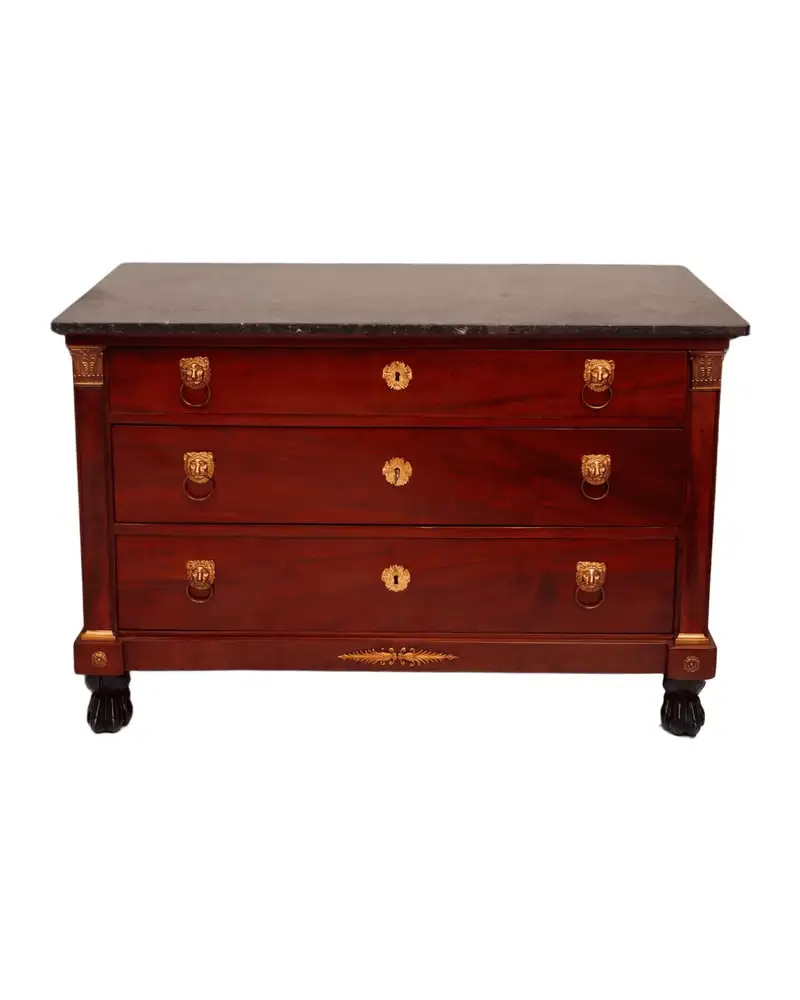
Kommode mit dem Stempel „JACOB R. MESLEE“
Ladrón de Guevara Fine Arts · Madrid
8.500 €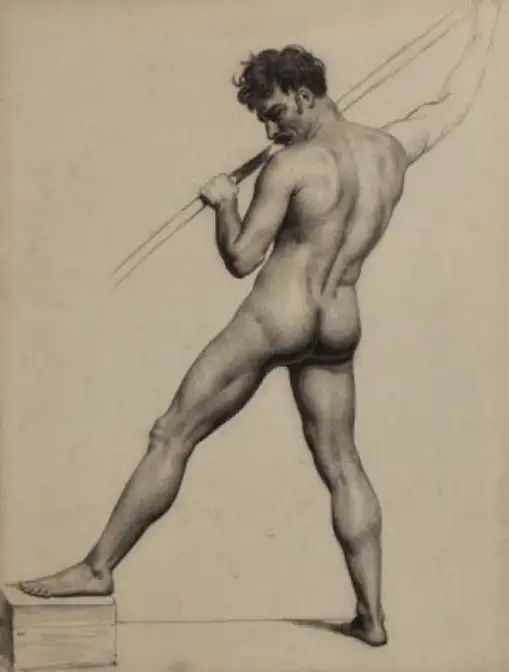 Nuovo
Desnudo masculino
Ladrón de Guevara Fine Arts · Madrid
1.800 €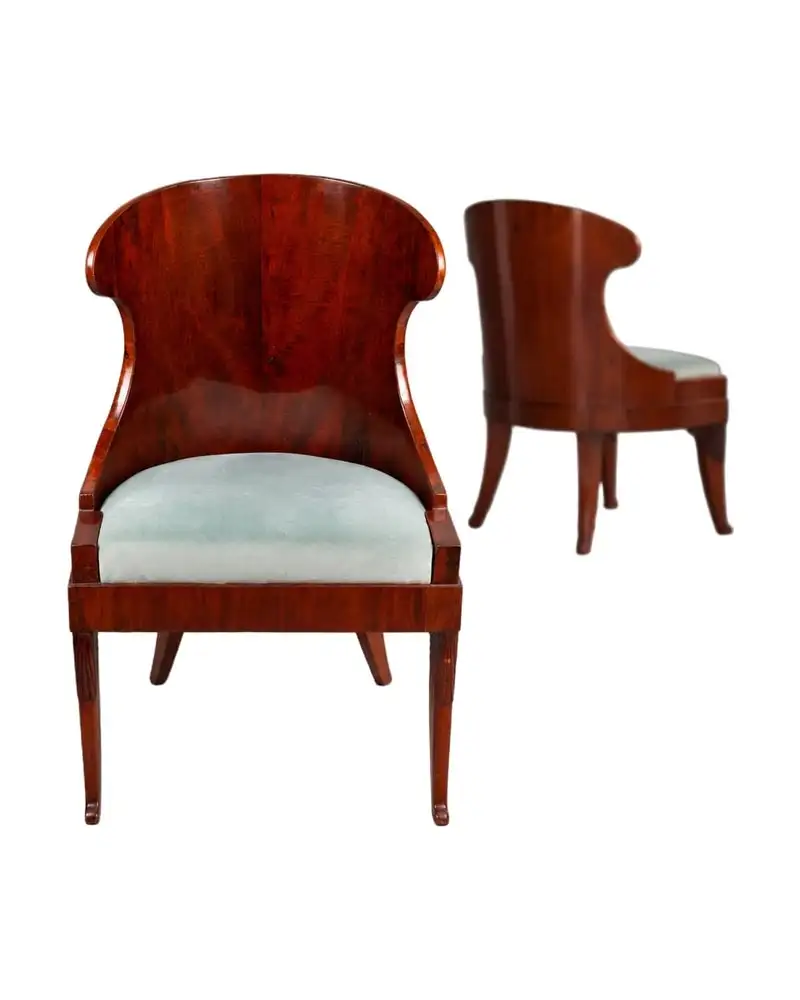 Nuovo
Pair of Russian Armchairs
Ladrón de Guevara Fine Arts · Madrid
6.500 €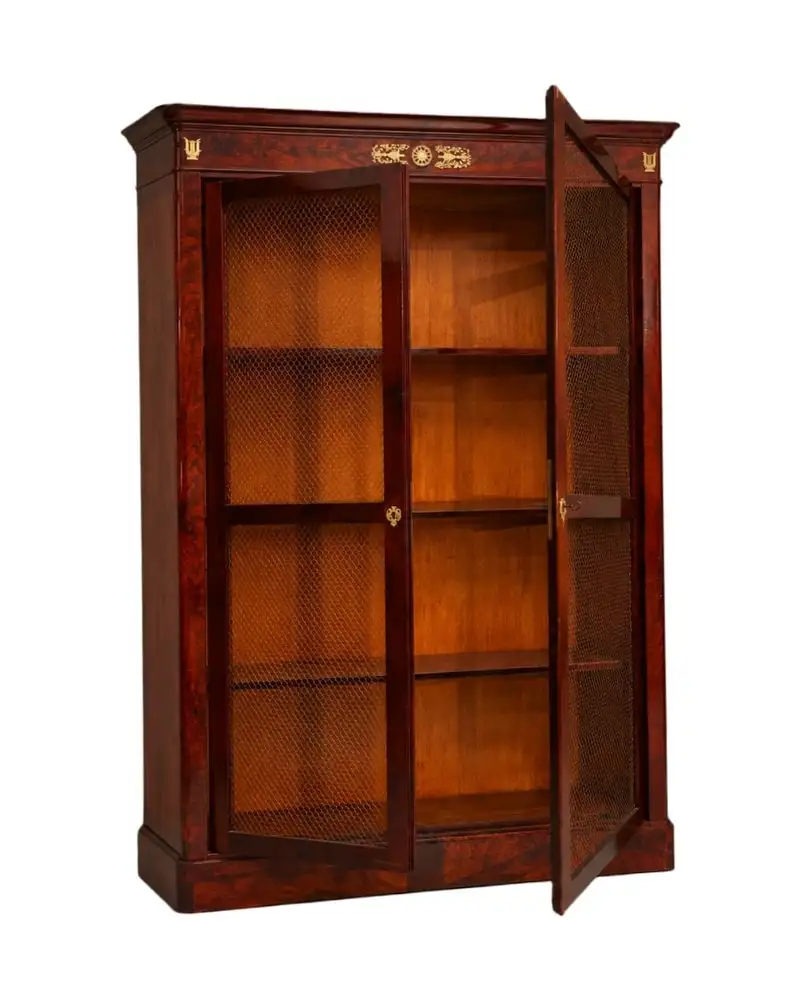 Nuovo
Vitrine Karls X
Ladrón de Guevara Fine Arts · Madrid
9.800 €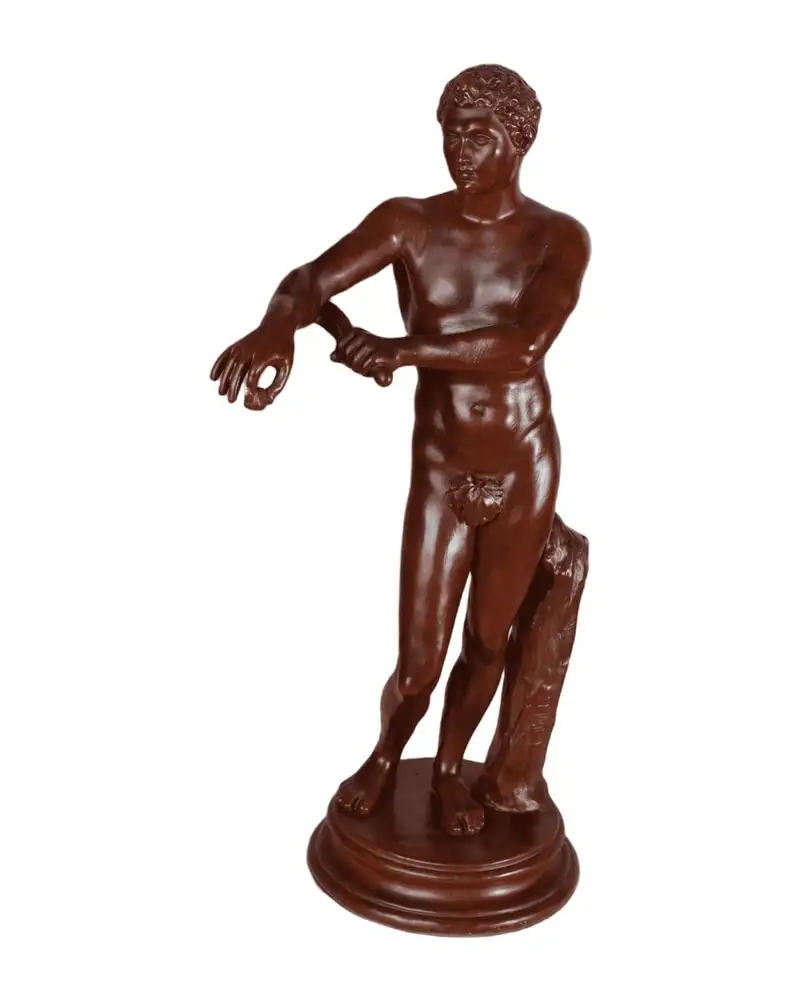 Nuovo
Atleta Apoxiómeno
Ladrón de Guevara Fine Arts · Madrid
850 €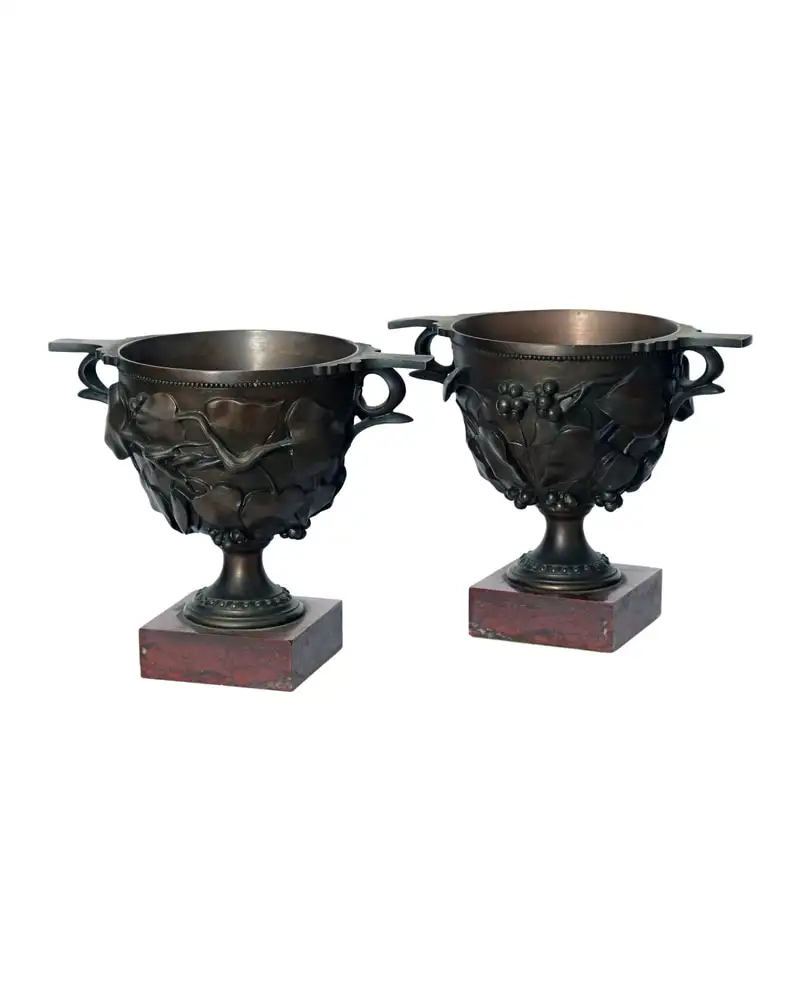 Nuovo
Pareja de copas
Ladrón de Guevara Fine Arts · Madrid
950 € Nuovo
Young Faun with a Flute – Marsias
Ladrón de Guevara Fine Arts · Madrid
1.800 €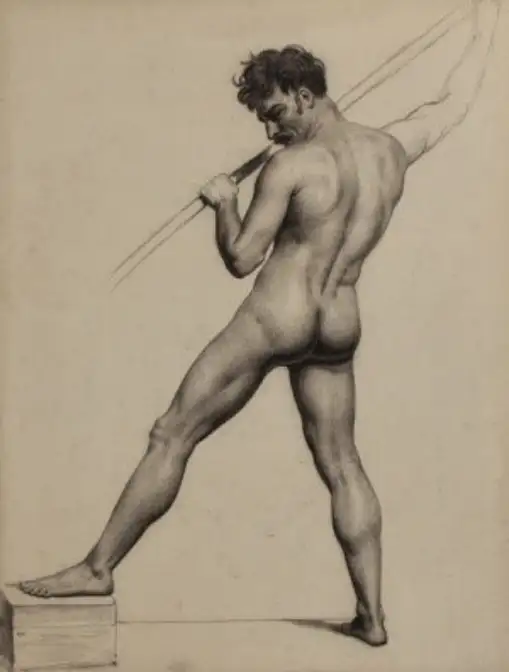 Nuovo
Male Nude
Ladrón de Guevara Fine Arts · Madrid
1.800 €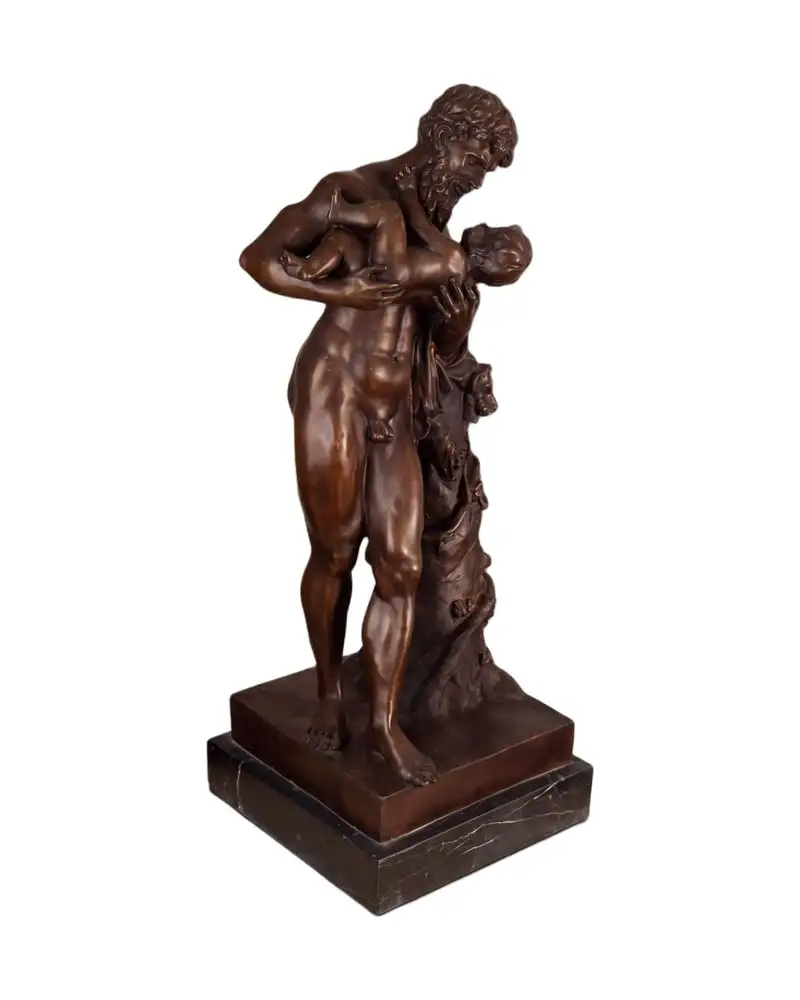 Nuovo
Silenus with the Child Dionysus
Ladrón de Guevara Fine Arts · Madrid
1.900 €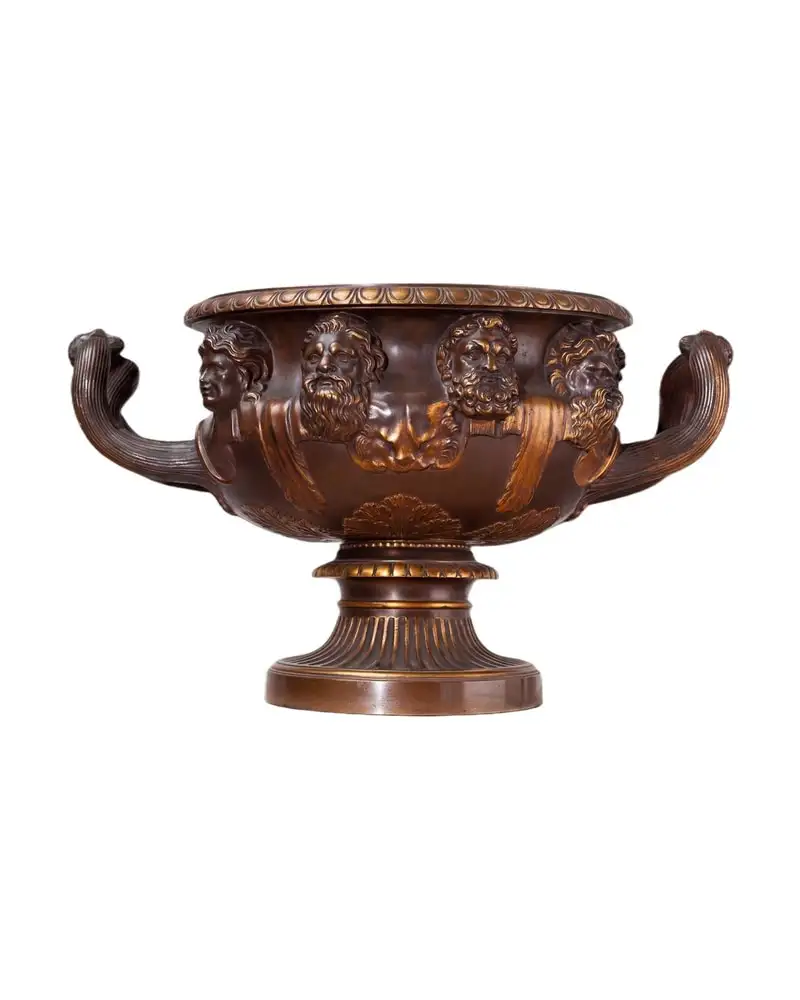 Nuovo
Warwick Vase
Ladrón de Guevara Fine Arts · Madrid
3.800 €
Altri pezzi come questo
Pascin – The Three Graces
Ladrón de Guevara Fine Arts · Madrid
7.500 €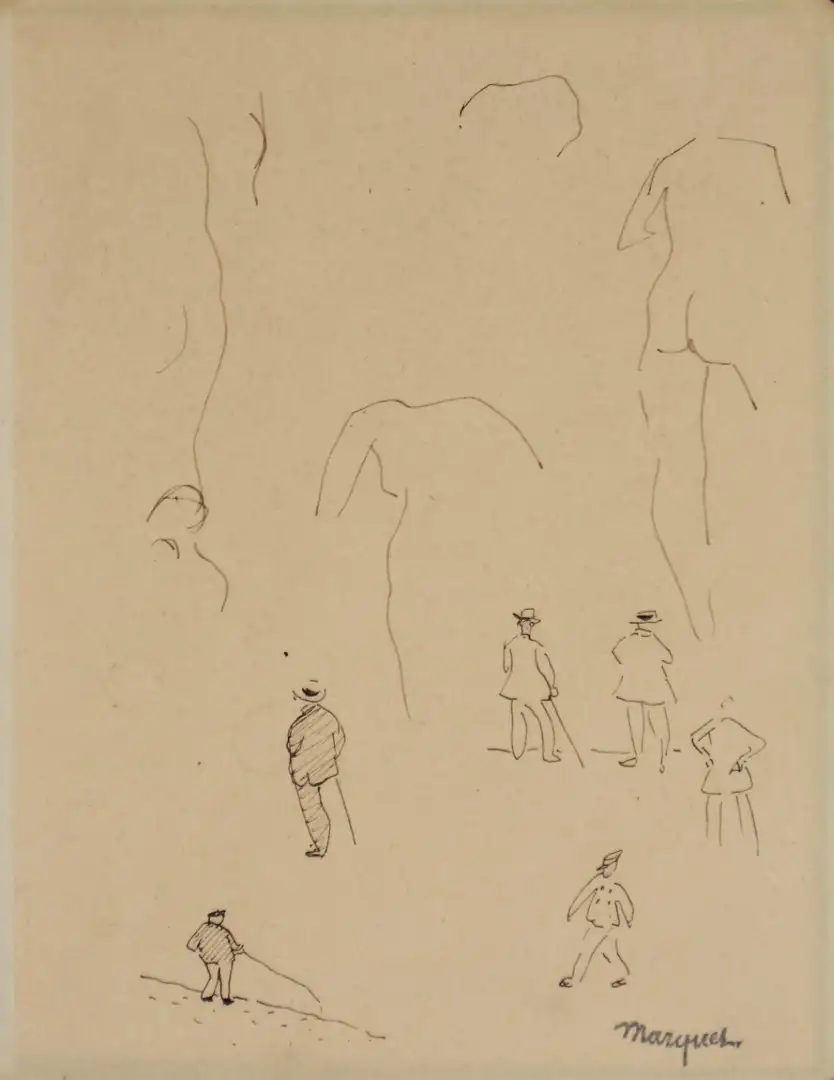
Study by Marquet from the 20th Century: Fishermen, Strollers, and Nudes
Ladrón de Guevara Fine Arts · Madrid
3.000 €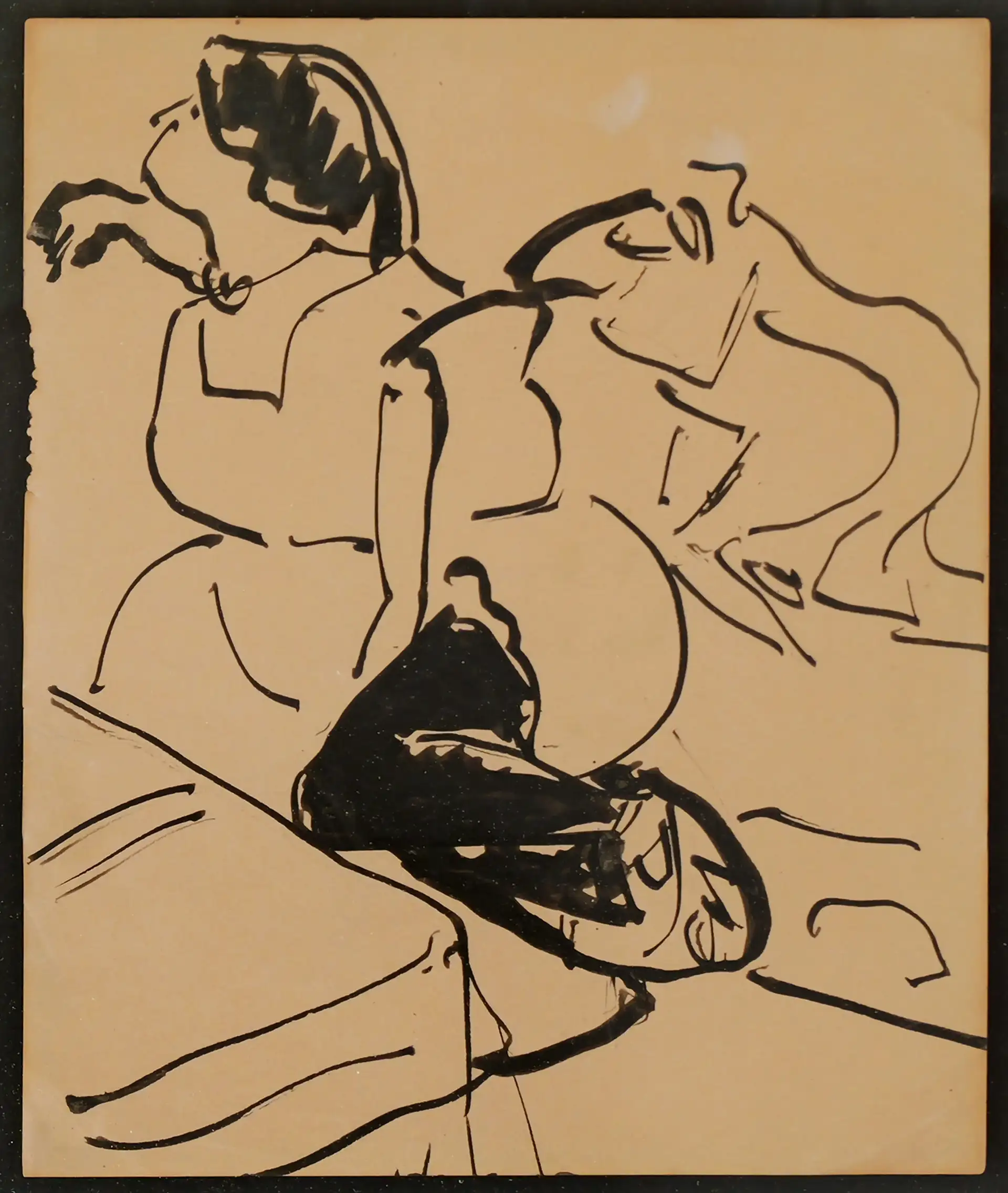
Kirchner – Donne sedute a un tavolo, profilo a sinistra
Ladrón de Guevara Fine Arts · Madrid
18.000 €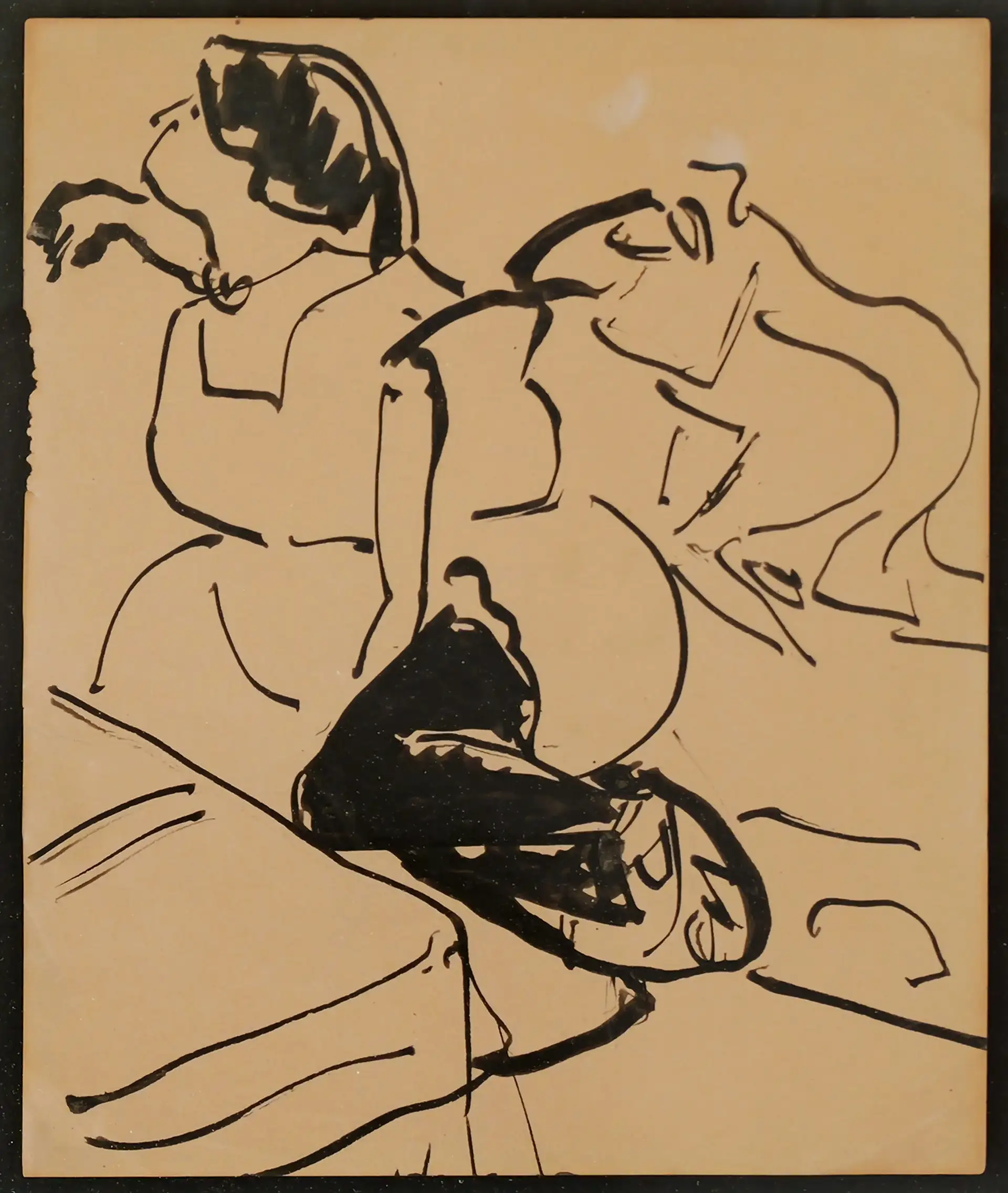
Kirchner – Donne sedute a un tavolo, profilo a sinistra
Ladrón de Guevara Fine Arts · Madrid
18.000 €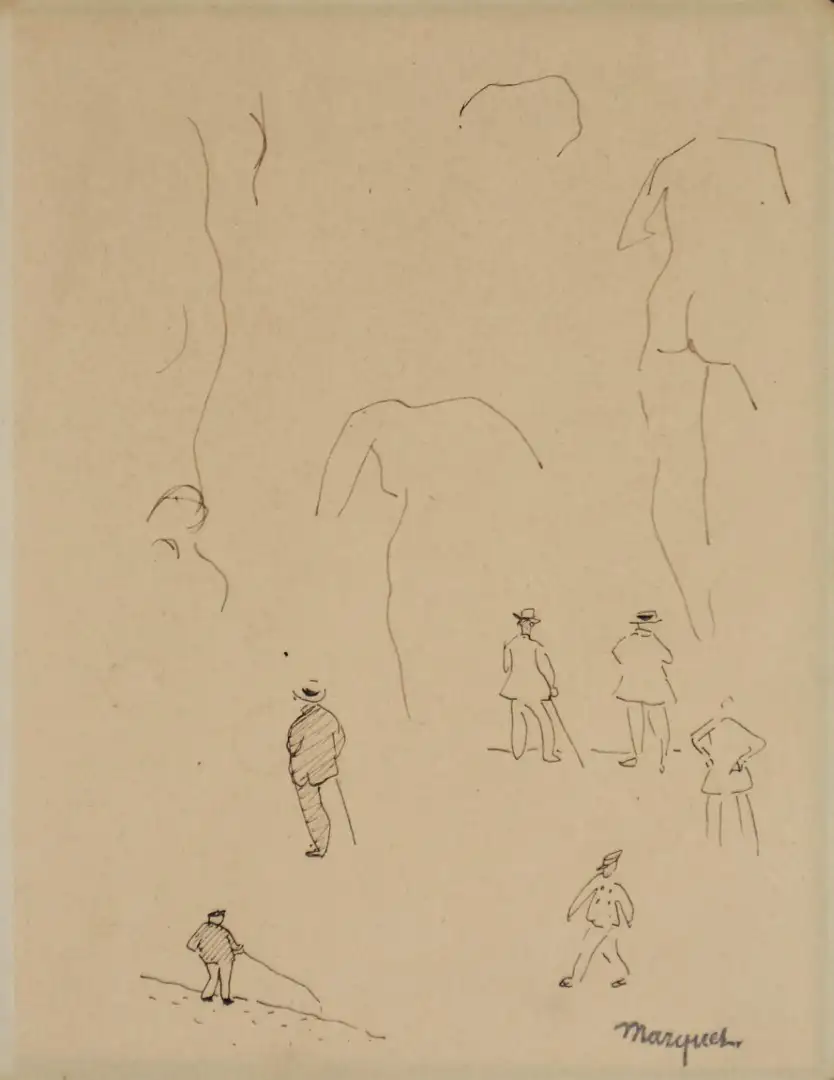
Studio del XX secolo di Albert Marquet in inchiostro su carta
Ladrón de Guevara Fine Arts · Madrid
3.000 €
Disegno di Robert Wessinger del XIX secolo – Nudo femminile seduto
Ladrón de Guevara Fine Arts · Madrid
2.800 €
Seyssaud – Contadini che conversano
Ladrón de Guevara Fine Arts · Madrid
980 €
Olio di César Fernández-Ardavín, Spagna, XX secolo
El Rincón de Viriato · Madrid
600 €