
Authentication
Wrought iron or cast iron: how to tell them apart in antique grilles and balconies
Joints, surface, repeated parts, how the metal behaves when it breaks and tool marks: the differences between wrought and cast iron in antique grilles, balconies and window railings, and how to spot modern ironwork passed off as old.
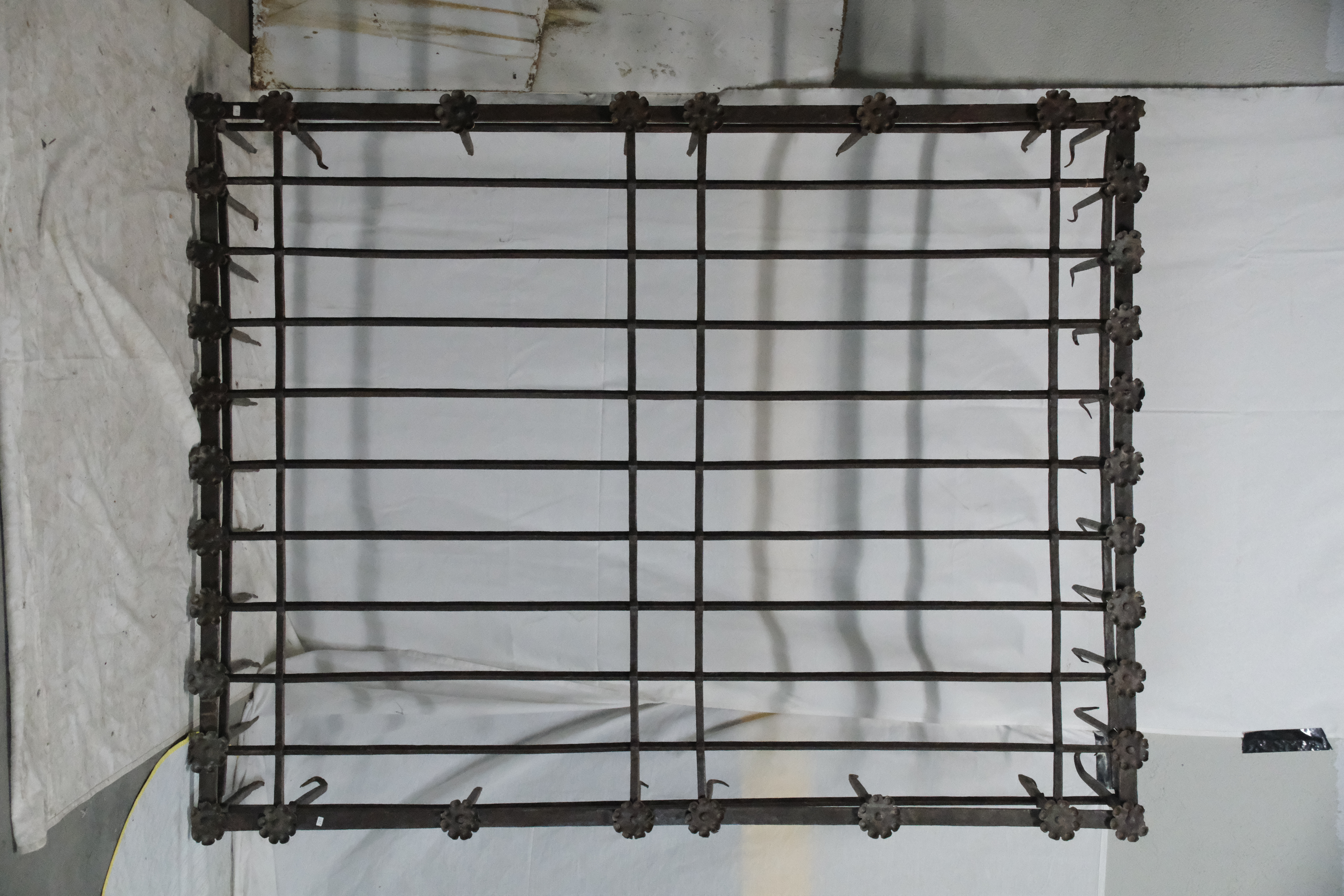
Two ways of working iron live side by side in Spanish architecture. Forging, in which the smith heats the metal and shapes it with a hammer on the anvil, is the method behind Castilian grilles and the balconies of the sixteenth to eighteenth centuries. Casting, in which molten iron is poured into a mould, became widespread with nineteenth-century industrialisation and filled cities with balconies, window railings and balustrades made of repeated parts. Both have value, but they are different things, and knowing how to recognise them helps you date a piece and pay a fair price for it.
Two materials that behave in opposite ways
Traditional wrought iron contains very little carbon. It is tough and malleable: it can be bent, twisted and flattened, and it can be forge-welded in the hearth. Cast iron contains much more carbon, which allows it to fill complex moulds but makes it hard and brittle: it does not bend, it breaks. That difference explains almost all the clues that follow.
How to recognise wrought iron
- Blacksmith’s joints: rivets, clamps or collars holding several bars together, bars passing through others via holes punched while hot, and forge welds with no visible bead.
- Similar parts, but not identical: every scroll, every knot and every leaf was made by hand. If you compare two “identical” elements, you will see small differences in thickness, curvature and length.
- Hammer marks: slightly faceted surfaces, softened edges and sections that vary along the same bar.
- Shapes born of bending and drawing out: C- and S-scrolls, twisted bars, flattened tips and leaves cut from sheet iron.
- Wall fixings: grilles meant to be set into masonry usually have forged claws or lugs around the edge, like this seventeenth-century Castilian grille.
How to recognise cast iron
- Exact repetition: all the balusters, rosettes or panels come from the same mould and are identical.
- Relief that cannot be forged: three-dimensional decoration, plant motifs in relief on both faces, thick and rounded sections.
- Mould line: a small burr or line along the edge, where the two halves of the sand mould met.
- Grainy surface: the texture of the mould sand remains in the metal, especially in unpolished areas.
- Assembly with screws or bolts: cast parts are put together with screws or slotted into place, often on a flat-bar frame.
- Clean breaks: a broken cast piece shows a grainy, grey fracture. A wrought one tends to bend before it breaks.
Many pieces combine both techniques: a wrought frame with cast rosettes, or a cast element completed with forged hooks, like this eighteenth-century fireplace planter. Railings with bars and cast finials, like this nineteenth-century one, are typical of the first industrially or semi-industrially made balconies.
Modern ironwork passed off as old
Much of the “wrought iron” sold today is industrial mild steel with decorative elements bought from a catalogue and joined with electric welding. You can recognise it by:
- Weld beads visible at the joints, sometimes ground down but with the trace still visible.
- Perfectly regular bars, square in section with sharp edges and identical dimensions along their whole length.
- Identical spear tips, leaves and scrolls, machine-stamped.
- “One-year-old” rust: an even, superficial reddish layer, without the loss of material or the deep patina of centuries.
Electric welding on an antique grille does not always mean a fake: it may be a twentieth-century repair. But it is worth knowing where it is and what it replaces. In our guide to antique wrought-iron grilles we explain the marks of genuine forging in more detail.
What changes in restoration and use
Wrought iron can be reheated, straightened and welded in the forge, and a traditional blacksmith can replace missing elements. Cast iron is more delicate: a crack cannot be straightened out, and repairing it requires specific techniques. Before buying a cast piece, check carefully that it has no cracks, especially at the fixing points.
In both cases, cleaning should remove loose rust without stripping the surface, and the finish should protect without concealing. Before deciding where a grille or balcony will go, measure the opening and the thickness of the wall carefully: we explain how in measure before you buy.
Quick checklist before buying
- Ask for close-up photos of several joints.
- Compare two “identical” elements: are they identical or merely similar?
- Look for rivets, collars and through-bars, or for screws and mould lines.
- Find any electric welding and ask what it repairs.
- On cast pieces, check for cracks and inspect the fixings.
- Ask for exact measurements of the whole piece and of the fixings.
Frequently asked questions
Is wrought iron worth more than cast iron?
In general, a well-preserved antique wrought grille fetches more than a mass-produced cast piece. But a complete, well-designed nineteenth-century cast balcony can be worth more than a simple, heavily repaired wrought grille.
How do I know a grille is iron and not another metal?
A magnet settles it: iron and steel are magnetic. After that, the joints and the surface will tell you whether it is wrought iron, cast iron or modern steel.
Can a broken cast-iron balcony be welded?
Yes, but not in the same way as wrought iron. It needs a workshop experienced with cast iron, and sometimes it is better to reinforce the piece or recast the missing element.
Antique grilles, balconies and railings
Castilian grilles from the sixteenth to the eighteenth century, Andalusian balconies and nineteenth-century railings, with measurements and detail photos. You can ask the seller for photos of the joints before buying.
See grilles and balconies →Explore the catalogue
Related pieces

17th Century Castilian Grille in Wrought Iron
Metalwork & Ironwork
17th Century · Cuenca, España
Solid wrought iron
Portantica · Madrid
1.250 €
Iron Grille, 18th Century
Metalwork & Ironwork
18th Century · Spain
Wrought iron with historical patina.
Portantica · Madrid
4.500 €
Wrought Iron Balcony from the 18th Century
Metalwork & Ironwork
18th Century · Castilla, España
Wrought iron
Portantica · Madrid
1.400 €
17th Century Forged Iron Balustrade
Metalwork & Ironwork
17th Century · Cuenca, Castilla
Forged iron
Portantica · Madrid
750 €
19th Century Wrought Iron Modernist Balcony
Metalwork & Ironwork
19th Century · Andújar, Jaén
Solid wrought iron
Portantica · Madrid
2.950 €
19th Century Cast Iron Balustrade for Balcony
Metalwork & Ironwork
19th Century · Castilla, España
Cast iron
Portantica · Madrid
700 €
18th Century Cast Iron Fireplace Planter
Metalwork & Ironwork
18th Century · Cuenca, Guadalajara
Cast iron
Portantica · Madrid
1.250 €
Iron Window or Wheel, 17th Century
Metalwork & Ironwork
18th Century · Andalucía, España
Wrought iron with natural patina.
Portantica · Madrid
495 €