
Authentication
Bronze or spelter: how to tell what metal an antique sculpture is made of
Weight, colour beneath the patina, sound, interior, chasing and foundry marks: how to tell a bronze sculpture from one in spelter or resin, what the Barbedienne and Collas seals mean, and why spelter has its own market too.
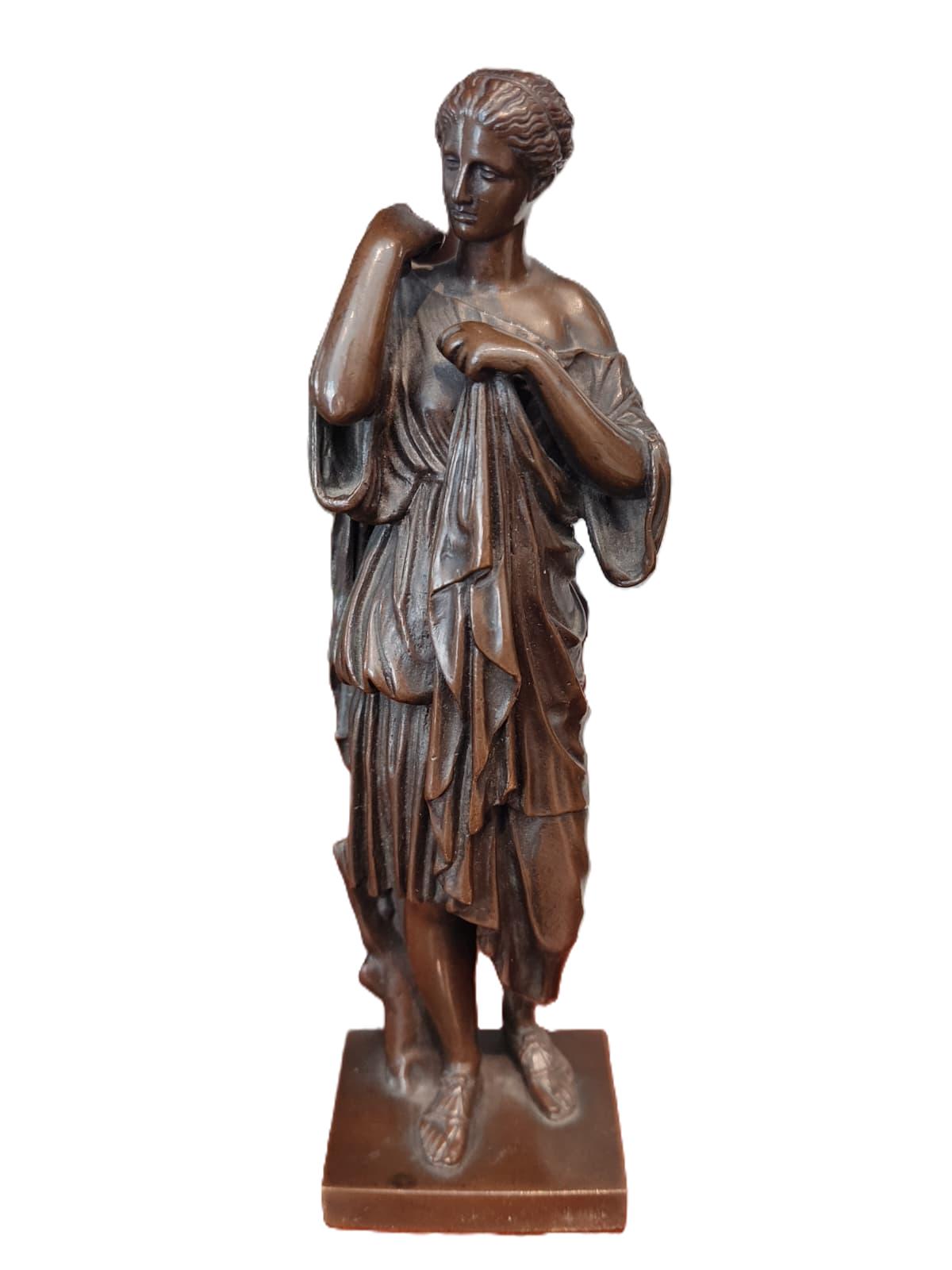
In the nineteenth century, salon sculptures became a consumer object: mythological figures, animals, busts and reductions of classical statues filled mantelpieces and console tables all over Europe. Many were cast in bronze, and many others in spelter, a far cheaper zinc alloy that was patinated to look like bronze. In Spanish it is called calamina and in French régule. Telling them apart is the first question to ask of any metal sculpture, because a large part of the price depends on the answer.
What each material is
- Bronze: an alloy of copper and tin, sometimes with other metals. It is dense and strong, and it allows very fine chasing after casting.
- Spelter: zinc or zinc alloys. Lighter, softer and more brittle. It melts at a lower temperature, which made mass production cheaper.
- Resin or “cold-cast bronze”: resin mixed with metal powder, typical of the second half of the twentieth century onwards. Light and warm to the touch.
The checks, one by one
1. Weight
Bronze is considerably denser than zinc. For the same size, a figure in solid or thick-walled bronze is clearly heavier than one in spelter. Resin weighs even less. It is only a rough test, because many bronze sculptures are hollow, but when you lift two similar pieces the difference is usually noticeable.
2. The colour of the metal beneath the patina
This is the most revealing test. Look for a spot where the patina is already worn or chipped: the underside of the base, a rubbed edge, the inside of a screw hole. Bronze shows through with a golden or reddish tone. Spelter, on the other hand, reveals a silvery grey metal. If there is no visible spot, ask the seller’s permission before scratching, and do so only in a hidden area.
3. Sound
Tapped gently with a knuckle or with a coin wrapped in cloth, bronze answers with a clear, sustained note. Spelter sounds duller and shorter. Resin barely resonates.
4. The interior and the joins
Look underneath the base. Spelter pieces often show thin walls, soldered joins and a threaded iron rod fixing the figure to its plinth. Well-cast bronze usually has thicker walls and parts joined with tight-fitting pins or screws. A magnet cannot tell bronze from spelter, because neither is magnetic; it only detects the iron parts.
5. Chasing and finish
Once a bronze had been cast, the chaser went over the hair, fingers, folds and textures by hand. That work gives good bronzes their crisp, lively contours. On spelter, chasing is usually minimal, the details remain softer and the patina, often a paint or a varnish, covers the surface more uniformly.
Signatures and foundry seals
Many nineteenth-century sculptures bear the sculptor’s signature on the model and, sometimes, the foundry seal. One of the best known is that of Ferdinand Barbedienne, a Parisian founder who went into partnership with Achille Collas, inventor of a machine for reducing sculptures to scale. Thanks to that system, Barbedienne sold reductions of famous statues, often with a small round seal mentioning the “réduction mécanique A. Collas”. Our catalogue has several examples, such as the Diana of Gabii signed Barbedienne or the Wounded Amazon.
Reductions of classical works, such as the Spinario in the Capitoline Museums or the Dying Gaul, were among the great subjects of salon sculpture and still have a large following.
Beware of added signatures and casts
A famous signature guarantees nothing on its own. There are after-casts (surmoulages): copies made by taking a mould from a finished bronze. Because metal shrinks as it cools, the after-cast comes out slightly smaller than the original, with softer details and the signature copied along with everything else. If you know the published dimensions of a model, compare them: a difference of a few centimetres on a medium-sized piece is reason to investigate.
Spelter has value too
A sculpture being in spelter does not make it a fake. It was a legitimate material, widely used for decorative figures, mantel clocks and lamps from the mid-nineteenth century onwards and in many Art Deco figures. A good spelter piece, well modelled, signed and with its original patina, such as this bird sculpture signed Lechesne, has its market. What matters is that the listing states clearly what material it is and that the price reflects it.
A practical point: spelter is brittle. Do not try to straighten a bent arm or tighten a loose part, because it may snap. To clean a bronze sculpture, follow the advice in our guide on how to clean antique bronze. Spelter should be cleaned only with a dry cloth.
Quick checklist before buying
- Ask for the exact weight and dimensions of the sculpture.
- Ask for a photo of the underside of the base and of any area without patina.
- Check the colour of the metal: golden or reddish (bronze), grey (spelter).
- Look at the chasing on the hands, hair and folds.
- Look for a signature and foundry seal, and compare the dimensions with the published model.
- Ask whether the base and the screws are original.
Frequently asked questions
How can I tell whether a figure is bronze without damaging it?
Combine weight, sound and the colour of the metal at a spot that is already worn, such as the base. If you are still unsure, an antiques dealer or a metals conservator can confirm it without leaving a mark.
Does a magnet tell you whether it is bronze?
Only to rule out iron. Neither bronze nor spelter is magnetic, so a magnet cannot tell them apart.
What does “Barbedienne foundry” mean?
That the piece came, or claims to have come, from the Parisian workshop of Ferdinand Barbedienne, one of the most prestigious founders of the nineteenth century. As with any signature, it is worth checking it alongside the quality of the casting and the dimensions.
Bronzes and sculptures in the catalogue
Classical reductions by Barbedienne, animalier figures, nineteenth-century bronzes and signed spelter pieces, with dimensions and detail photos. You can ask the seller for the weight or a photo of the base before buying.
See antique bronzes →Explore the catalogue
Related pieces
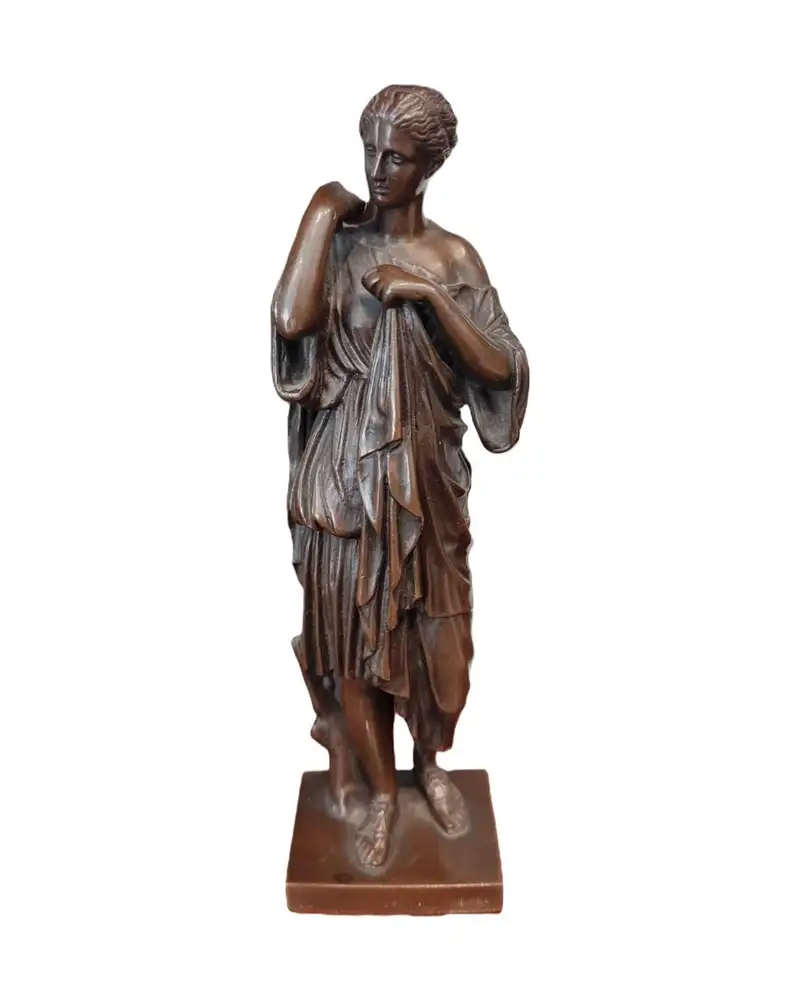
Sculpture Diana of Gabii from the 19th Century in Bronze
Decorative Objects
19th Century · France
Bronze
Ladrón de Guevara Fine Arts · Madrid
680 €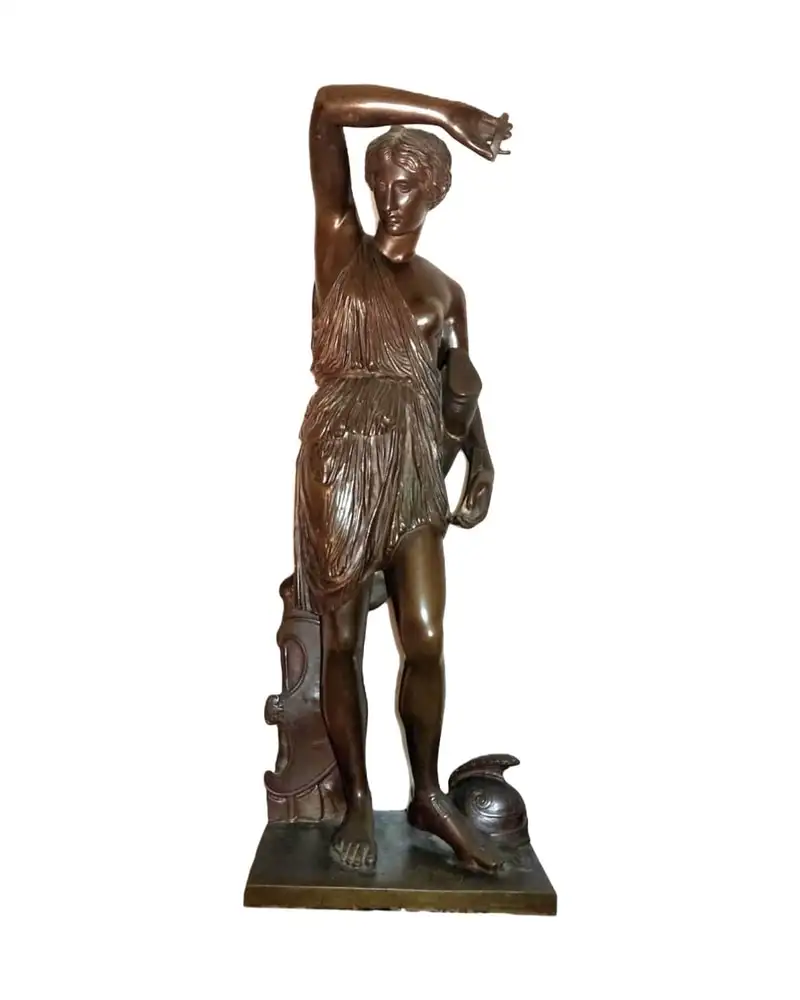
Wounded Amazon Sculpture from the 19th Century in Bronze
Decorative Objects
19th Century · France
Bronze
Ladrón de Guevara Fine Arts · Madrid
1.600 €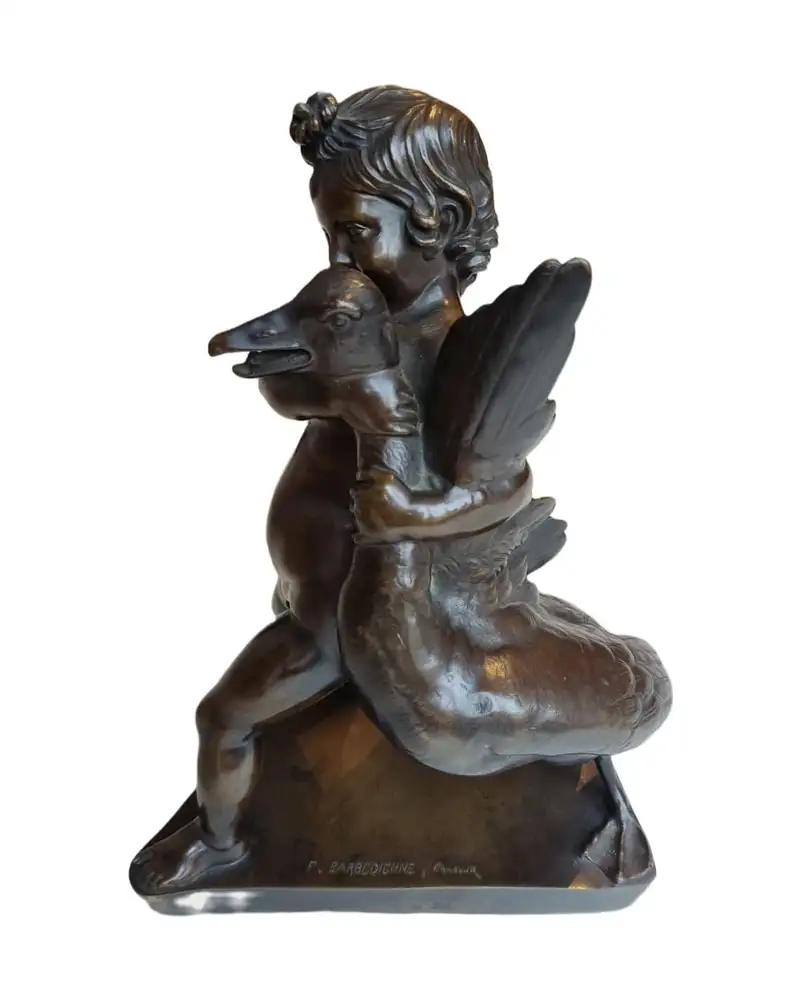
19th Century Bronze Sculpture of Hercules with Goose
Decorative Objects
19th Century · París
Bronze
Ladrón de Guevara Fine Arts · Madrid
1.800 €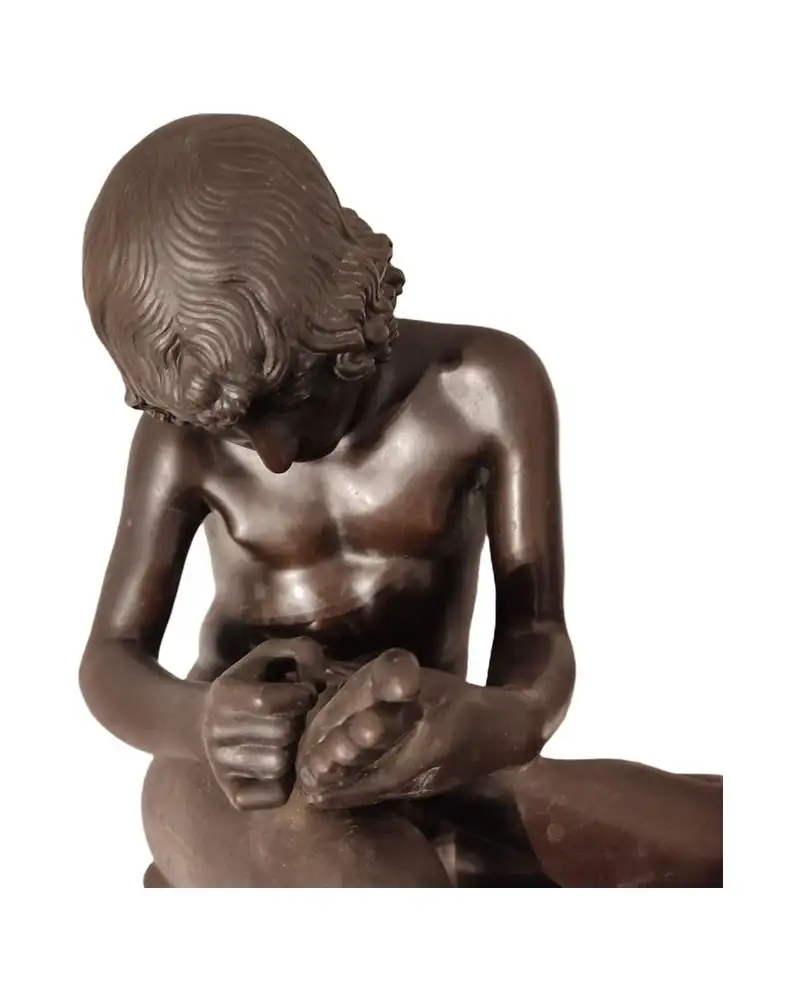
19th Century Espinario Sculpture in Bronze
Decorative Objects
19th Century · France
Bronze
Ladrón de Guevara Fine Arts · Madrid
1.600 €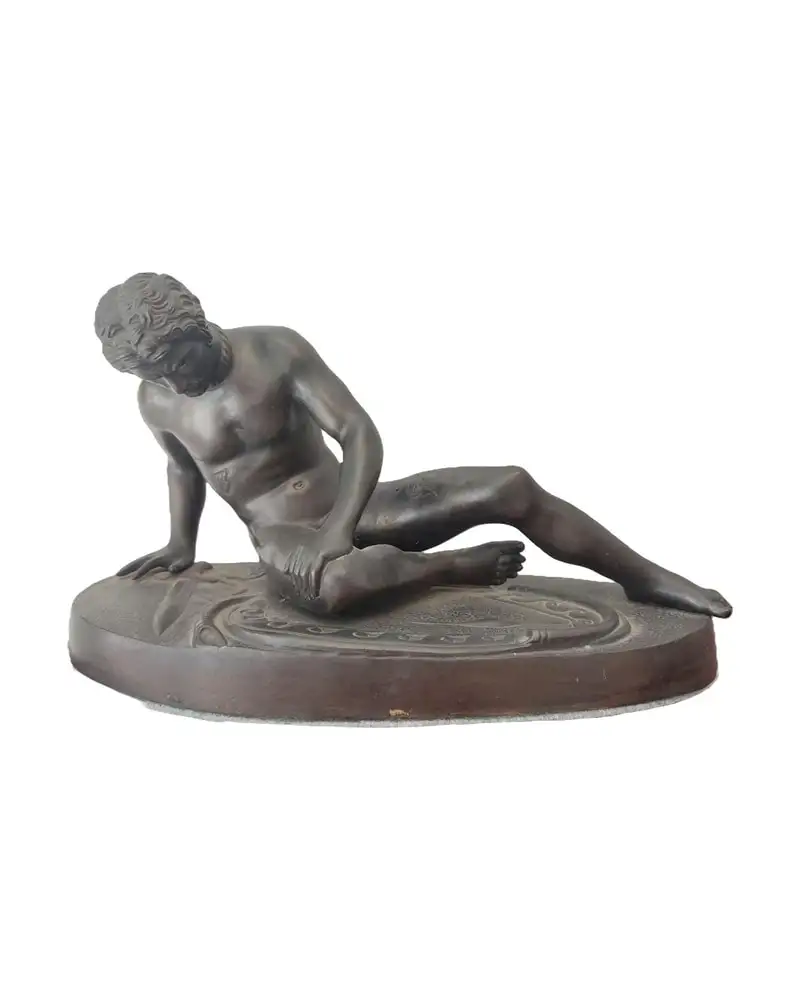
19th Century Dying Galatian Sculpture in Bronze
Decorative Objects
19th Century · France
Bronze
Ladrón de Guevara Fine Arts · Madrid
480 €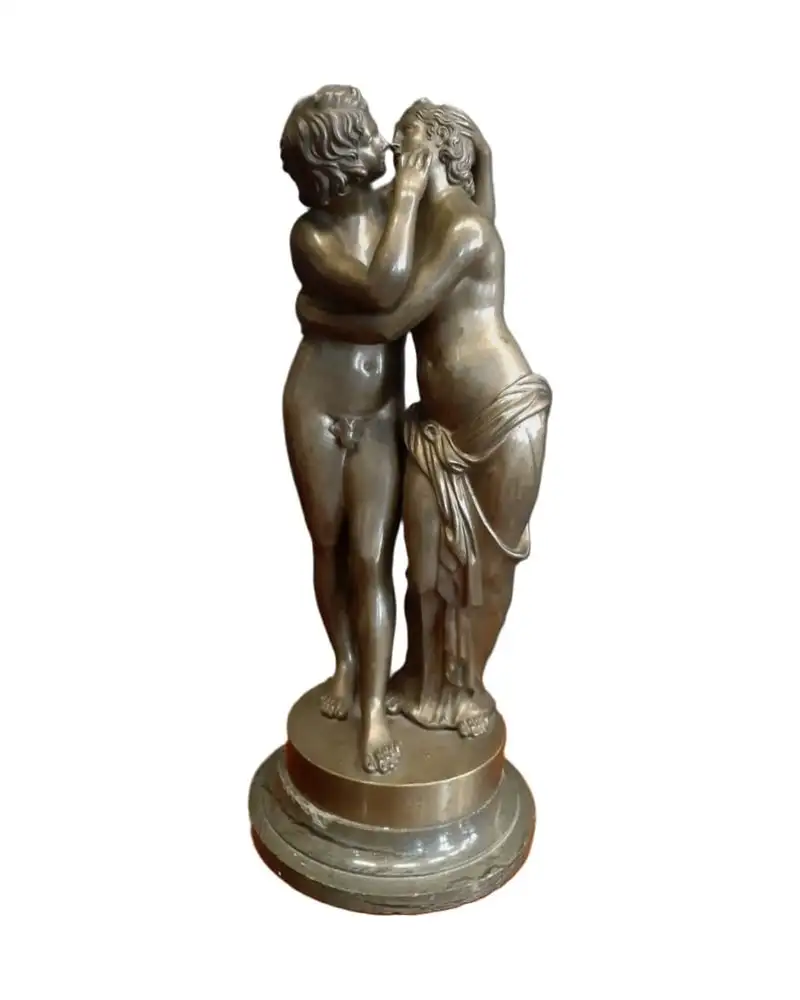
Sculpture of Cupid and Psyche in 19th Century Bronze
Decorative Objects
19th Century
Bronze
Ladrón de Guevara Fine Arts · Madrid
1.800 €
Bird Sculpture in Tin from the 20th Century
Decorative Objects
First half of the 20th Century · France
Tin
Mercedes Cabeza de Vaca · Madrid
2.500 €
20th Century Bronze Dog Statue P.Courtier
Decorative Objects
France
Bronze, green marble
Mercedes Cabeza de Vaca · Madrid
470 €