
Restoration
How to restore an antique wooden door without losing its value
Assessment, woodworm, stripping, joints, ironwork and finish: the steps to bring an antique wooden door back to life, the mistakes that cost it most value and how to fit it to a modern opening without cutting it down.
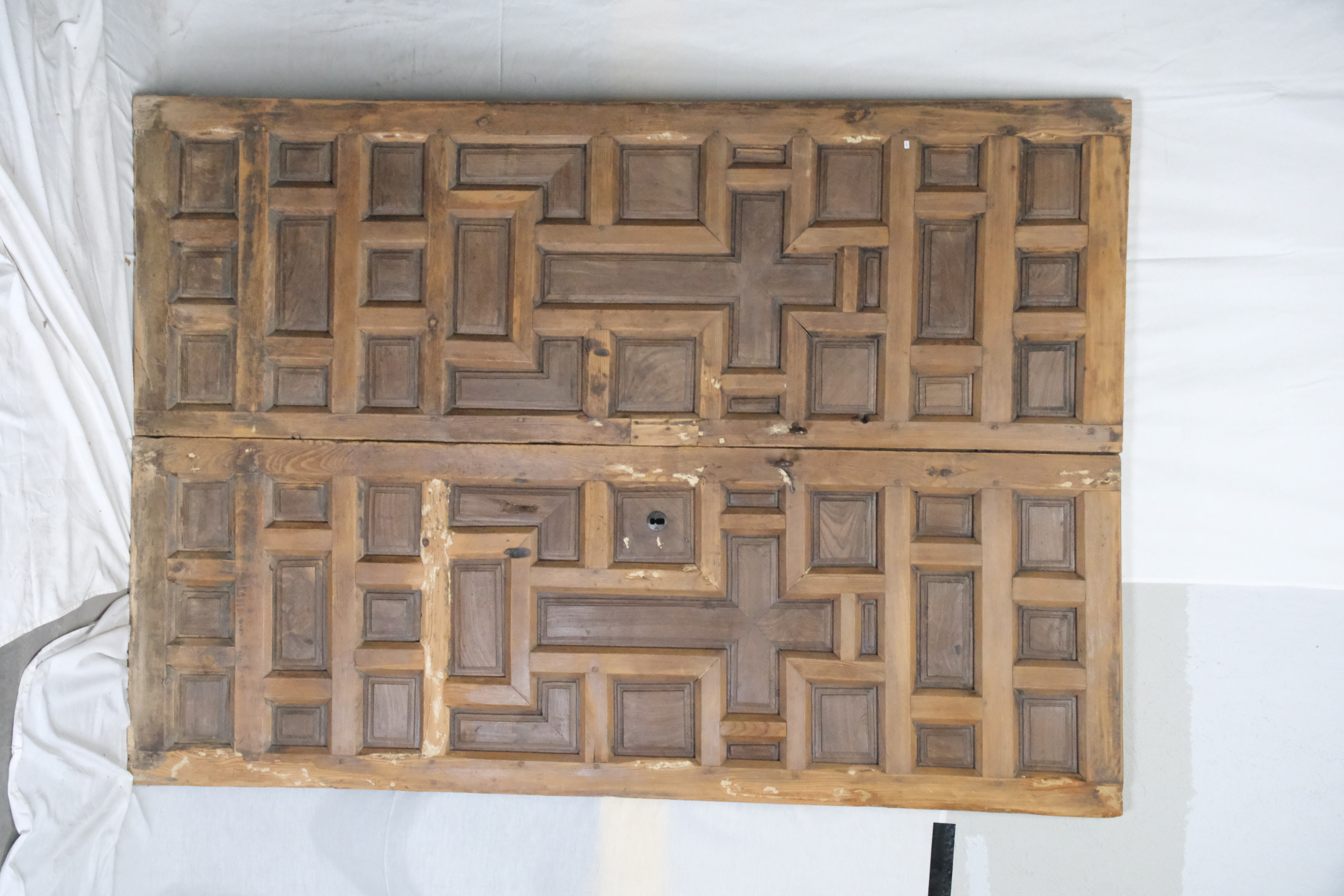
An antique wooden door can last several more centuries if it is treated well. It can also lose, in one afternoon with a sander, much of what made it valuable: the patina, the tool marks, the original paint or the soundness of its joints. Restoring does not mean making it look new, but giving it back stability and use while keeping as much of the original as possible. These are the steps, in the order in which it pays to take them.
1. Assessment: what it has and what it lacks
Before touching anything, go over the whole door in good light, front and back:
- Structure: the frame (stiles and rails) and the panels. Are the mortise and tenon joints sound, or do they move?
- Woodworm: small round holes. If fine, pale dust comes out when you tap the wood, or there are little piles of dust at the foot, the infestation is active.
- Rot: soft or crumbling wood, especially at the bottom, where the door touched the floor or took in water.
- Missing parts: panels, mouldings, architraves or parts of the ironwork. Some losses are stated in the listing, as with this 17th-century rustic door with small windows, which is missing a panel.
- Finish: bare wood, old wax, varnish or layers of paint. Scratch with a fingernail in a hidden area to see how many layers there are.
Photograph everything before you start. It documents the piece and lets the carpenter know what was there.
2. Treating woodworm
If there is active woodworm, this comes first, because there is no point restoring wood that is still being eaten from the inside. The usual approach is to apply a wood-specific insecticide by brush and by injection into the holes, following the manufacturer’s instructions and with the piece well ventilated. For valuable pieces there is anoxia treatment, which kills the insects by depriving them of oxygen without chemicals; it is carried out by specialist firms. If the wood has lost strength, it is consolidated afterwards.
3. Strip or keep the paint?
This is the decision that most affects value. Many doors were painted again and again over their lifetime, and those layers can be part of their character, as with this door with its worn paint. Others were meant to be seen as bare wood and were painted later. There is no single rule: the thinking behind patina or restoration applies here just as it does to a piece of furniture.
If you decide to strip it, bear two things in mind:
- Old paints may contain lead. Do not dry-sand or burn off the paint without protection: the dust and fumes are toxic. Work with a suitable mask, ventilation and collection of the waste.
- Avoid caustic soda baths. Dipping the door in a tank is quick, but it raises the grain, leaves the wood greyish, dissolves the glues and loosens the joints. A gel stripper applied section by section and removed with a wooden spatula is slower and far more respectful.
A carefully stripped door can keep a very beautiful patina, like this 18th-century panelled door in pine, whose listing notes that it has been stripped and keeps part of its original frame.
4. Consolidating joints and replacing parts
Loose joints are carefully taken apart, cleaned of old glue and glued again. Carpenters who work with antique pieces prefer animal glue, the traditional one, because it can be undone with heat and moisture if the door needs further work in the future. Missing parts are replaced with old, reclaimed wood of the same species, so that colour and behaviour are similar. Repairs should be kept to the minimum necessary: a well-made patch is better than replacing a whole stile.
5. Ironwork and nails
Hinges, pintle hinges, locks, door knockers and hand-forged nails are part of the door and often of its dating. Remove them only if absolutely necessary, and number each piece. Take off loose rust with a soft brush and protect the iron with wax. If a fitting is missing, look for an antique one from the same period rather than a shiny replica. In how to recognise an antique door we explain which fittings are usual on Spanish doors.
6. The finish
For an interior door, the most respectful option is a wax or an oil that nourishes the wood without forming a film. Avoid glossy polyurethane varnishes, which give a plasticky look and are hard to remove. An exterior door needs more protection against sun and rain: ask the carpenter for advice on breathable products designed for outdoor use, and check the finish every few years.
7. Fitting it to the opening without cutting it
An antique door almost never matches a modern opening. Whenever possible, adapt the opening to the door, not the door to the opening: a new sub-frame, a wider architrave or a sliding door hung from a track let you use it without cutting down the stiles. If it is a front door, a good carpenter can add hidden reinforcements, draught seals and a security lock without altering its appearance. Before buying, measure the opening, the leaf and the thickness carefully: we explain it step by step in measure before you buy.
A well-restored door does not look new: it looks cared for. The adze marks, the wear around the latch and the patina of centuries are what you are paying for.
Frequently asked questions
Can I sand an antique door?
Better not. Sanding removes the patina and the tool marks, which are part of its value, and if there is old paint it can release lead dust. If an area needs smoothing, it is done by hand and very locally.
How do I know if the woodworm is still active?
By the fine, pale dust that comes out of the holes or gathers underneath. If in doubt, clean away the dust and look again after a few weeks.
Who restores antique doors?
A carpenter or cabinetmaker experienced with old wood, or a furniture restorer. Ask to see previous work and to have them explain what they will keep and what they will replace.
Antique doors in the catalogue
Castilian panelled doors, double-leaf entrance doors and interior doors from the 17th to the 20th century, with dimensions, wood and condition in each listing.
See antique doors →Explore the catalogue
Related pieces
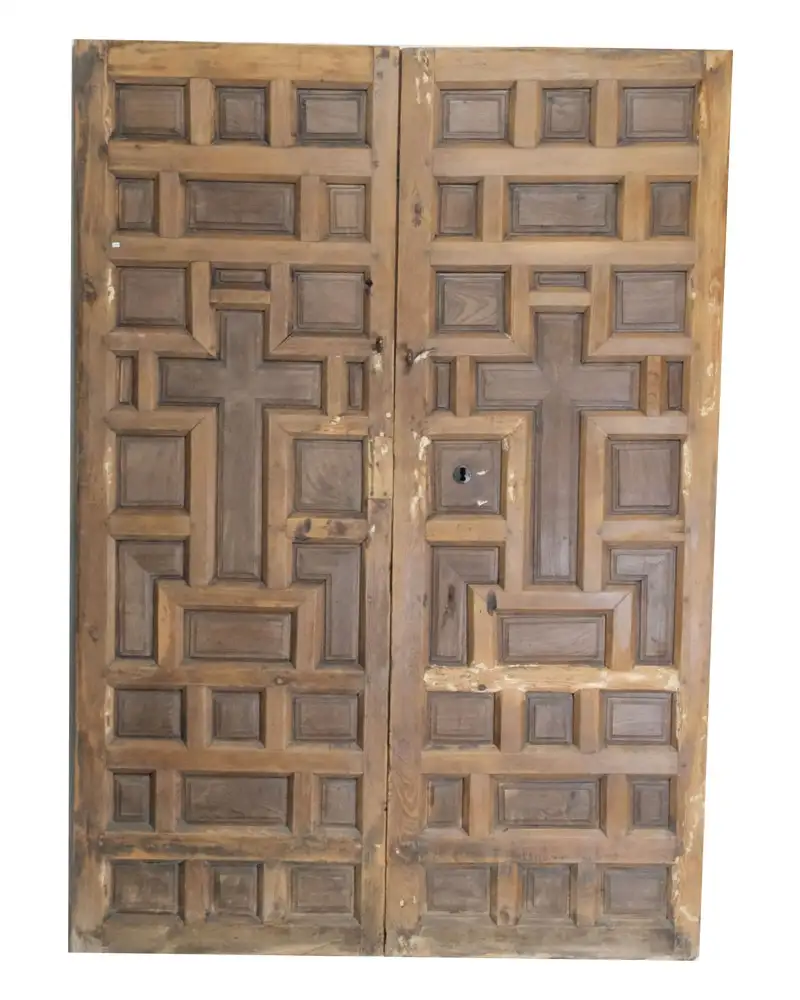
Castilian Door, 17th Century with Central Cross
Doors & Architectural
18th Century · Spain
Walnut and old Castilian pine panels
Portantica · Madrid
1.475 €
18th Century Castilian Oak Paneled Door
Castilian Doors
18th Century · Spain
Solid oak
Portantica · Madrid
500 €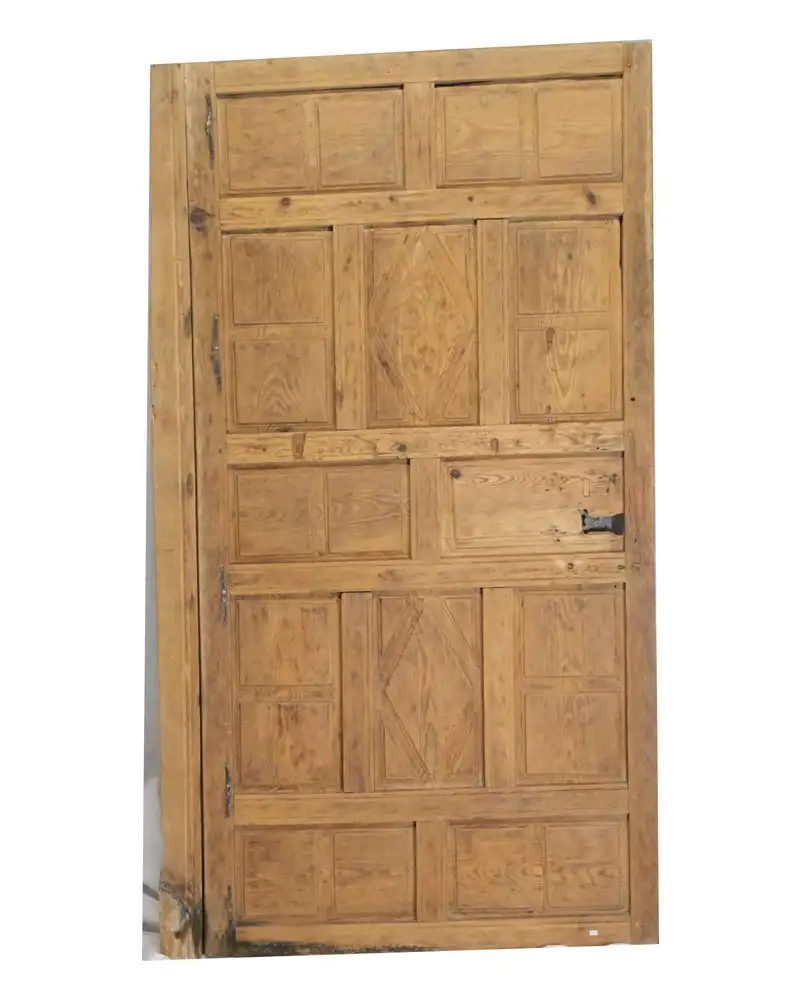
Clear Pine Panel Door, 18th Century
Doors & Architectural
18th Century · Spain
Clear pine with artisanal finishes
Portantica · Madrid
490 €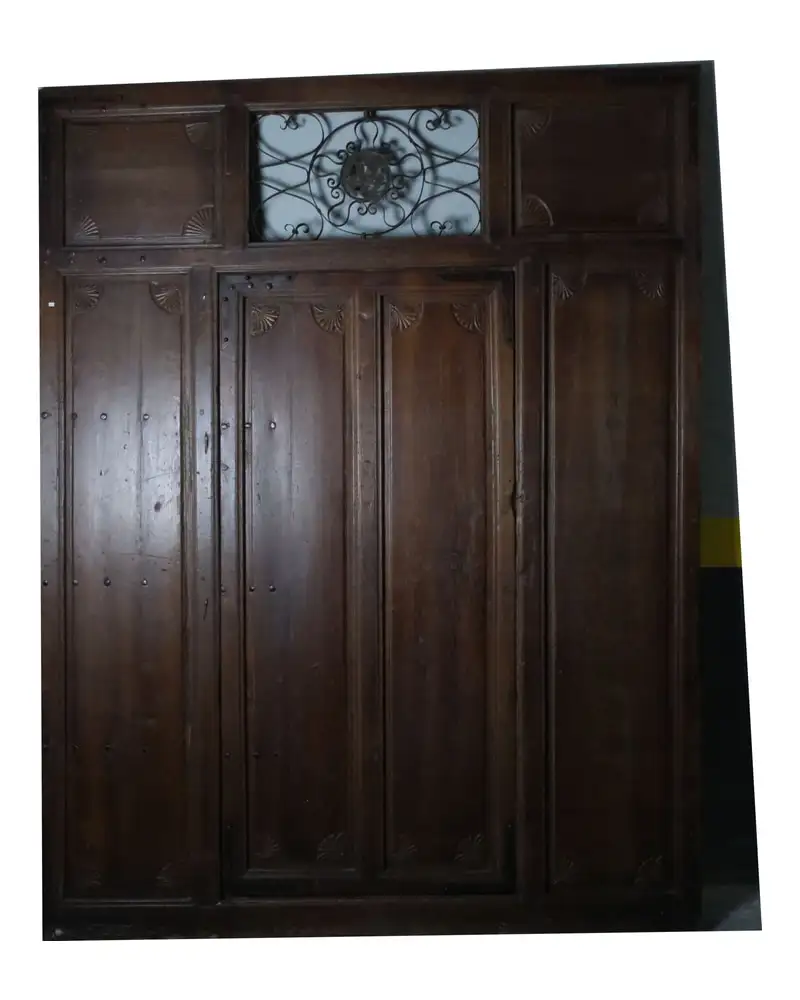
Gate from 1857 in Walnut with Monogram and Wrought Iron
Doors & Architectural
19th Century · Spain
Solid walnut wood, wrought iron
Portantica · Madrid
1.500 €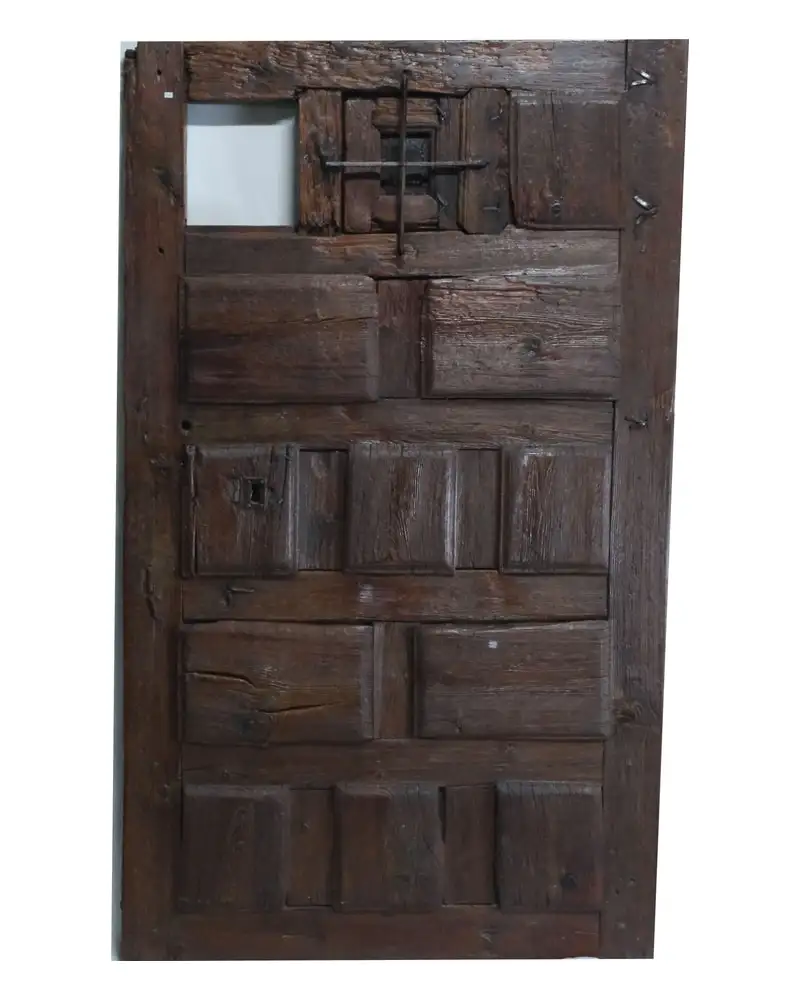
Rustic 17th Century Pine Door with Small Windows
Doors & Architectural
19th Century · Spain
Pine, antique hardware
Portantica · Madrid
650 €
Glazed Door with Panels, 19th Century
Doors & Architectural
19th Century · Úbeda, España
Solid wood with hand-carved panels.
Portantica · Madrid
750 €
Decorative Door, 20th Century
Doors & Architectural
20th Century · Spain
Wood with a weathered painted finish.
Portantica · Madrid
190 €
Double Wooden Door, 18th or 19th Century
Doors & Architectural
18th Century · Spain
Solid wood with a rich patina and carved details.
Portantica · Madrid
400 €