
Authentication
Ancient coins: how to tell whether a Greek, Roman or Iberian coin is genuine
Struck versus cast, weight, style, repeated dies and patina: the checks that help you spot a copy of an ancient coin, what MBC and EBC mean and what Spanish law says about provenance.
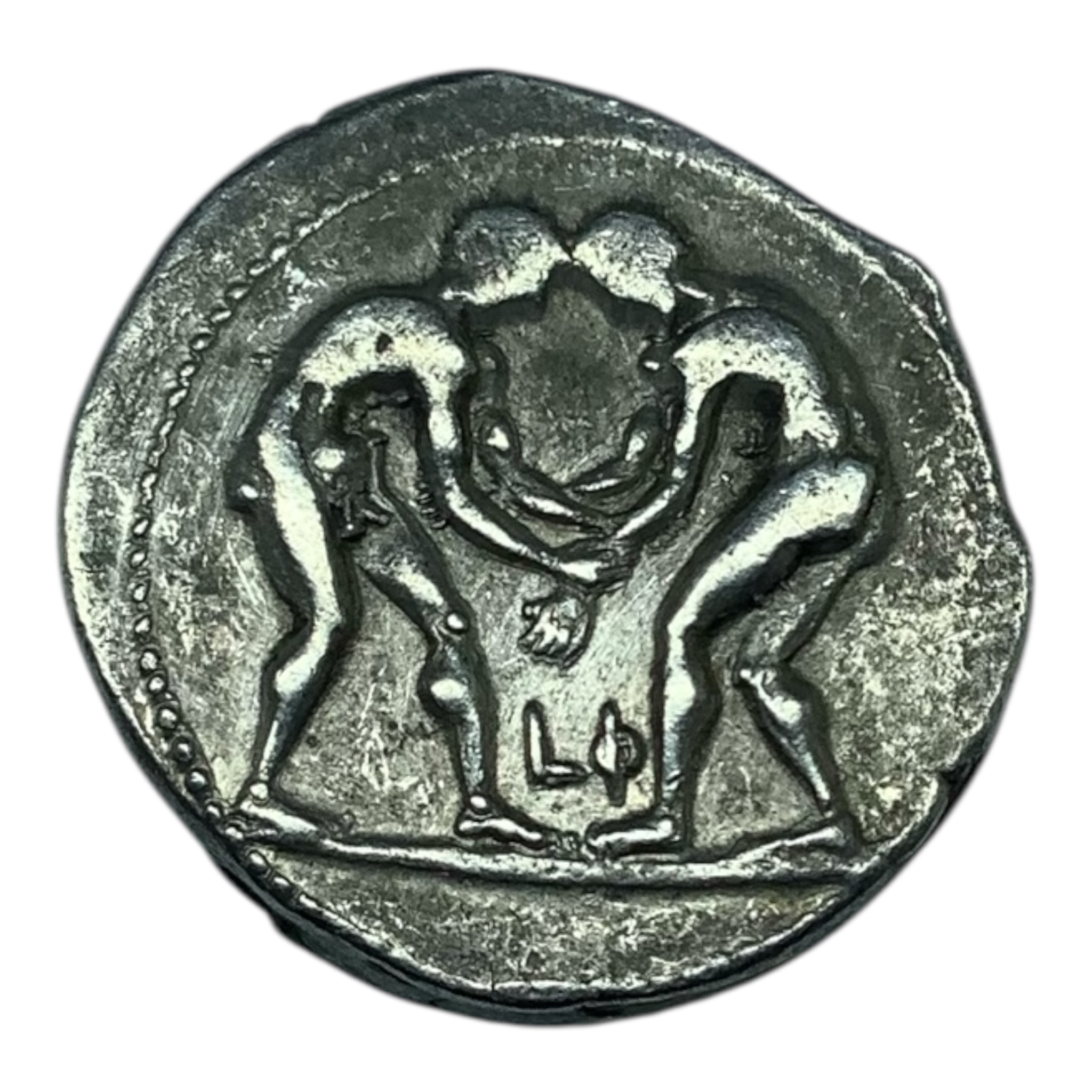
Greek, Roman and Iberian coins are among the few objects from Antiquity that an enthusiast can hold in their hand for a reasonable price. They were struck in enormous quantities and many have survived to this day. For exactly that reason they have also been copied a great deal: from souvenir reproductions, easy to spot, to modern forgeries designed to deceive collectors. No home test replaces examination by a numismatist, but there are simple checks that rule out most copies.
Struck or cast: the first question
Ancient coins were made by hammer blow: a heated metal disc, the flan, was placed between two engraved dies and struck. That process leaves traces that a copy cast in a mould imitates poorly.
- Crisp relief and “flowing” metal: on a struck coin, the metal is pushed towards the edges of the design. Under a magnifier you can sometimes see fine flow lines and clean outlines.
- Edge cracks: the blow could open small radial cracks at the edge of the flan. They are normal on many Greek and Roman coins.
- Surface of a cast copy: grainy or porous, with tiny bubbles, soft details and lettering with rounded outlines.
- The edge: cast pieces may show a mould line, or file marks where it was removed.
The most dangerous forgeries are not cast but struck with modern dies. So a coin being struck is a necessary condition, but not a sufficient one.
Weight and dimensions
Each type of coin followed a weight standard. Tetradrachms on the Attic standard, for example, weighed around 17 grams when they left the mint, and the staters of Aspendos, in Pamphylia, about 10 to 11 grams. Wear and cleaning take off a little weight, so a heavily worn coin will weigh slightly less. A large difference, on the other hand, is a warning sign. A precision scale reading to hundredths of a gram and a calliper are enough to compare against the figures in the reference catalogues.
Numismatists also use density to check the metal: silver is much heavier than the cheap alloys from which many copies are made. It is a test best left to a professional, as it requires a hydrostatic balance and some practice.
Style and the reference catalogues
Every mint and every period had a recognisable style: the shape of the eyes, the rendering of the hair, the letters of the legend. Forgers often get those details wrong. Compare the coin with specimens published in reference catalogues. For Roman coinage, the American Numismatic Society maintains the online databases Online Coins of the Roman Empire and Coinage of the Roman Republic Online. For ancient Hispanic coinage, the corpus by Leandre Villaronga remains the usual reference.
It is also worth noticing what does not fit: a legend with modern lettering, a patina identical on the relief and the fields, or a portrait too perfect for a coin whose field is otherwise worn.
Repeated dies: the trap of serial copies
Two genuine ancient coins can come from the same die, but they are never identical: the flan, the centring, the wear and the circulation marks all differ. Copies made from a real coin, by contrast, reproduce the same knocks, scratches and flaws on every example. If you find another coin online with exactly the same marks, be suspicious.
Patina and cleaning
Over the centuries, silver takes on grey, golden or iridescent tones, and bronze a green, brown or black patina. A stable patina is desirable and should not be removed: an ancient coin is never cleaned at home. Heavily cleaned coins, shiny and with a “washed” look, lose value. Be suspicious of artificial patinas too: a uniform colour that hides the details, traces of paint in the recesses or a patina that comes off when rubbed with a dry cotton bud.
What MBC, EBC and other abbreviations mean
In Spain, condition is described on a scale of abbreviations. From lowest to highest: RC (fair condition), BC (well preserved), MBC (very well preserved, roughly VF), EBC (excellent, roughly EF) and SC (uncirculated, UNC). The “+” and “-” signs refine the grade. For ancient coins, MBC already indicates a piece with the design complete and legible and moderate wear. The staters and tetradrachms we have listed, for example, are described as MBC or MBC+, with weight and diameter given.
Provenance and the law
In Spain, the Ley 16/1985 del Patrimonio Histórico Español (Spanish Historical Heritage Act) treats archaeological objects discovered in excavations, earthworks, building works or by chance as public property, and the autonomous communities regulate the use of metal detectors. In practice, this means a coin should only be bought with a documented provenance: an old collection, an auction or a dealer who issues an invoice and stands behind the piece. Coins more than a hundred years old also need a permit to leave Spain.
A certificate is worth what the person who signs it is worth. Always ask who has examined the coin and where it comes from.
Quick checklist before buying
- Ask for sharp photos of the obverse, reverse and edge, with a scale.
- Check the weight and diameter and compare them with the standard for the type.
- Look with a magnifier for a porous surface, bubbles or a mould line.
- Compare the style with specimens published in reference catalogues.
- Be wary of coins with the same marks as others for sale.
- Ask about provenance and request an invoice or certificate from an identifiable professional.
- If you are buying remotely, follow the guidelines for buying safely online.
Frequently asked questions
How do I know whether an ancient coin is silver?
Colour and sound tell you little. Weight and dimensions say more, and a numismatist can carry out the density test in a few minutes. Do not scratch it or use acids: you would damage the coin and its value.
What is a posthumous issue?
It is a coin struck with the name and type of a ruler after his death. The tetradrachms of the Seleucid king Philip I Philadelphus, for example, continued to be struck in Syria after his reign. They are genuine coins, catalogued separately from those struck in his lifetime.
Can I clean a Roman coin?
No. Cleaning at home removes the patina, leaves marks and greatly reduces the value. If a coin has active corrosion, consult a conservator who specialises in metal.
Coins and collectables
Seleucid tetradrachms, Greek staters and Iberian denarii with weight, diameter and grade on every listing. You can ask the seller about provenance before buying.
View collectables →Related pieces

Greek Stater Pamphylia Aspendos (370-333 BC)
Curiosities & Collectibles
Before the 15th Century · Grecia Antigua
Silver
Consuelo Sierra Antigüedades · Madrid
700 €
Tetradrachm of Philip I Philadelphus
Curiosities & Collectibles
Before the 15th Century · Grecia Antigua
Silver
Consuelo Sierra Antigüedades · Madrid
600 €
Tetradrachm of Philip I Philadelphus (Posthumous Issue)
Curiosities & Collectibles
Before the 15th Century · Grecia Antigua
Silver
Consuelo Sierra Antigüedades · Madrid
550 €
Celtiberian Denarius Vascones
Curiosities & Collectibles
Before the 15th Century · Hispania Antigua
Silver
Consuelo Sierra Antigüedades · Madrid
550 €