
Guide
Buying antiques in Spain from abroad: shipping, customs and payment
A practical guide for buyers outside Spain: how to talk to the dealer, how shipping is estimated and arranged, what happens with export permits and customs, and how to pay with peace of mind.
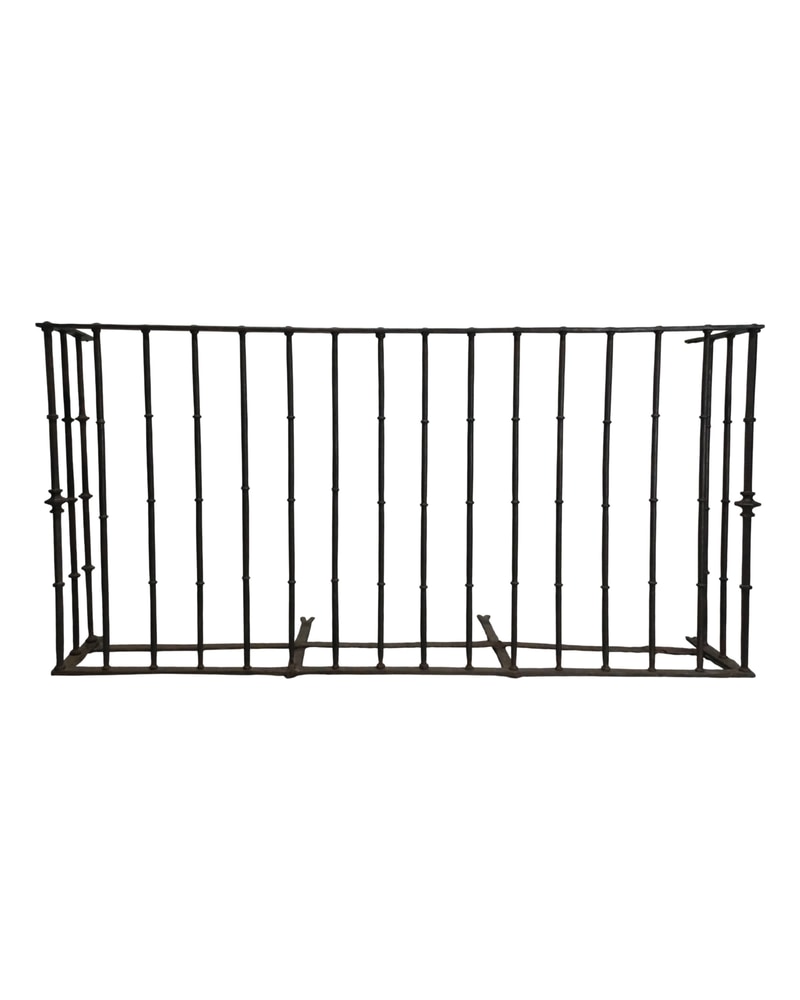
Spain has an antiques market full of pieces that are hard to find elsewhere: panelled Castilian doors, wrought-iron grilles and balconies, chests, bargueño cabinets, religious art. More and more buyers in Europe, the Americas and beyond are buying them from a distance. It is straightforward if done in the right order. This guide follows the process from the first message to the day the piece arrives home.
1. Talk to the dealer before buying
In a long-distance purchase, the conversation with the seller replaces the visit to the shop. On Antiga you can write to the dealer directly from each piece’s listing; all you need is an email address, no password. Use it to ask for what the photos do not show:
- Extra photos of the back, edges, joints and any restoration.
- Exact dimensions and, if possible, the approximate weight.
- Condition: woodworm, replaced parts, original fittings.
- Approximate age and known provenance.
- How long it will take to prepare and ship the piece to your country.
A serious dealer answers precisely and has no problem showing flaws. If an answer is vague on the essentials, take it as a signal.
Many Spanish dealers work in English or French, but not all of them. Write short, concrete sentences, give dimensions in centimetres and, if useful, add a photo or a plan of the place where the piece will go. A well-framed question usually gets a better and faster answer.
2. Understand the shipping cost
Large antiques do not travel by ordinary parcel services. A door, a grille or a wardrobe needs made-to-measure packing and specialist transport, and the price depends mainly on volume, weight, distance and the type of delivery (to the front door or into a specific room). Every Antiga listing shows an estimated shipping cost for your destination. The final amount is confirmed by the seller, who arranges the transport and its insurance.
For bulky pieces, ask whether the price includes a wooden crate and how far the delivery goes. And check your access beforehand: stairs, lift, doorways. We explain this in detail in our guide to measuring before you buy.
3. Export permits
If the piece is more than a hundred years old, it needs prior authorisation to leave Spain, including when it goes to another European Union country. The owner of the piece, normally the seller, applies for it, and the process takes time. Agree from the start who handles it, how long it may take and how it affects the shipping date. We summarise it in exporting antiques from Spain.
4. Customs and taxes at destination
There are no customs between European Union countries: a piece travelling from Spain to France, Germany or Italy pays no import duties. Outside the EU, the destination country may charge import taxes and duties. Many customs authorities classify antiques over a hundred years old under a specific tariff heading, 9706, which receives favourable treatment in several countries. As the rules differ from country to country, check with your customs authority or freight forwarder before completing the purchase, and ask the seller for the invoice and the documents that will travel with the shipment.
5. How to pay
There are two ways to complete a purchase on Antiga. For many pieces you can buy online by card, with the payment processed by Stripe. You can also agree payment directly with the dealer after talking to them. In that case, keep everything you agree in writing: price, shipping, timing and return conditions.
One piece of advice that applies to any long-distance purchase: be wary of anyone who, without knowing you, asks for a bank transfer to an account in a private individual’s name or puts you under unjustified pressure. It is the most common sign of fraud in the second-hand market.
6. Returns
Each dealer chooses their returns policy: returns within 14 days, exchanges only, returns only for delivery defects, or no returns. On Antiga, the one that applies to each piece appears next to the price. Read it before buying, especially for bulky pieces, because returning a door or a wardrobe also costs transport. In the European Union, distance purchases from a professional seller usually also give the consumer a right of withdrawal; its conditions depend on the applicable rules.
7. Delivery
- Check the packaging in front of the carrier and note any visible damage on the delivery note.
- Take photos of the piece as you unpack it, especially if you notice any damage.
- If the piece is wooden and comes from a different climate, let it acclimatise for a few weeks before adjusting or installing it.
- Keep the invoice and the permits: they are part of the piece’s documented history.
Start with a question
Choose a piece, write to the dealer from its listing and ask for photos, dimensions and a shipping estimate to your country. It is free and without obligation.
See antique Spanish furniture →Explore the catalogue
Related pieces

18th Century Cordoban Balcony in Wrought Iron
Doors & Architectural
18th Century · Córdoba, España
Wrought iron
Portantica · Madrid
900 €
Double Wooden Door, 18th or 19th Century
Doors & Architectural
18th Century · Spain
Solid wood with a rich patina and carved details.
Portantica · Madrid
400 €
17th Century Iron Grille with Castilian Frame
Metalwork & Ironwork
19th Century · Castilla, España
Wrought iron, wood
Portantica · Madrid
875 €
Clear Pine Panel Door, 18th Century
Doors & Architectural
18th Century · Spain
Clear pine with artisanal finishes
Portantica · Madrid
490 €
18th Century Iron Balustrade with Castilian Decorations
Metalwork & Ironwork
18th Century · Madrid, España
Wrought iron
Portantica · Madrid
700 €
Wooden Gate, 19th Century
Doors & Architectural
19th Century · Madrid
Noble wood with detailed woodworking.
Portantica · Madrid
1.500 €
