
Restoration
How to clean antique copper without ruining it: patina, verdigris and shine
A step-by-step guide to cleaning antique copper and brass: when to keep the patina, how to remove verdigris, what lemon, salt and vinegar actually do, what never to use and how to protect the piece afterwards.
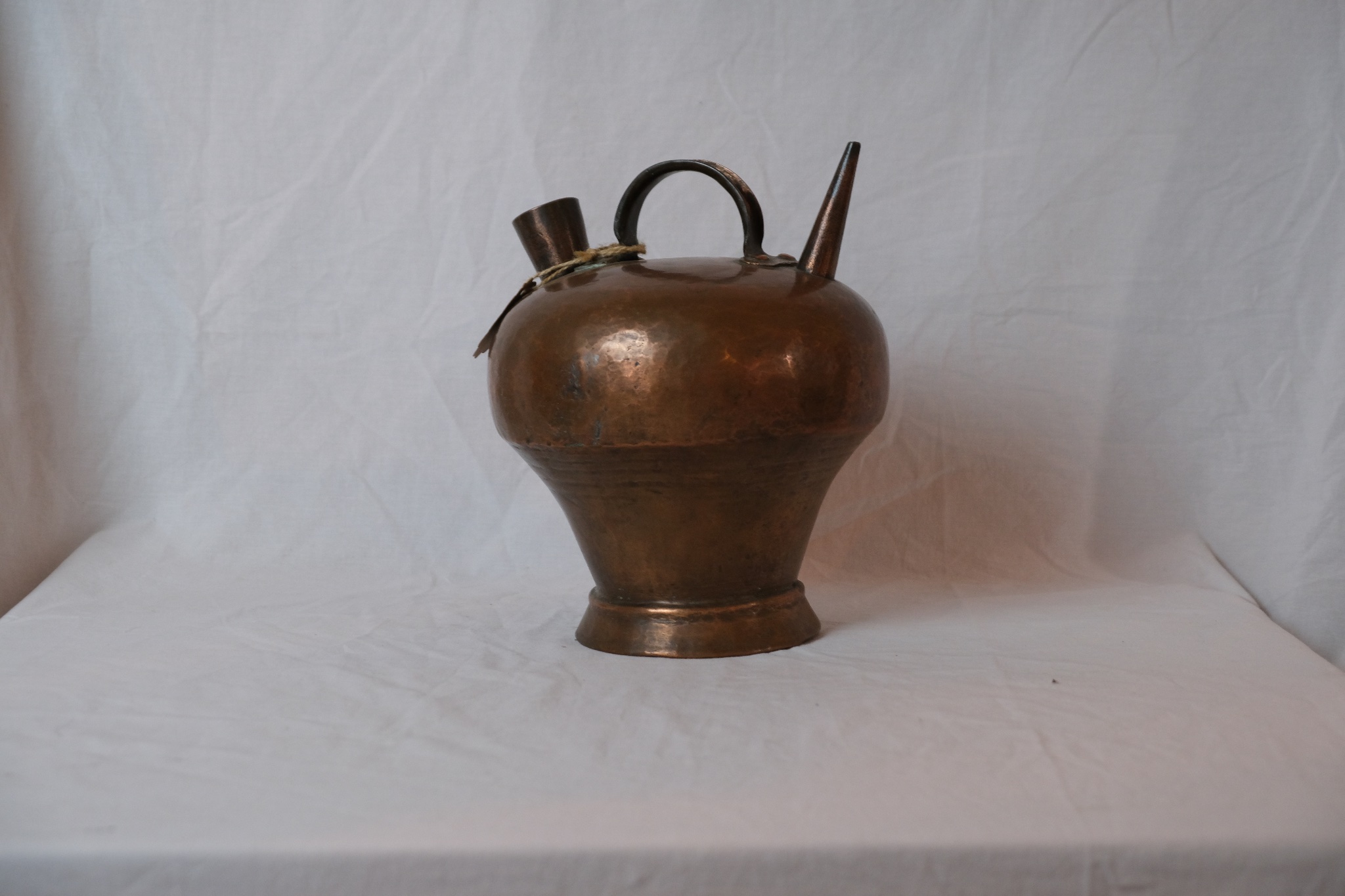
Cauldrons, botijos (traditional Spanish drinking jugs), braziers, chocolate pots, pans and water heaters: copper was in every kitchen and farmhouse until well into the twentieth century. Over time it darkens, stains and sometimes develops green spots. Before reaching for the lemon and salt, it is worth asking yourself one question: do I want to bring back the shine or keep the patina? The answer changes everything else.
Patina or shine: decide first
The even, dark brown tone of old copper is a stable oxide layer that protects the metal and that many collectors value. On a working piece, such as a large cauldron used in the traditional pig slaughter or a hammered botijo, that patina tells its story, and removing it can reduce its value. On a decorative piece meant to shine, such as a tray or a lamp, restoring its lustre can make sense. It is the same reflection we set out in patina or restoration.
There is one thing you should always remove: verdigris, the green or bluish-green deposits that appear in corners, joints and damp areas. It is active corrosion, it stains and, on kitchen pieces, it must not come into contact with food.
Before you start: three checks
- Is it copper or brass? Copper is reddish; brass, an alloy of copper and zinc, is golden yellow. They are cleaned in a similar way. If it is bronze, follow our guide on how to clean antique bronze.
- Is it lacquered? Many decorative pieces were lacquered to stop them darkening. If the lacquer is in good condition, a damp cloth is all you need. If it is flaking, uneven stains will appear and metal polish will not work wherever lacquer remains. Removing it is a job for a restorer.
- Are there solder joints, tinning or parts in another metal? The tinned interior of pans, solder joints and iron rivets react differently to cleaning products. Treat them separately or leave them untouched.
Step by step
1. Remove dust and grease
Wash the piece with lukewarm water and a little neutral soap, using a soft sponge, or a soft-bristled brush for the relief work. Rinse and dry immediately with a cotton cloth. Often this step is enough for a piece you want to keep with its patina.
2. Treat the verdigris
For green spots, use a cotton bud dampened in soapy water and, if that does not shift it, a gentle paste of bicarbonate of soda and water applied only to the stain, without rubbing hard. Rinse well and dry. If the verdigris is extensive or the piece is valuable, consult a restorer.
3. Polish, only if you want shine
The most controllable option is a metal polish made specifically for copper and brass, applied with a soft cloth in circular movements, in small amounts and tested first on a hidden area. Home remedies work because they are acidic: half a lemon with salt, or vinegar with salt and a little flour to form a paste. They have two drawbacks. Salt scratches, and acid residues left in cracks and joints keep attacking the metal. If you use them, do so gently and rinse very thoroughly with water before drying.
4. Protect
Freshly polished copper darkens again within weeks. To slow this down, apply a very thin coat of microcrystalline wax, the kind restorers use on metals, and buff it with a cloth. On decorative pieces that need to keep their shine for a long time, a restorer can apply a lacquer made specifically for copper alloys.
What you should never use
- Scourers, steel wool or abrasive powders: they leave scratches that will always show and erase the hammer marks.
- Bleach and chlorine-based products: they encourage corrosion that can keep advancing afterwards.
- Ammonia and strong degreasers: they attack copper and can stain it.
- Power polishing tools: in inexpert hands they remove metal, round off the relief and leave a brand-new shine.
- The dishwasher: it darkens copper and stains it unevenly.
If you want to cook in antique copper
Copper kitchenware was usually tinned on the inside so that food did not touch the copper. If the tinning is worn and the reddish metal shows through, the piece must not be used for cooking until it has been re-tinned in a specialist workshop. Nor should acidic foods be stored in untinned copper. As a decorative object, on the other hand, there is no problem at all.
The hammer marks, the solder of an old repair or the dark tone of years of use are part of the piece. Cleaning it does not mean making it look new.
Frequently asked questions
Do vinegar and salt damage copper?
Used gently and rinsed off very thoroughly, they clean. If residues are left in joints and cracks, new stains appear before long. Salt can also scratch polished surfaces.
How often should a copper piece be cleaned?
As little as possible. Every polish removes a microscopic layer of metal. Dusting with a dry cloth and protecting with wax greatly reduces the need to polish.
How can I tell whether a piece is solid copper or plated?
Look at the edges and the areas that get rubbed: if another metal, such as iron or brass, shows through beneath a reddish layer, it is plated. A magnet will attract copper-plated iron pieces, but not solid copper ones.
Antique copper and brass in the catalogue
Nineteenth-century copper botijos, cauldrons and water heaters, brass lanterns and umbrella stands, with detail photos so you can see the patina and the working marks.
See copper pieces →Related pieces

19th Century Copper Water Jug
Metalwork & Ironwork
19th Century · Spain
Copper
Mercedes Cabeza de Vaca · Madrid
200 €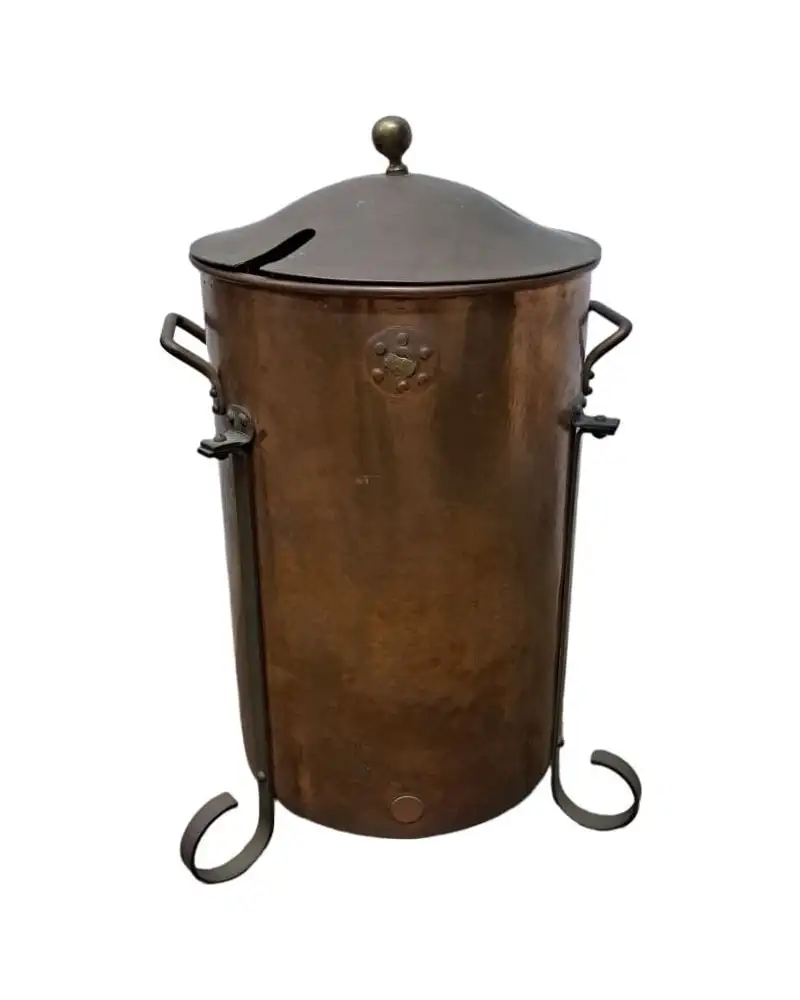
Antique Copper Deposit, 19th Century
Decorative Objects
19th Century
Copper
Antigüedades Calderón · Mataró
295 €
19th-20th Century Metal Cauldron
Decorative Objects
19th–20th Century · Spain
Metal, probably copper
Portantica · Madrid
90 €
Brass Umbrella Stand 19th Century
Curiosities & Collectibles
19th Century · Europa
Brass
Mercedes Cabeza de Vaca · Madrid
120 €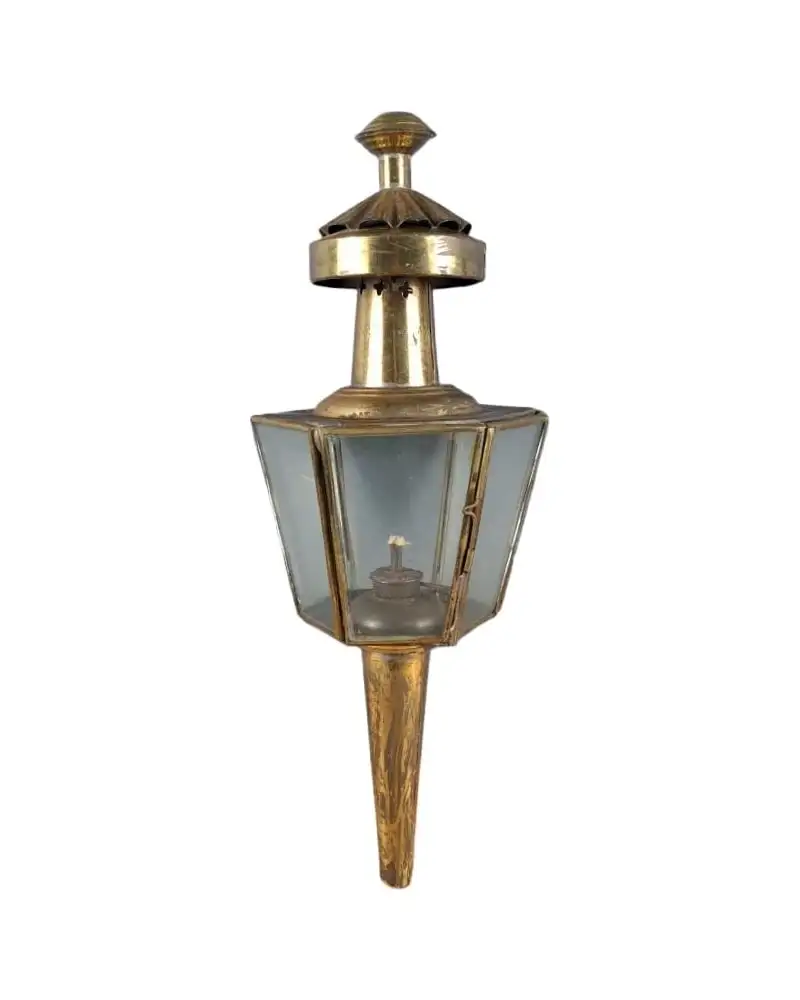
Antique processional lantern in brass, 40 cm, early 20th century
Lighting
20th Century · Spain
Brass
Antigüedades Calderón · Mataró
145 €