
Authentication
Antique oil paintings: how to identify originals, copies and forgeries
Antique oil paintings: how to identify an original, what craquelure reveals, how to analyse pigments and signatures, and when to suspect a copy. A practical authentication guide.
Antique oil painting is probably the category of antiques where the most money is made and the most is lost. A correctly identified painting can be worth ten, a hundred or a thousand times what was paid for it. A misattributed painting — or an outright fake — can turn a significant investment into an expensive lesson. The difference between the two depends largely on knowing how to look.
In this article we go through the keys to identifying antique oil paintings: what to examine in the support, the paint surface, the pigments and the signature. It is no substitute for an expert’s eye or laboratory analysis, but it provides the basic tools to assess a piece before buying it.
The support: canvas or panel
The first thing to look at is the back. The support of an antique painting says a great deal about its date and origin. Until the late sixteenth century most European paintings were done on panel — oak in the North, poplar in Italy, pine in Spain. From the seventeenth century canvas gained ground until it became the dominant support. A supposedly fifteenth-century painting on industrial cotton canvas should raise immediate questions.
Painting on panel
- Thickness: old panels are usually of irregular thickness, reduced with an adze and plane. Panels of uniform thickness suggest machine cutting (nineteenth century onwards).
- Woodworm galleries: woodworm holes are common in old panels. Their distribution should be random; holes that are too regular may be simulated.
- Warping and cracks: old panels deform over time with changes in humidity. A perfectly flat board after four centuries is suspicious.
- Joinery: wide panels are made of several boards joined together. Old joints use animal glue and wooden dowels; modern ones use white or synthetic glue.
Painting on canvas
- Type of fabric: irregularly woven linen (seventeenth–eighteenth centuries), coarse hemp (popular works), industrial cotton (nineteenth century onwards). The weave of the canvas is an indicator of date.
- Stretcher: old stretchers are hand-worked wood, with expansion keys from the eighteenth century. Industrial stretchers show machine-saw cuts.
- Relining: many old paintings have been relined — attached to a new canvas for conservation reasons. Relining does not indicate a forgery; it indicates that the piece has been treated.
Craquelure: the fingerprint of time
Craquelure — the network of small cracks that appears on the surface of old paintings — is one of the most reliable indicators of age. It is caused by the gradual contraction of oil paint layers as they age. Each period, technique and school produces different craquelure patterns.
Natural craquelure has specific characteristics: the cracks go through the whole paint layer down to the ground, the edges of the cracks are slightly raised and the pattern is organic, with wider primary cracks branching into finer ones. Artificial craquelure — produced by heating the surface, applying varnishes that pull as they dry, or even drawing it in with a point — looks different: surface cracks that do not reach the ground, flat edges, patterns that are too regular or too random.
A restorer once told us: “Craquelure can never be faked completely. You can fool the eye, but not the microscope.” True — but with a good magnifier and raking light you can already see a lot.
Pigments: dating by colour
A painter’s palette is limited by the pigments available at the time. That makes pigment analysis a powerful dating tool. Some key examples:
- Natural ultramarine (lapis lazuli): used since the Middle Ages, extremely expensive, gradually replaced by synthetic ultramarine from 1826.
- Lead white: the only opaque white available until the invention of zinc white (1834) and titanium white (1920).
- Chrome yellow: introduced around 1809. Its presence in a supposedly eighteenth-century painting is a problem.
- Emerald green (copper acetoarsenite): appears around 1814. If it is in a “seventeenth-century” painting, the dating does not add up.
- Cobalt blue: synthesised in 1802. Absent from earlier paintings.
Chemical analysis of pigments — X-ray fluorescence, infrared spectroscopy — can date the materials of a painting precisely. It is not cheap, but for pieces of significant value it is a justified investment.
Signatures and monograms: extreme caution
Signatures are, paradoxically, among the least reliable elements for authenticating an old painting. Many old masters did not sign. Many signatures were added later, sometimes centuries later, to increase a piece’s value. And fake signatures are relatively easy to execute.
What to look for is consistency between signature and painting. Is the signature under the varnish or on top of it? If it is on top, it was added later. Is the pigment of the signature consistent with the painting’s palette? Does the style of writing match the period? Does the craquelure in the signature match that of the rest of the surface? These questions do not always give definitive answers, but they show where to investigate.
Period copies and modern forgeries
It is worth distinguishing between period copies and forgeries. An eighteenth-century copy of a seventeenth-century painting is a legitimate object — painters copied openly, as training and on commission — and can have value of its own. A forgery is a piece deliberately made to deceive, with a spurious signature and often artificial ageing.
Period copies can be recognised because, although they imitate the style, they betray the hand and sensibility of their own time. An eighteenth-century copyist reproducing a seventeenth-century Velázquez tends to soften the brushwork, to “improve” the proportions according to the taste of the day, and to use the pigments available in his own time. The result is a piece that resembles the original but “feels” different.
When to ask for a professional report
The short answer: whenever the price justifies the investment. A report by an old-master expert — with visual examination, technical photography (infrared, ultraviolet, X-ray) and, where appropriate, pigment analysis — costs between €500 and €3,000 depending on complexity. For a painting you are going to buy for €10,000 or more, it is essential insurance.
Major auction houses include condition reports and sometimes attribution reports for important lots. But in the private market, with dealers and galleries, the responsibility for checking falls on the buyer. Buying old paintings without expert advice is playing roulette — sometimes you win, but when you lose, you lose seriously.
References
- Bomford, D. et al. (1989). Art in the Making: Italian Painting before 1400. London: National Gallery.
- Eastaugh, N. et al. (2008). Pigment Compendium: A Dictionary and Optical Microscopy of Historical Pigments. Oxford.
- Van de Wetering, E. (1997). Rembrandt: The Painter at Work. Amsterdam University Press.
- Museo del Prado. Boletín del Gabinete Técnico: studies of painting technique.
Antique paintings on Antiga
Paintings on Antiga are shown with detail photos, and from each listing you can ask the dealer for more images or information about the work.
See the catalogue →Related pieces
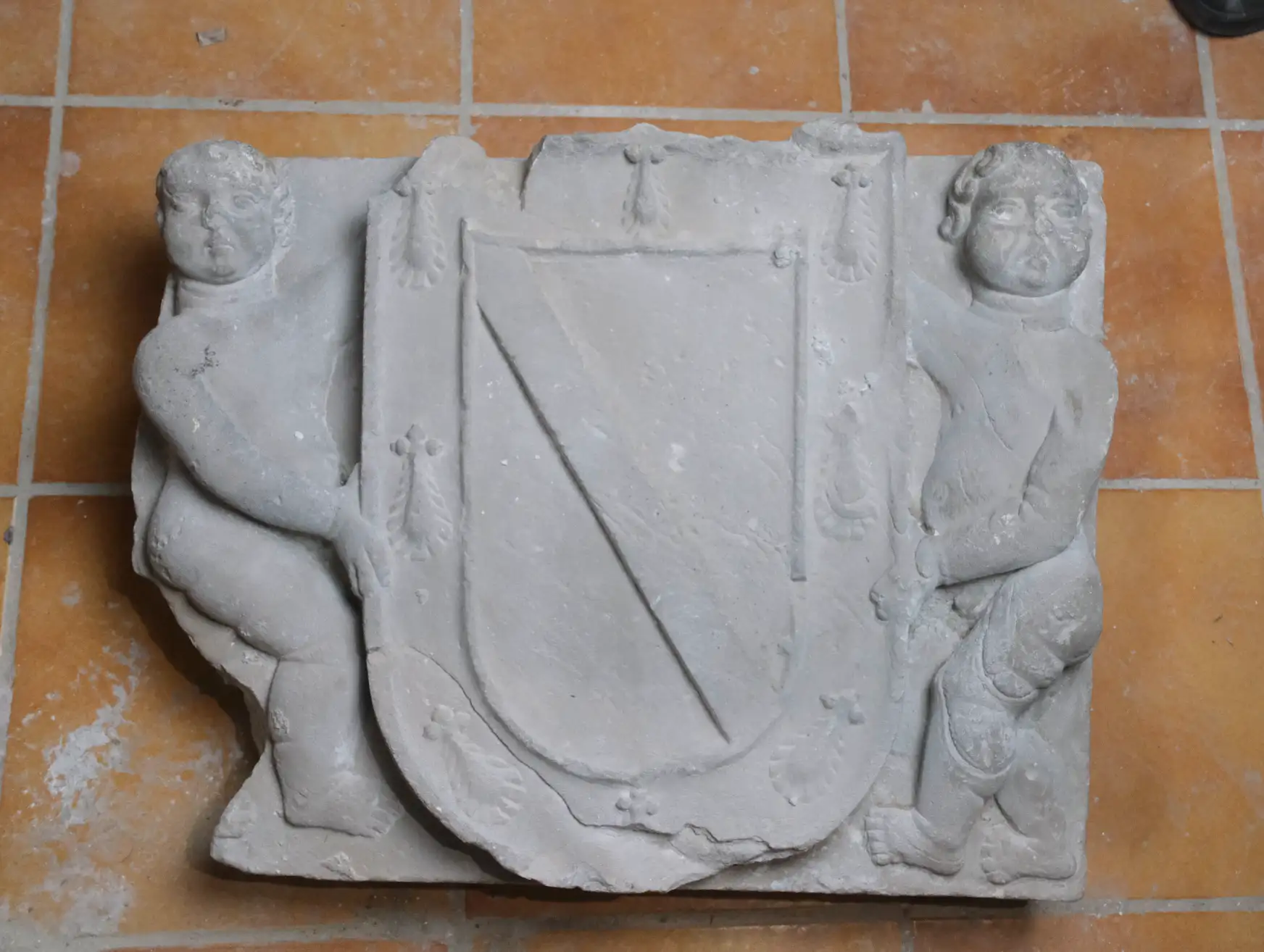
Limestone Shield, 18th Century
Art & Paintings
Spain
Limestone with hand-carved details
Portantica · Madrid
4.500 €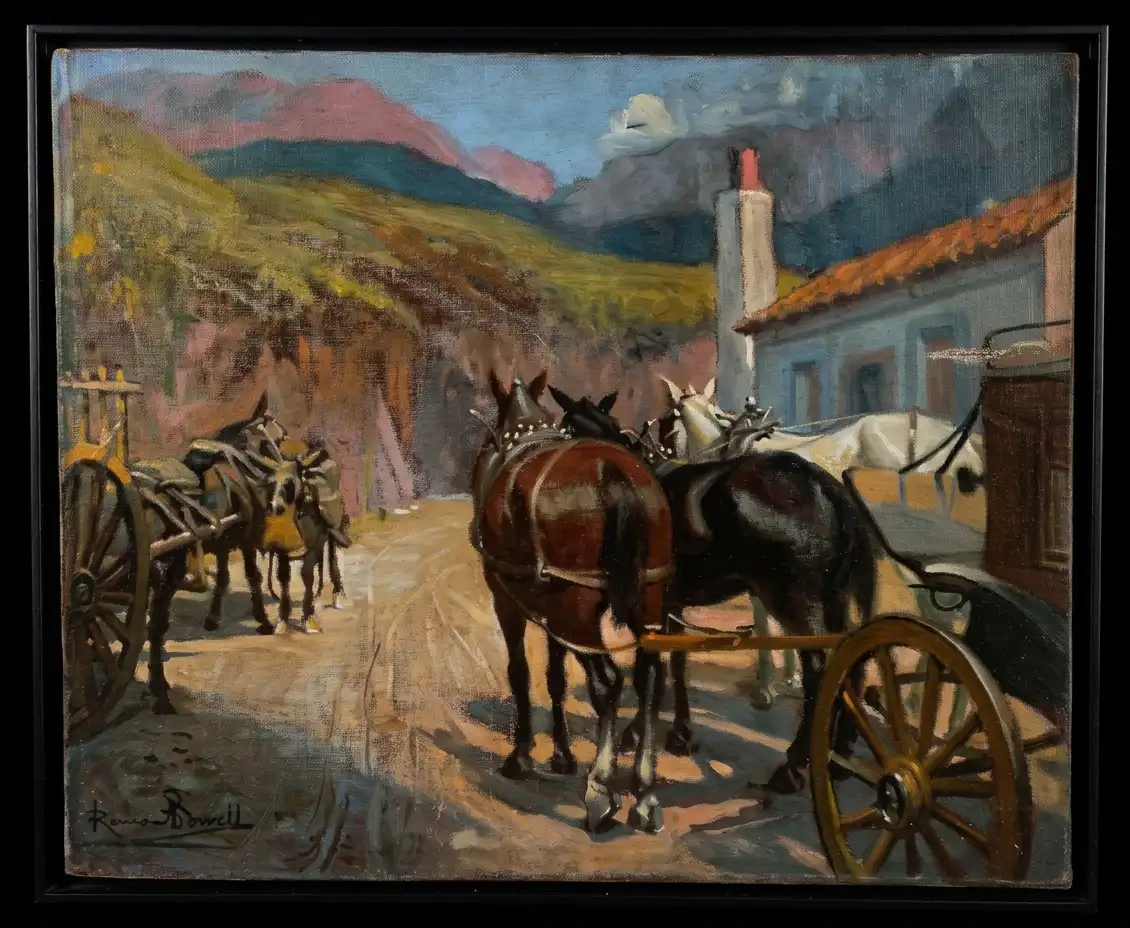
Oil Painting Horses by Ramón Borrell
Art & Paintings
First half of the 20th Century · Barcelona
Oil on canvas
Lorena Muñoz García · Málaga · Yesterday
600 €
Nouvelle Carte de L'état de L'église por Santini y Remondini, 1776
Art & Paintings
18th Century · Italy
Paper
L'Art de la Memòria · Sant Andreu de Llavaneres
365 €
Map of the Grand Duchy of Tuscany by Santini/Remondini, 1776
Art & Paintings
18th Century · Italy
Paper, ink
L'Art de la Memòria · Sant Andreu de Llavaneres
465 €