
Guide
Antique wrought-iron grilles: Spanish tradition, restoration and use in today’s projects
Antique wrought-iron grilles: the great tradition of Spanish ironwork, how to recognise forge marks, restoration options and how to integrate antique grilles into contemporary architecture and interiors.
Antique wrought-iron grilles (rejas) are one of Spain’s great contributions to Europe’s artistic heritage. From the monumental cathedral screens — Toledo, Seville, Burgos, Granada — to the window grilles of ordinary houses, Spanish ironwork developed a technical and aesthetic vocabulary unmatched in any other country. Today these pieces are enjoying a second life: architects and interior designers are recovering, restoring and integrating them into contemporary projects with remarkable results.
In this article we look at the tradition of Spanish ironwork, the keys to identifying and valuing antique wrought-iron grilles, the restoration options and, above all, how to integrate them successfully into today’s architecture.
The tradition of Spanish ironwork: a unique heritage
Spain has more monumental wrought-iron screens than any other country in Europe, and the reason is historical: the reja had a specific liturgical function — separating the main chapel from the rest of the church — that in other countries was met with stone walls or wooden screens. That function raised ironwork to the status of a major art, with masters who signed their work and were paid like sculptors.
The great sixteenth-century ironworkers — Cristóbal de Andino, Domingo de Céspedes, Bartolomé de Jaén, Francisco de Villalpando — created works that rival the finest sculpture of their time in complexity and beauty. The screen of the main chapel of Toledo Cathedral, by Villalpando (1548), is a piece of astonishing technical ambition: columns, friezes, pediments and figures in the round, all in forged, chased and gilded iron.
Types of antique grilles on the market
- Window grilles: the most common. They can be simple (straight bars with cross-rails) or elaborate (with scrolls, finials and pierced decoration). Examples from the sixteenth to the eighteenth century are the most prized.
- Gates and grille doors: larger pieces, often with a round arch or a decorated head. Much in demand for the entrances of estates, gardens and residential projects.
- Balconies: the wrought-iron balcony — a curved railing with decorative finials — is a characteristically Spanish type that has reached the market through the demolition of old buildings.
- Choir and chapel screens: fragments of church screens that have come onto the market. Large, high-quality pieces, but their provenance must be checked.
- Small grilles and vents: minor pieces — air vents, confessional grilles, heating registers — that offer the look of forged iron on an accessible scale.
How to recognise genuine forge marks
Telling hand-forged iron from industrial or cast iron is essential when valuing a grille. The keys are:
- Surface texture: hand-forged iron shows the marks of the hammer — lengthwise striations, slight undulations, subtle irregularities — that rolled iron lacks.
- Bar section: in hand forging, the section varies slightly along the bar. In industrial iron, the section is perfectly uniform.
- Joints: forge welds show a slight thickening at the join. Riveted joints have irregular heads. Electric welding (a visible bead) indicates modern intervention.
- Decoration: forged ornaments (scrolls, leaves, flowers) have an organic plasticity that casting cannot achieve. Cast leaves have softer, less defined edges.
Restoring antique grilles: options and criteria
Restoring an antique grille means balancing the conservation of the original material with the function required of it. Paradoxically, old wrought iron resists corrosion better than modern steel: its fibrous structure, the result of the forging process, makes it more stable. But centuries of exposure leave their mark, and intervention is usually needed.
- Cleaning: gentle, low-pressure blasting to remove active rust without damaging the original surface. Never use aggressive chemical strippers.
- Consolidation: loose or weakened parts are reinforced by traditional forging or, where that is not possible, by compatible welding. Repairs should be identifiable but discreet.
- Protection: after cleaning, apply a primer followed by a finishing paint. Graphite or oil-based paints are traditional options; modern high-performance paints offer longer-lasting protection.
- Degree of intervention: the minimum necessary. Keep the patina where it is stable and intervene only where there is active corrosion or structural risk.
Integrating antique grilles into contemporary projects
This is where the antique grille shows its full potential. A seventeenth-century grille set in a modern stone façade creates a dialogue between periods that enriches both. An old gate as a room divider in a loft. A wrought-iron balcony built into a contemporary window. A fragment of grille mounted as a wall sculpture. The possibilities are vast, and the most creative interior designers are exploring them.
The technical side matters: the grille needs a frame that supports it properly, fixings that do not damage it and, if it goes outdoors, protective treatment renewed periodically. A good blacksmith — not a locksmith, a blacksmith — is the right professional for installation. In cities such as Toledo, Seville, Córdoba and Salamanca there are still forges with experience of historic pieces.
Value and market
Prices of antique grilles vary enormously with size, age, complexity of work and condition. A simple eighteenth-century window grille may cost a few hundred euros; an elaborate sixteenth-century gate can reach several thousand. Monumental pieces — fragments of cathedral screens, large palace gates — move in a different range.
The market is fairly active, driven by demand from architectural restoration and characterful interior design projects. Spain is, for obvious reasons, the main market, but international demand is growing, especially from the United States and northern Europe, where Spanish wrought iron is seen as a product with a very distinct cultural identity.
An antique grille is not a security feature — there are more effective modern solutions for that. It is a fragment of architecture that carries with it the memory of the façade where it stood for centuries.
References
- Gallego de Miguel, A. (1970). El arte del hierro en Galicia. Madrid: CSIC.
- Orduña Viguera, E. (1915). Rejeros españoles. Madrid.
- Domínguez Cubero, J. (1989). La rejería de Jaén en el siglo XVI. Jaén.
- Australia ICOMOS (1999). The Burra Charter: The Australia ICOMOS Charter for Places of Cultural Significance.
Wrought iron on Antiga
Grilles, balconies and wrought-iron pieces with detail photos of the ironwork.
See grilles and balconies →Related pieces
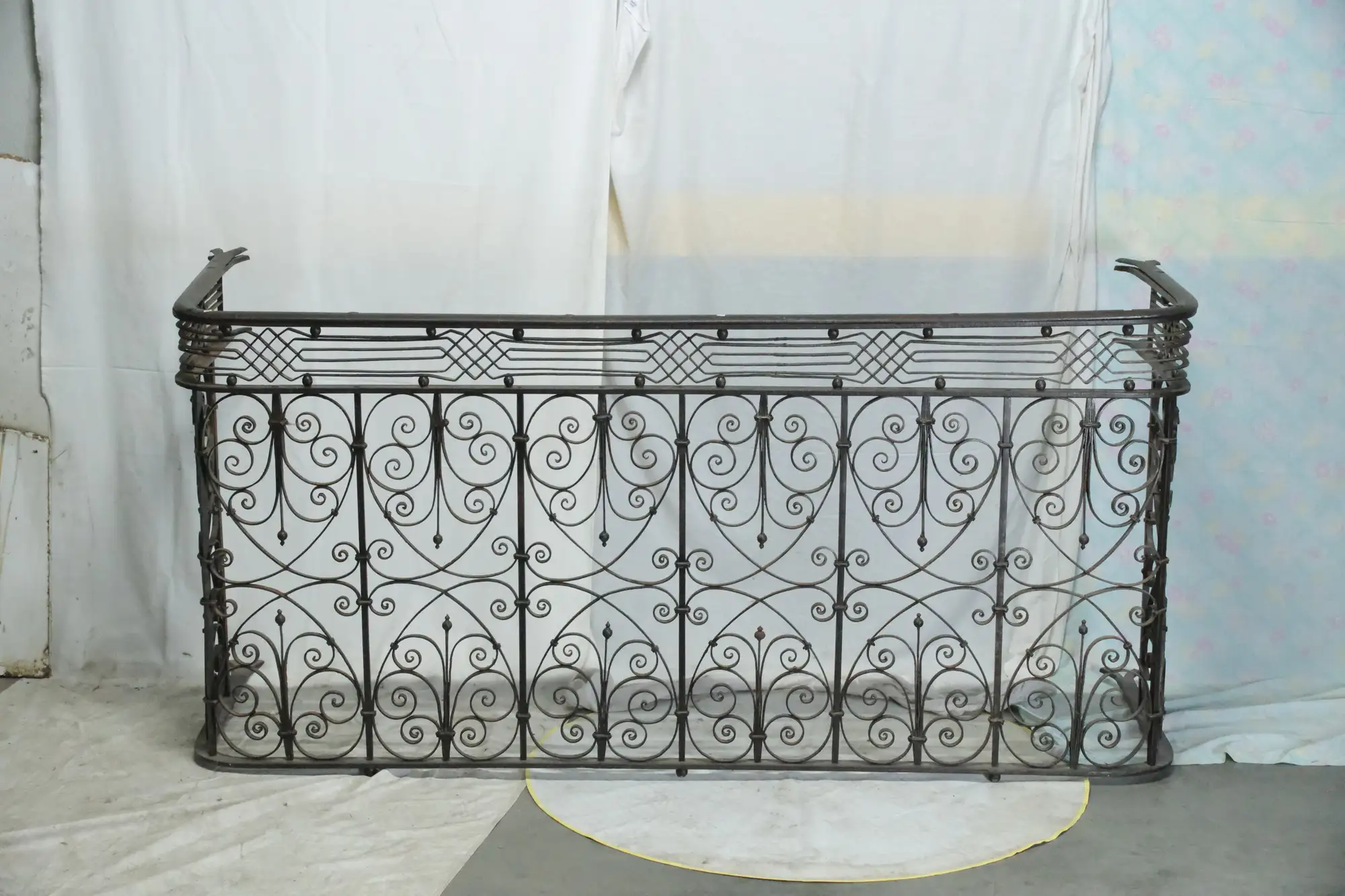
19th Century Wrought Iron Modernist Balcony
Metalwork & Ironwork
19th Century · Andújar, Jaén
Solid wrought iron
Portantica · Madrid
2.950 €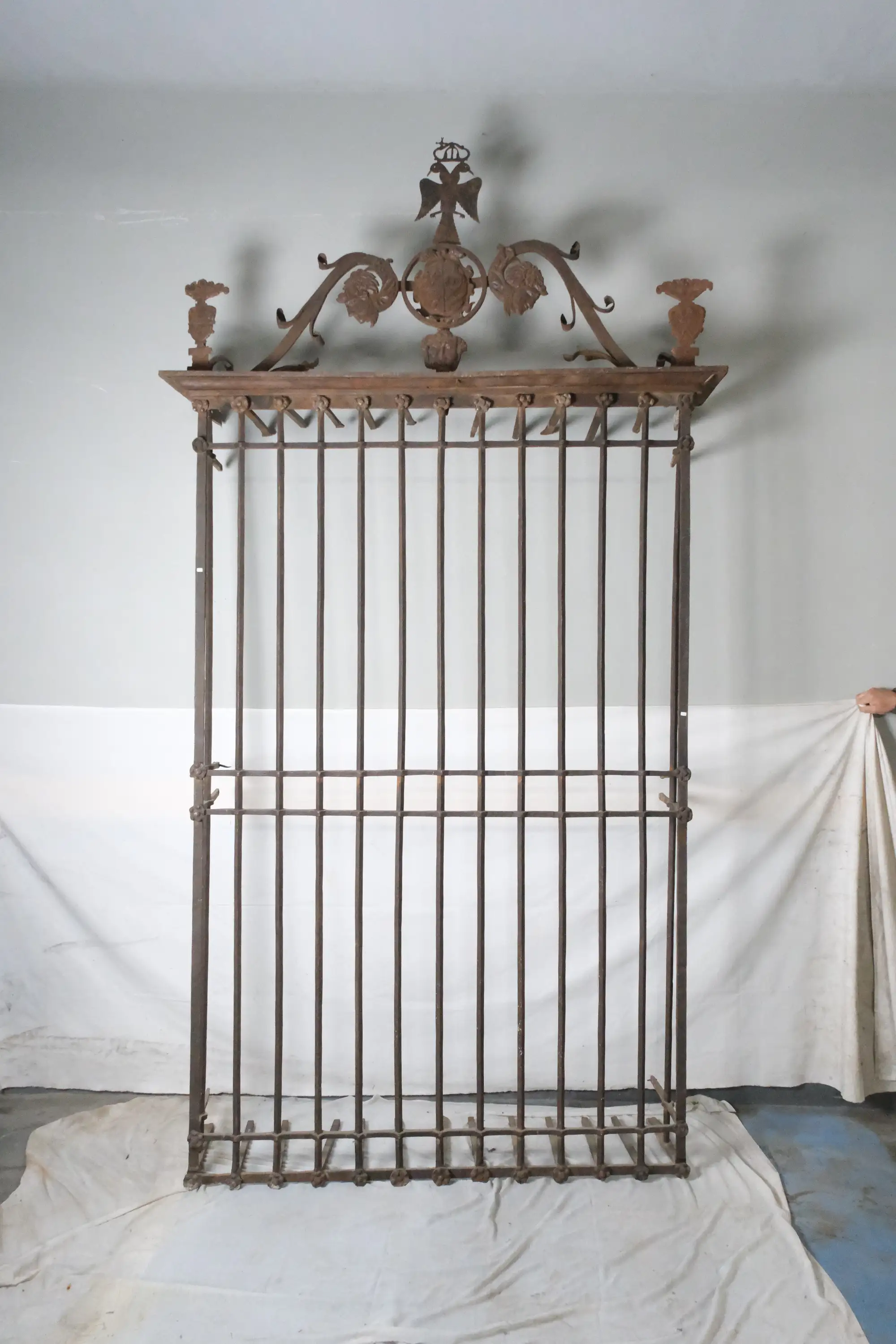
Grand Noble Grille with Coat of Arms, 17th Century
Metalwork & Ironwork
17th Century · Murcia, España
Wrought iron with aged patina
Portantica · Madrid
6.500 €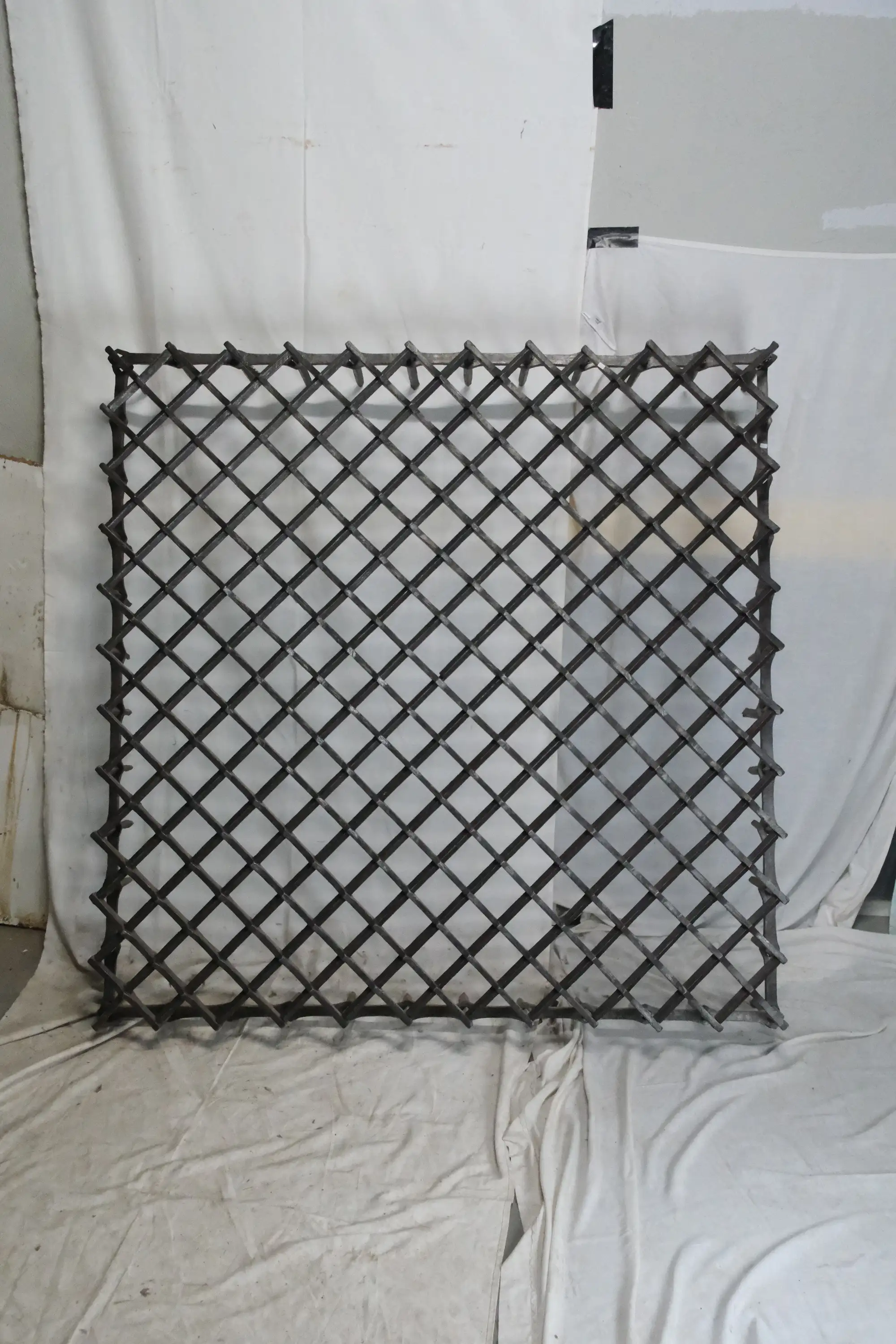
Iron Grille, 18th Century
Metalwork & Ironwork
18th Century · Spain
Wrought iron with historical patina.
Portantica · Madrid
4.500 €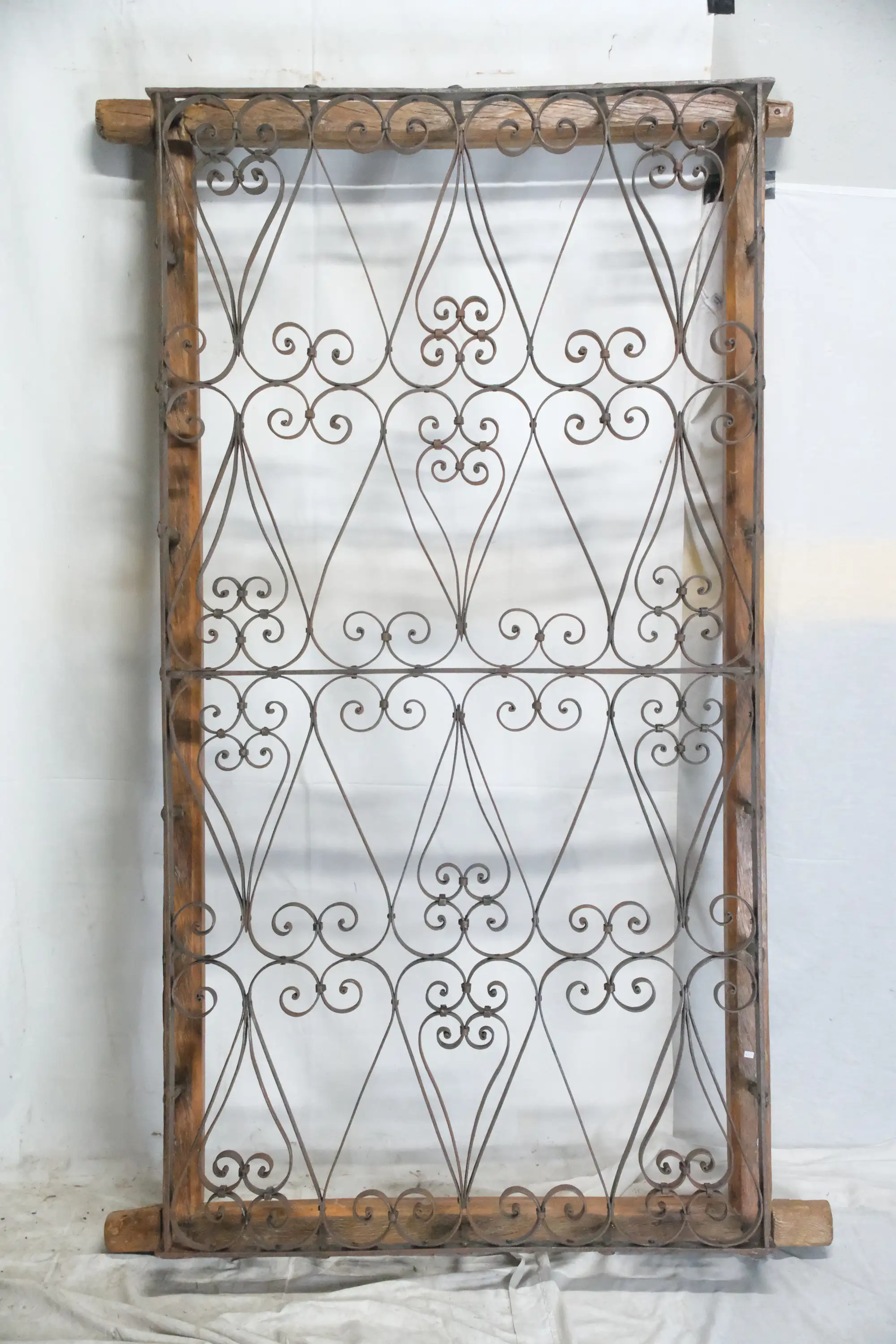
Large Decorated Iron Grille, 19th Century
Metalwork & Ironwork
19th Century · Sevilla, España
Wrought iron with a wooden structure.
Portantica · Madrid
1.200 €