
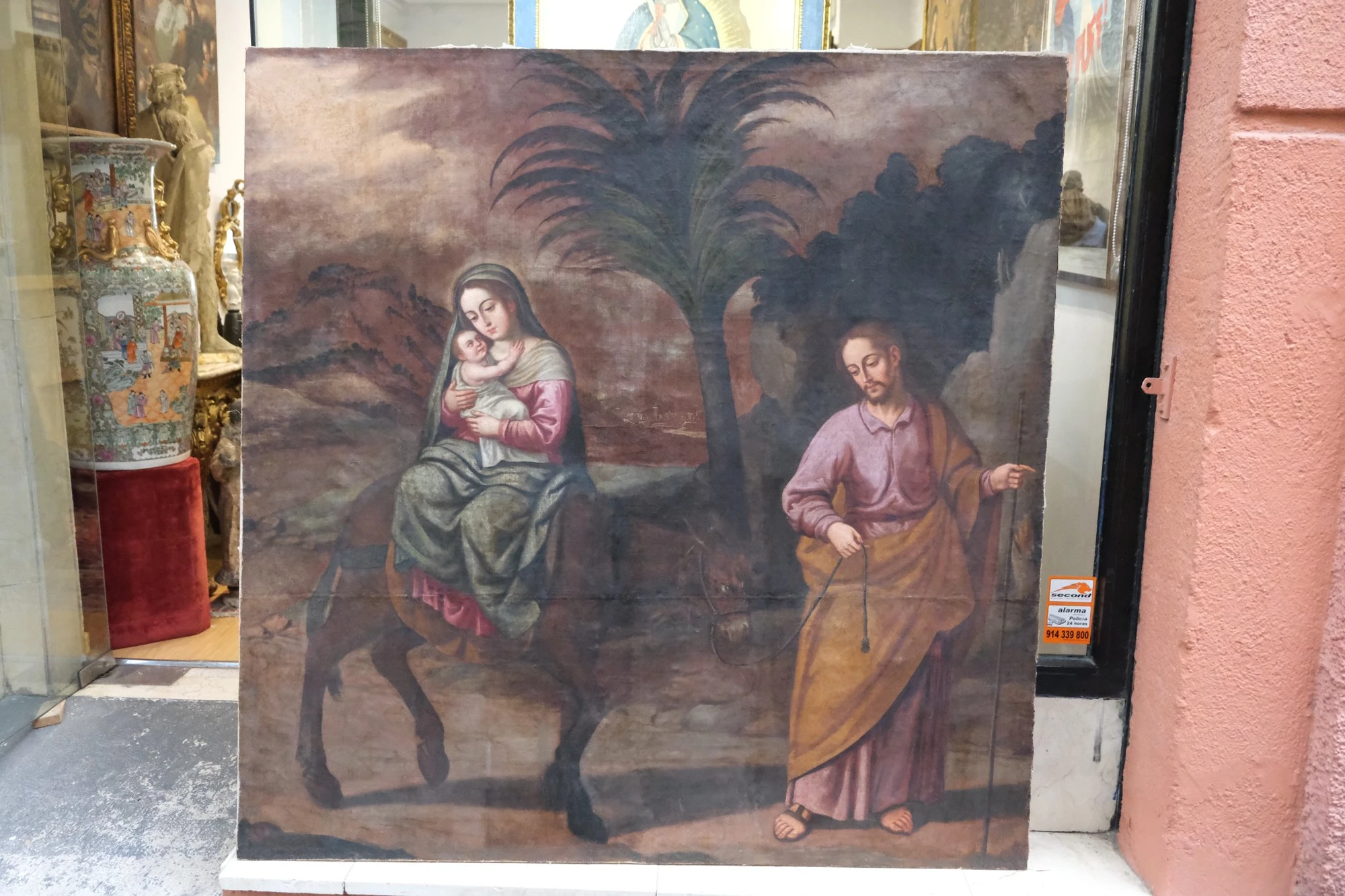
Gregorio Vázquez de Arce y Ceballos, “la Huida a Egipto”, Siglo XVII
Arte y Pintura · Siglo XVI–XVII
Precio de la pieza
50.000 €
Estimar envío
¿A dónde enviamos?
También puede recoger en Madrid gratis
Pregunte por el envío, el estado, la historia o cualquier duda.
Descripción
Gregorio Vázquez de Arce y Ceballos (Bogotá, Colombia, 1638 – 1711) “La Huida a Egipto” 159 x 157 cm.
La pintura muestra un momento conmovedor en la narrativa bíblica: la Sagrada Familia huyendo hacia Egipto para escapar de la persecución del rey Herodes. La Virgen María, montada en un burro, sostiene al Niño Jesús con ternura mientras San José, con rostro sereno y gesto protector, guía el animal a través de un paisaje agreste pero armonioso. La obra transmite una profunda sensación de tranquilidad en medio de la incertidumbre, lograda a través de un excelente manejo de la luz y la composición. El detalle en las vestiduras y el rostro de los personajes refleja la devoción característica del estilo de Vázquez.
Gregorio Vázquez de Arce y Ceballos, nacido en Bogotá en 1638, es considerado uno de los más grandes exponentes del arte colonial en la Nueva Granada (actual Colombia). Con una prolífica carrera que abarcó gran parte de su vida, Vázquez dejó un legado de obras religiosas que influyeron significativamente en el desarrollo artístico de la región. Su estilo combina elementos del barroco europeo con una sensibilidad y una devoción propias del contexto latinoamericano del siglo XVII.
La atribución de “La Huida a Egipto” a Vázquez se fundamenta en varios aspectos estilísticos que son distintivos en su obra. Entre ellos destacan el manejo magistral del claroscuro, la expresividad de los rostros y el enfoque en la humanidad de las figuras sagradas, lo que invita al espectador a una contemplación profunda de la escena. La manera en que la luz baña a la Virgen y al Niño resalta la protección divina, mientras que San José, aunque terrenal, actúa como guía y protector en este viaje. Este uso particular de la luz no solo resalta el dramatismo de las escenas religiosas, sino que también otorga una atmósfera serena y contemplativa.
América Latina. El carácter universal del tema —la familia, el viaje, la protección— hace que la obra resuene con públicos contemporáneos, mientras que su autenticidad y maestría técnica garantizan su posición como una obra deseable en cualquier colección de arte virreinal.
Comparativa Estilística y Técnica entre La Huida a Egipto y Obras del autor Gregorio Vázquez de Arce y Ceballos
Al analizar La Huida a Egipto en relación con otras obras de Gregorio Vázquez de Arce y Ceballos, podemos establecer un conjunto de similitudes estilísticas y técnicas que refuerzan su atribución a este maestro del barroco neogranadino. A lo largo de seis comparativas clave, se observan patrones en el uso del claroscuro, la composición, la paleta de colores y la expresividad que son indicativos de la mano de Vázquez.
Comparativa con La Adoración de los Pastores (Museo Colonial de Bogotá)
En esta obra, una de las más conocidas de Vázquez, la composición piramidal y el uso del claroscuro son elementos destacados. Al comparar esta pieza con La Huida a Egipto, se observa una estructura compositiva similar, donde la Virgen y el Niño ocupan un lugar central y jerárquico. En ambas, el manejo de la luz sirve para destacar a los personajes sagrados, mientras que el fondo se mantiene en penumbra. Además, la ternura en los gestos y las expresiones de los personajes es un rasgo característico que refuerza la atribución a Vázquez.
Comparativa con Santa Rosa de Lima: Desposorios Místicos (Museos de la República, Bogotá)
En esta obra, Vázquez utiliza una paleta de colores cálidos, similar a la que emplea en La Huida a Egipto. Los tonos terrosos y dorados unifican ambas composiciones, creando una atmósfera de serenidad. Además, la disposición de las figuras en una estructura jerárquica, donde los personajes principales dominan la escena, es una técnica recurrente en el pintor. Al igual que en La Huida a Egipto, los gestos y expresiones transmiten una profunda devoción y paz.
Comparativa con Nuestra Señora de los Ángeles (Museo Seminario, Bogotá)
En Nuestra Señora de los Ángeles, la representación celestial y la organización jerárquica de los personajes es similar a la de La Huida a Egipto, aunque en esta última la escena es más terrenal. En ambas obras, el uso de los ángeles y la luz que emana de las figuras principales destaca el carácter divino de los personajes. La paleta de colores, dominada por los tonos cálidos y terrosos, es una constante en el trabajo de Vázquez. La similitud en la forma de representar el simbolismo religioso, como la protección divina en ambas escenas, refuerza la atribución.
Comparativa con El Juicio Final (Iglesia de San Francisco, Bogotá)
En esta obra de gran escala, Vázquez demuestra su habilidad para manejar composiciones complejas con múltiples figuras. Aunque La Huida a Egipto es una obra más íntima, ambas comparten una organización jerárquica clara, donde las figuras centrales están dispuestas para atraer la atención del espectador. La paleta de colores y el uso del claroscuro son también elementos recurrentes en ambas composiciones. La expresividad de los personajes y la atención a los detalles, como los gestos de las manos, son consistentes en ambas obras.
Comparativa con San José y el Niño (Museo del Seminario, Bogotá)
Esta obra, que representa una escena íntima entre San José y el Niño Jesús, comparte con La Huida a Egipto un enfoque en la ternura y la humanidad de las figuras religiosas. En ambas piezas, el uso de una composición simple pero emocionalmente cargada permite que el espectador se enfoque en la relación entre los personajes. Además, los colores cálidos y el detallismo en las vestiduras refuerzan la similitud estilística entre ambas obras. El lirio en la mano de San José, símbolo de pureza, y el simbolismo de protección en La Huida a Egipto son otro punto de conexión.
Comparativa con La Adoración de los Pastores (Segunda Versión, Museo Colonial de Bogotá)
En esta segunda versión de La Adoración de los Pastores, vemos una repetición del esquema compositivo con una disposición jerárquica de los personajes sagrados. En ambas obras, el claroscuro juega un papel importante para destacar a los personajes principales. Además, la textura de las vestiduras y los pliegues detallados de las telas es una constante que se repite en La Huida a Egipto, lo que refuerza la atribución a Vázquez.
Referencias Bibliográficas:
“Gregorio Vázquez: la vida y obra del pintor más importante del Nuevo Reino de Granada” de Santiago Sebastián (1985).
“La pintura colonial en Colombia” de José Manuel Groot (1987).
“La Pintura en el Virreinato de la Nueva Granada” de Elisa Vargas Lugo (1970).
“La pintura en Santafé de Bogotá” de Santiago Sebastián y Germán Rubiano Caballero (1983).
Usos sugeridos
- Exposición en una galería de arte colonial
- Pieza central en una colección de arte religioso
- Decoración en un espacio cultural
- Elemento didáctico en una institución educativa
- Siglo
- Siglo XVI–XVII
- Origen
- Colombia
- Material
- Tela
- Estado
- Restaurada
- Dimensiones
- 159 cm × 157 cm
- Publicado el
- 25 de abril de 2026
Vendido por
Envío y seguro
¿Cuánto cuesta el envío?▾
El coste del envío es definido por el vendedor según el destino y las características de la pieza. Te lo comunicarán tras confirmar la compra.
¿La pieza va asegurada?▾
El vendedor coordina el seguro del envío. Recomendamos confirmar la cobertura antes del envío.
¿Cuánto tarda en llegar?▾
El tiempo de entrega depende del origen y destino. El vendedor te dará una estimación tras la compra.
¿Se aceptan devoluciones?▾
Cada vendedor elige una de las cuatro políticas de devolución de Antiga (devoluciones 14 días, solo cambios, solo por defectos en la entrega, o sin devoluciones). La que aplica a esta pieza aparece junto al precio.
Artículos relacionados

Piezas similares
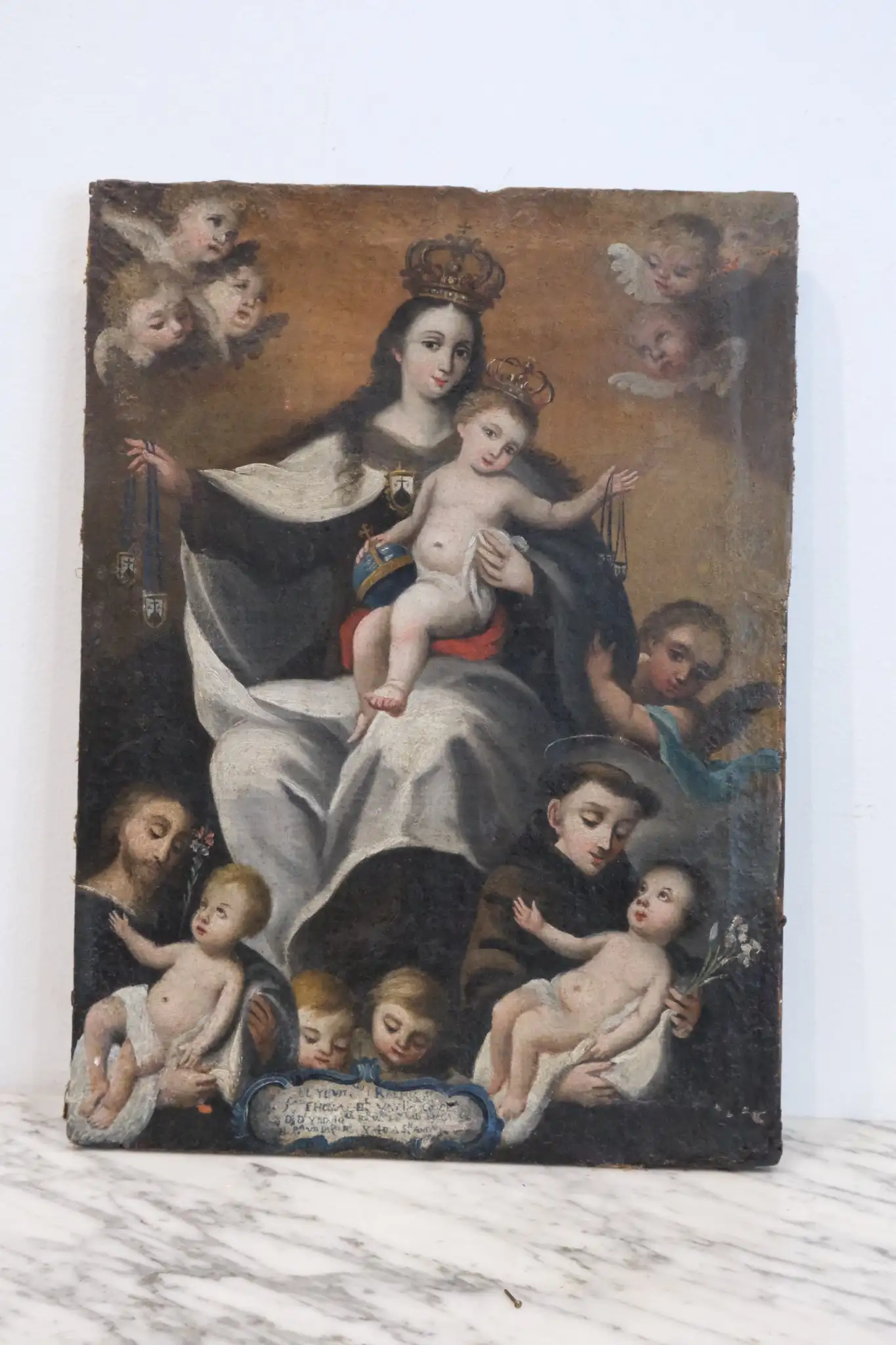
Virgen del Carmen y San Antonio de Padua, siglo XVIII, Origen Colonial
Arte y Pintura
Siglo XVIII · Colonial
Óleo sobre lienzo
El Rincón de Viriato · Madrid
2.000 €
Virgen Peruana, Siglo XIX-XX
Arte y Pintura
Siglo XIX–XX · Perú
Óleo sobre lienzo
El Rincón de Viriato · Madrid
8.000 €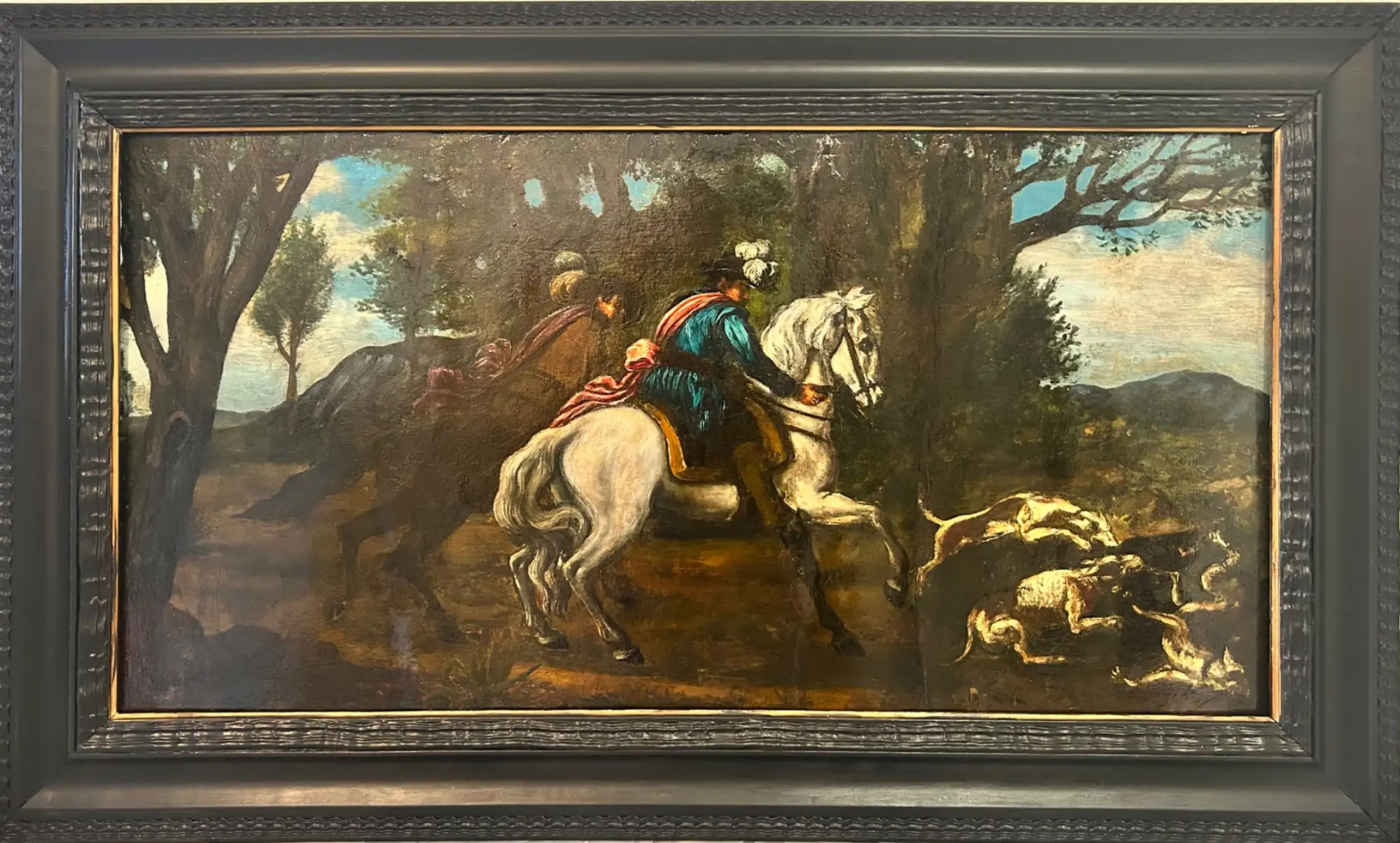
Paisaje de Cacería, Óleo Sobre Tabla, Siglo XVII-XVIII
Arte y Pintura
Siglo XVII · España
Óleo sobre tabla
Antique Arts · Madrid
1.800 €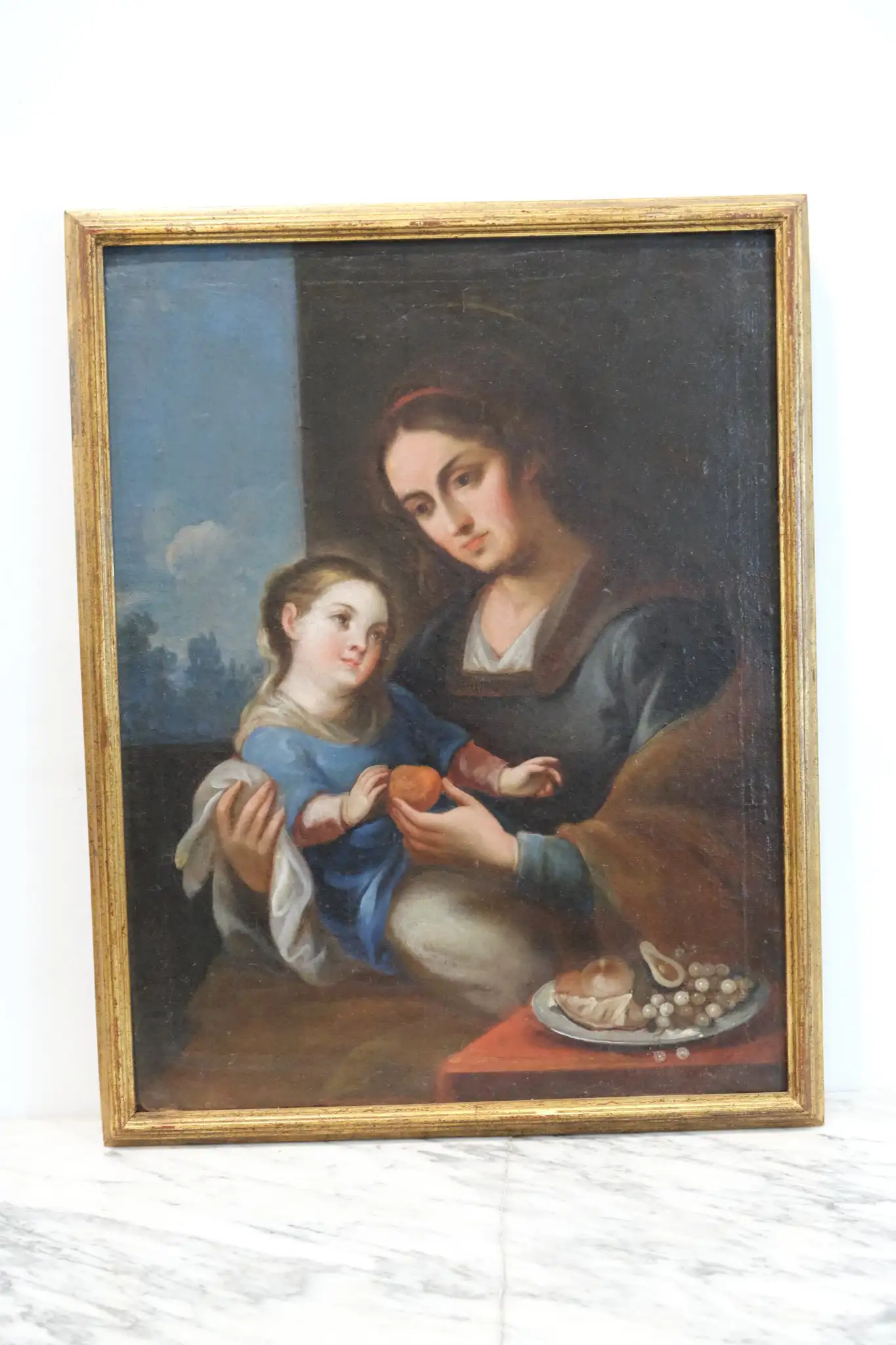
Óleo de la Virgen con el Niño y aguacate, Siglo XIX, Mexico
Arte y Pintura
Siglo XIX · México
Óleo sobre lienzo
El Rincón de Viriato · Madrid
2.000 €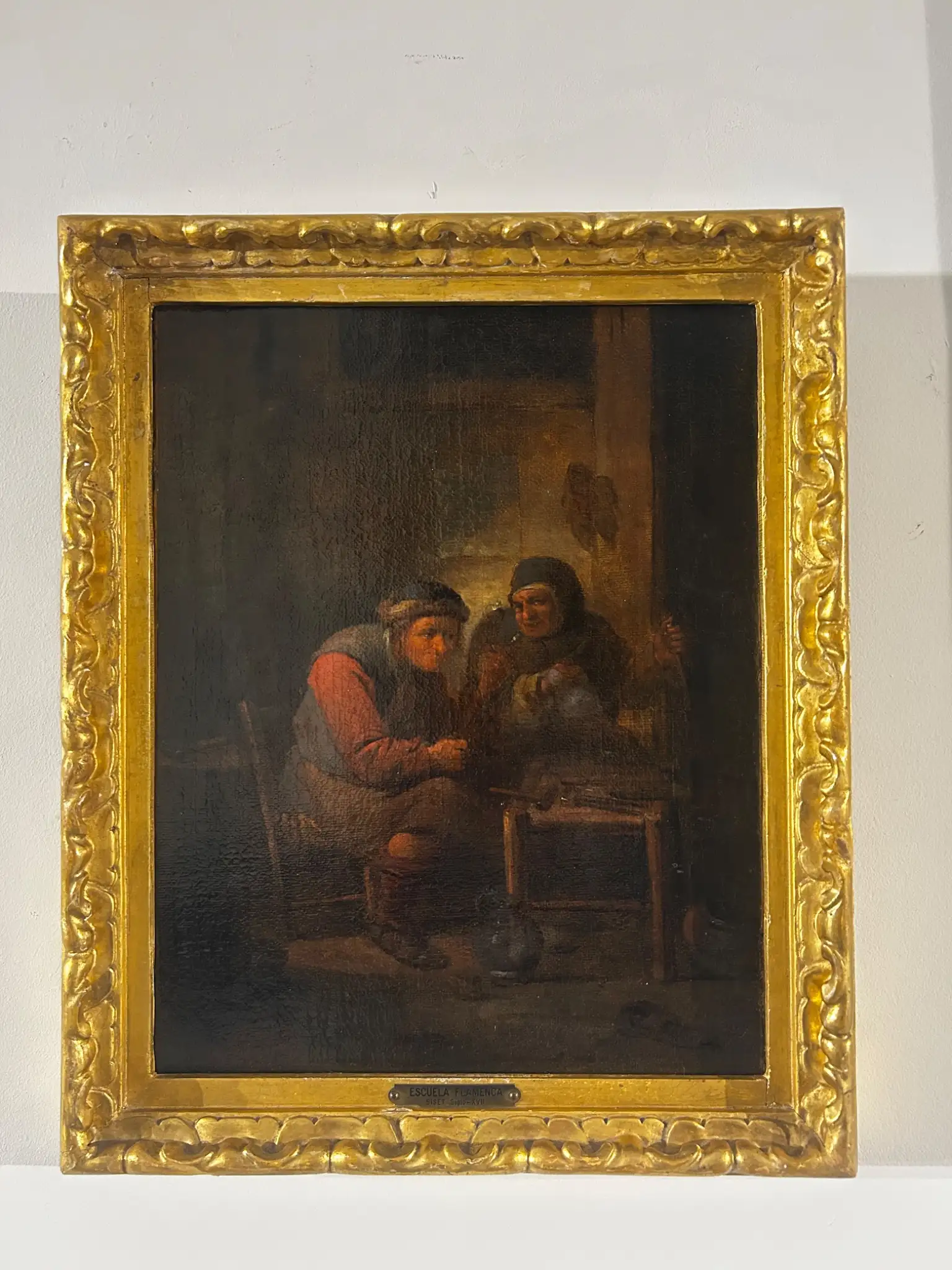
Óleo Sobre Lienzo Escuela Holandesa del Siglo XVII
Arte y Pintura
Siglo XVII · España
Óleo sobre lienzo
Antique Arts · Madrid
2.000 €
Los Desposorios de la Virgen, Matías de Arteaga y Alfaro
Arte y Pintura
Siglo XVII · España
Óleo sobre lienzo
Antique Arts · Madrid
2.500 €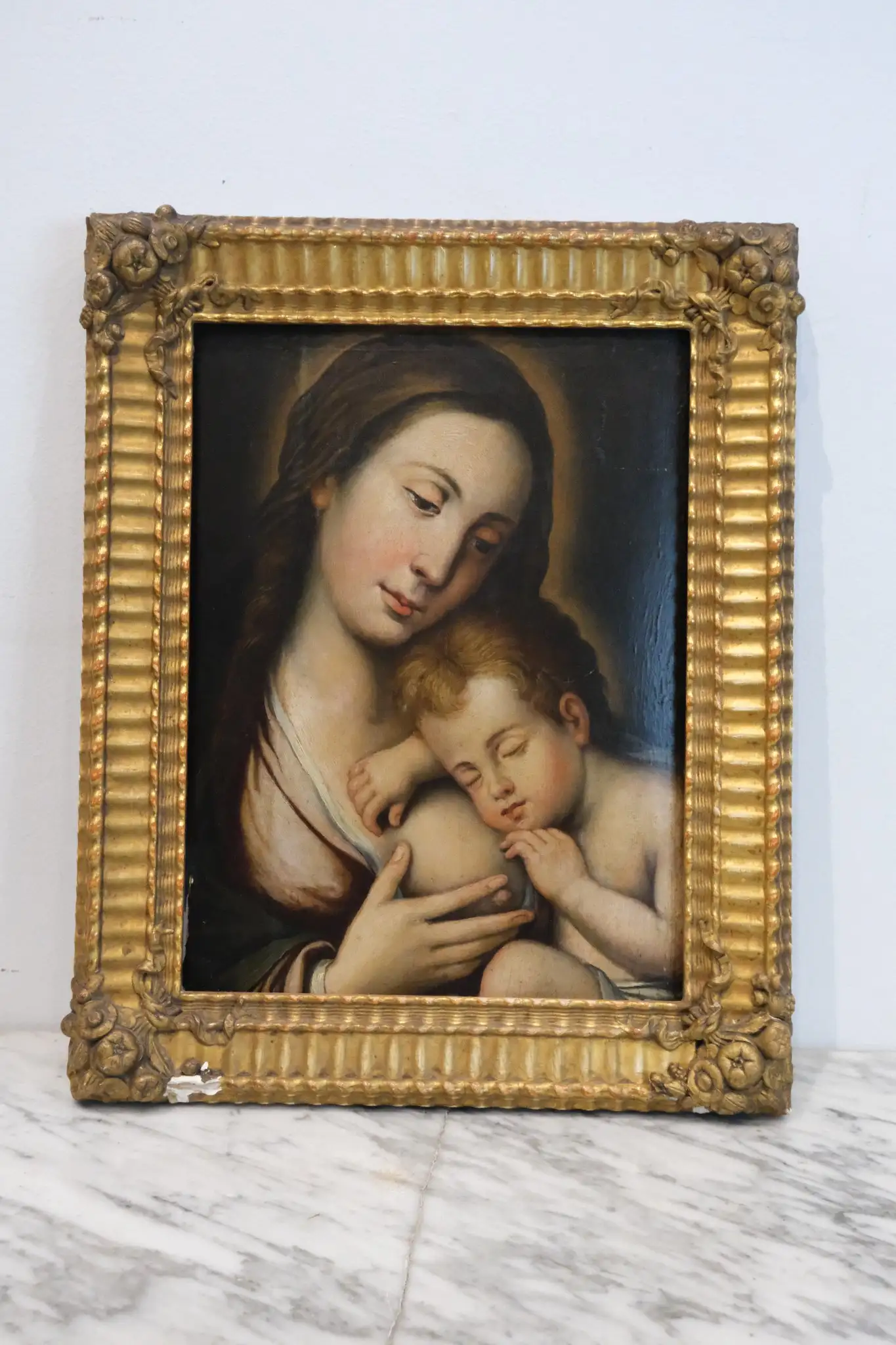
Óleo de la Virgen Maria del Siglo XVIII Sobre Madera
Arte y Pintura
Siglo XVIII · Italia
Óleo sobre madera
El Rincón de Viriato · Madrid
2.000 €
Óleo Sobre Tabla Natividad, Italia, Siglo XVII
Arte y Pintura
Siglo XVII · Italia
Óleo sobre tabla
Antique Arts · Madrid
4.500 €